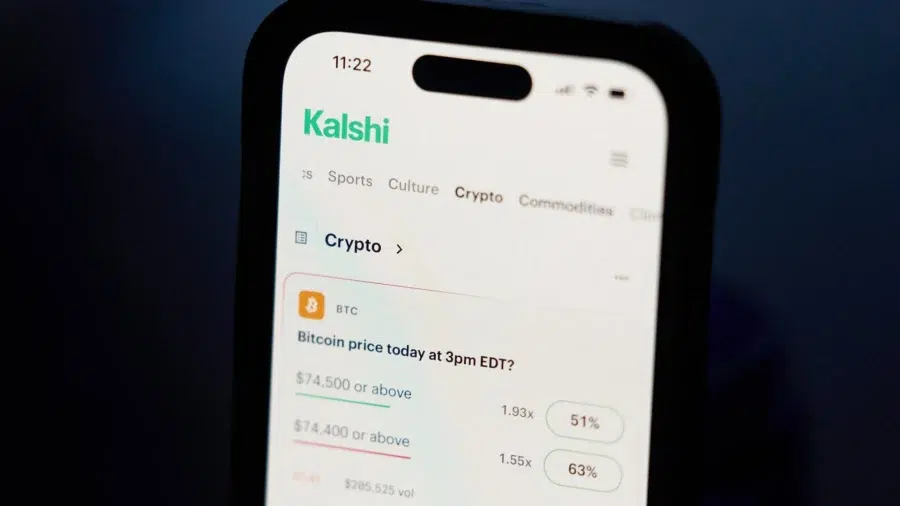

A Pennsylvania man who self-excluded from DraftKings and FanDuel after bankruptcy later found Kalshi through an Instagram ad and lost more than $25,000, NPR reported.
Identified by his middle name, Thomas said he began betting on DraftKings and FanDuel during the pandemic, mostly on football and tennis parlays. Over several years, he accumulated about $75,000 in credit-card and personal-loan debt and lost more than $50,000 on online sportsbooks.
Thomas filed for bankruptcy in late 2023, settled with most of his creditors and banned himself from DraftKings and FanDuel. He swore off gambling, but about two years later an Instagram promotion offering a $20 bonus for spending $10 introduced him to Kalshi.
He told NPR that his Kalshi bets grew from $10 to hundreds and then thousands of dollars, leaving him more than $25,000 in the red. After asking a live agent to close his account, he made three more requests by email over two days. Kalshi eventually barred him from betting.
The case highlights how state gambling protections can differ for prediction markets. NPR reported that Kalshi is federally supervised as a financial instrument known as a swap, rather than regulated by states as a gambling business. The story says Kalshi and Polymarket have not sought state approval and do not follow state-mandated protections for people with gambling addictions.
That distinction matters for people already on state self-exclusion lists. Pennsylvania’s list blocks Thomas from casinos, mobile sports betting and other online betting, as well as direct marketing from betting operators, but it does not automatically bar him from prediction markets.
Kalshi disputes the comparison
Kalshi spokeswoman Dani Lever characterized Thomas’s experience as a cherry-picked case and argued that an exchange model is healthier than a sportsbook model because the company’s profits are not tied to traders’ losses. The company also points to account limits, breaks and voluntary opt-outs as responsible-trading features.
The dispute over safeguards echoes broader concerns about how Kalshi’s protections compare with those of gambling operators. NPR reported that Kalshi belongs to an industry self-exclusion program, but does not participate in state-run exclusion databases, which would require it to obtain a state gambling license.
Exclusion can end at the platform boundary
Abdullah Mahmood, a problem-gambling counselor at Maryhaven in Columbus, Ohio, told NPR that some clients who exclude themselves from sportsbooks later turn to prediction markets. Clinical psychologist Jesse Suh said the platforms present few obstacles to mobile gambling, while responsible-gambling advocate Brian Pempus argued that people use them as sports-betting apps.
The distinction between the products also shapes the safeguards available when betting escalates. Sportsbook promotions and responsible-gambling warnings form part of a separate operator framework; Thomas’s experience shows that self-exclusion there did not prevent a move to Kalshi.
The legal framework for Kalshi’s event contracts is contested by states and could ultimately reach the Supreme Court, NPR reported. Meanwhile, the platform’s scale has grown sharply: TickerTracker data cited by NPR put wagers at nearly $60 billion in the last month, compared with $2.8 billion the previous September.
The post Kalshi’s Growth Puts Prediction-Market Safeguards Under Scrutiny appeared first on ReadWrite.
This articles is written by : Nermeen Nabil Khear Abdelmalak
All rights reserved to : USAGOLDMIES . www.usagoldmines.com
You can Enjoy surfing our website categories and read more content in many fields you may like .
Why USAGoldMines ?
USAGoldMines is a comprehensive website offering the latest in financial, crypto, and technical news. With specialized sections for each category, it provides readers with up-to-date market insights, investment trends, and technological advancements, making it a valuable resource for investors and enthusiasts in the fast-paced financial world.