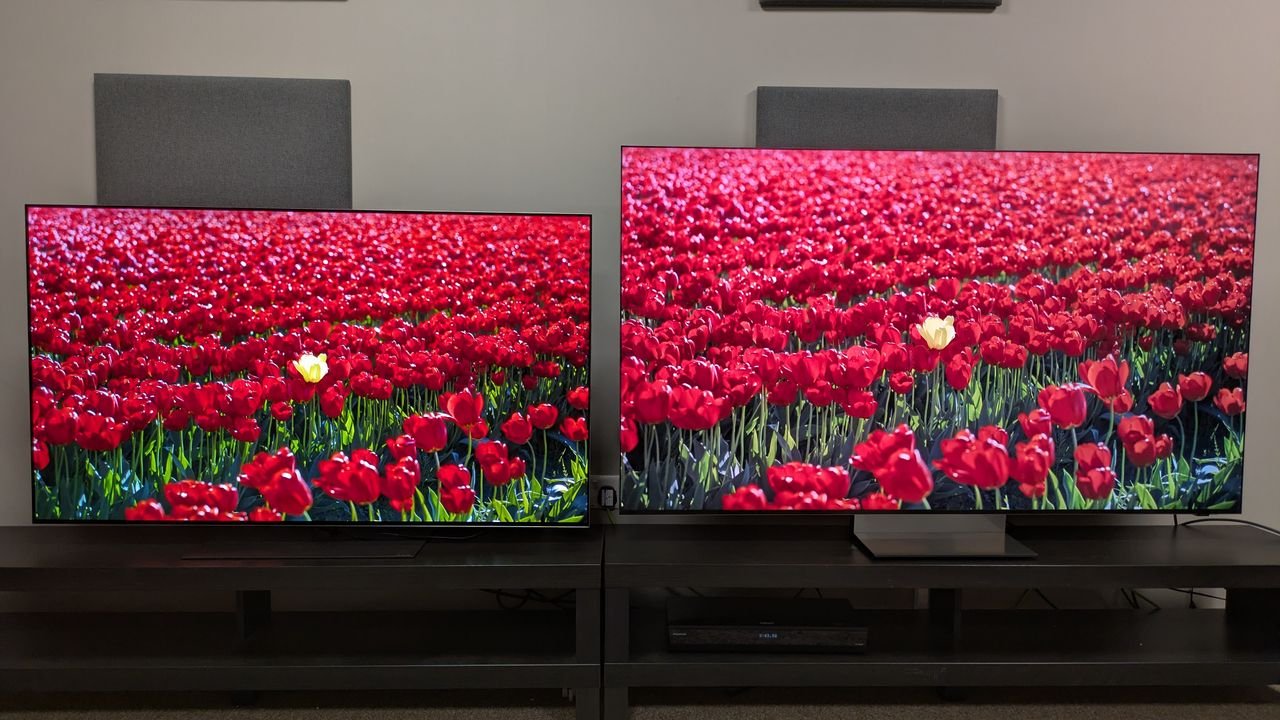
RGB TVs are the latest talk of the TV world, with multiple brands embracing the new technology. Known by different names depending on the brand, such as Micro RGB (Samsung and LG), True RGB (Sony), and RGB mini-LED (Hisense and TCL), RGB TVs use a layer of red, green and blue mini-LEDs in their backlight, where standard mini-LED just uses white LEDs. The aim is to produce bolder, richer colors and better backlight control compared to traditional mini-LED.
I’ve tested a few RGB TVs now, and the tech shows promising signs. One of those TVs, currently sitting in our testing lab, is the Samsung R95H, the brand’s flagship Micro RGB TV. I’ve compared the R95H to a rival True RGB TV from Sony, the Bravia 7 II, and both showed what RGB is capable of.
But, given that RGB is aiming to take OLED’s spot at the top of the best TVs pile, I thought I’d compare the R95H to a rival OLED, using reference scenes from 4K Blu-rays I use in my AV testing. The OLED I’ve chosen is the LG G6, one of the best OLED TVs I’ve tested so far in 2026.
So, let’s find out how a flagship OLED compares to a flagship RGB TV.
A quick note on the photos below: the R95H has a red tint due to the camera interacting with the glare-free matte screen. This red tint is not visible when viewing with the naked eye.
Brightness
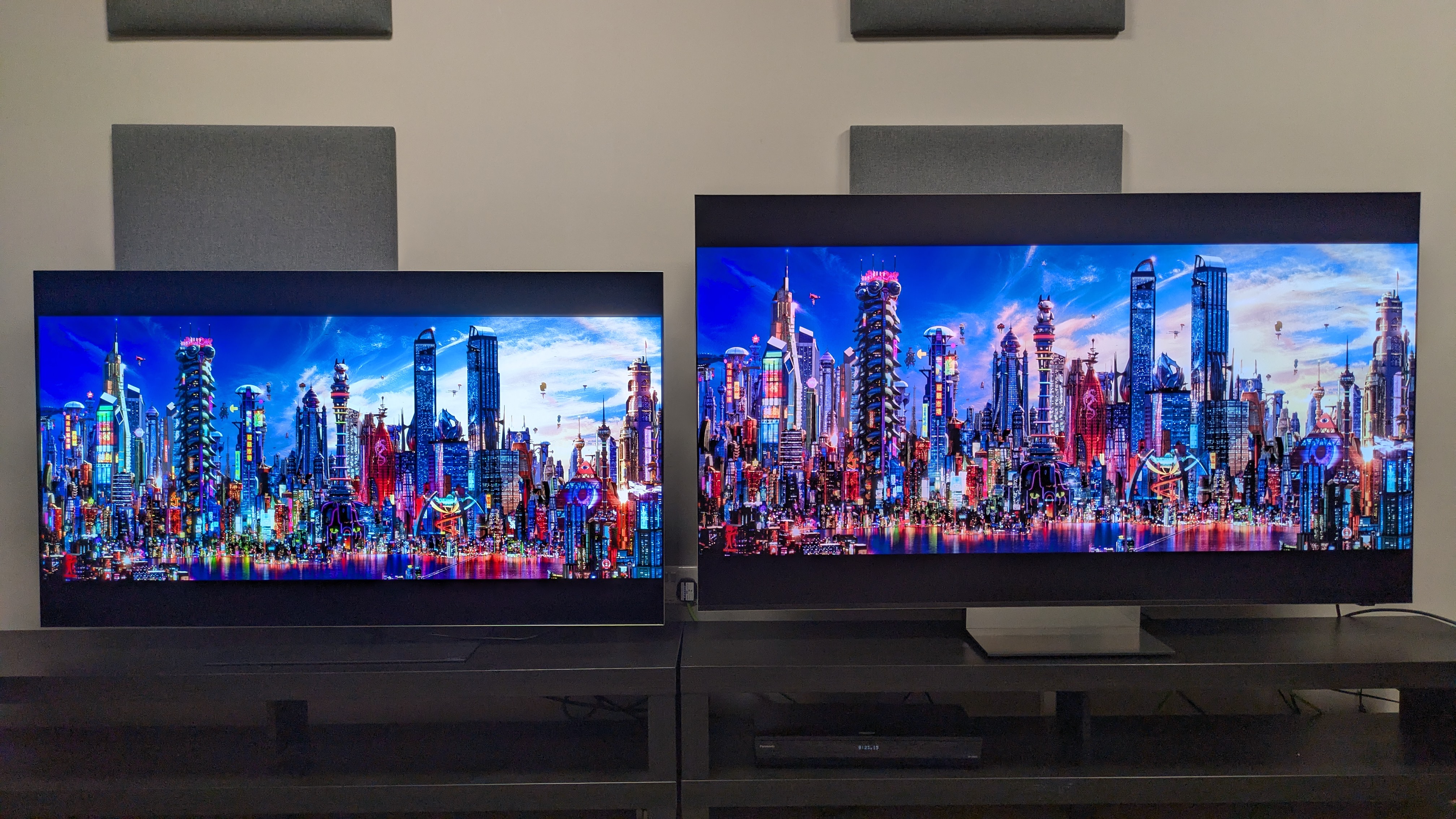
Traditionally, mini-LED would take the brightness crown easily, as mini-LED in recent years has easily exceeded 3,000 nits, even in budget models, while OLED has struggled to break the 2,000-nit mark. However, that’s changed in the last couple of years, with OLED now delivering real brightness improvements.
Measuring both TV’s brightness, the LG G6 initially hit 2,471 nits peak HDR brightness in my first tests in March 2026. Since then, the G6 has received a few firmware updates, and in my most recent measurements, taken in July 2026, it hit 3,004 nits (both measurements were taken in Filmmaker Mode). These are huge results for OLED. As for the Samsung R95H, it measured 1,977 nits peak HDR brightness in Filmmaker Mode, while in its ‘brighter’ movie mode it hit 1,960 nits. So, the G6 easily takes the peak HDR win.
As for fullscreen brightness, where mini-LED often succeeds, the G6 hit 451 nits fullscreen HDR brightness in Filmmaker Mode, while the R95H hit 612 nits. So here, the RGB TV takes the win, but the gap isn’t as big as it used to be. Flagship OLEDs would often struggle to break 300 nits two years ago, but that’s changed now.
What does this mean for real-world scenes though? For the most part, I’ve found that these measurements have translated to in-person viewing. Watching Speed Racer, the G6 shows much punchier HDR highlights, such as the headlamps of the Mach 5 or the bright, blue sky above the city as the Racer family fly to Royalton Industries. Watching footage of snow from the Spears & Munsil UHD Benchmark 4K Blu-ray, the whites of the snow have more impact on the G6, though there’s still some nice brightness in the R95H.
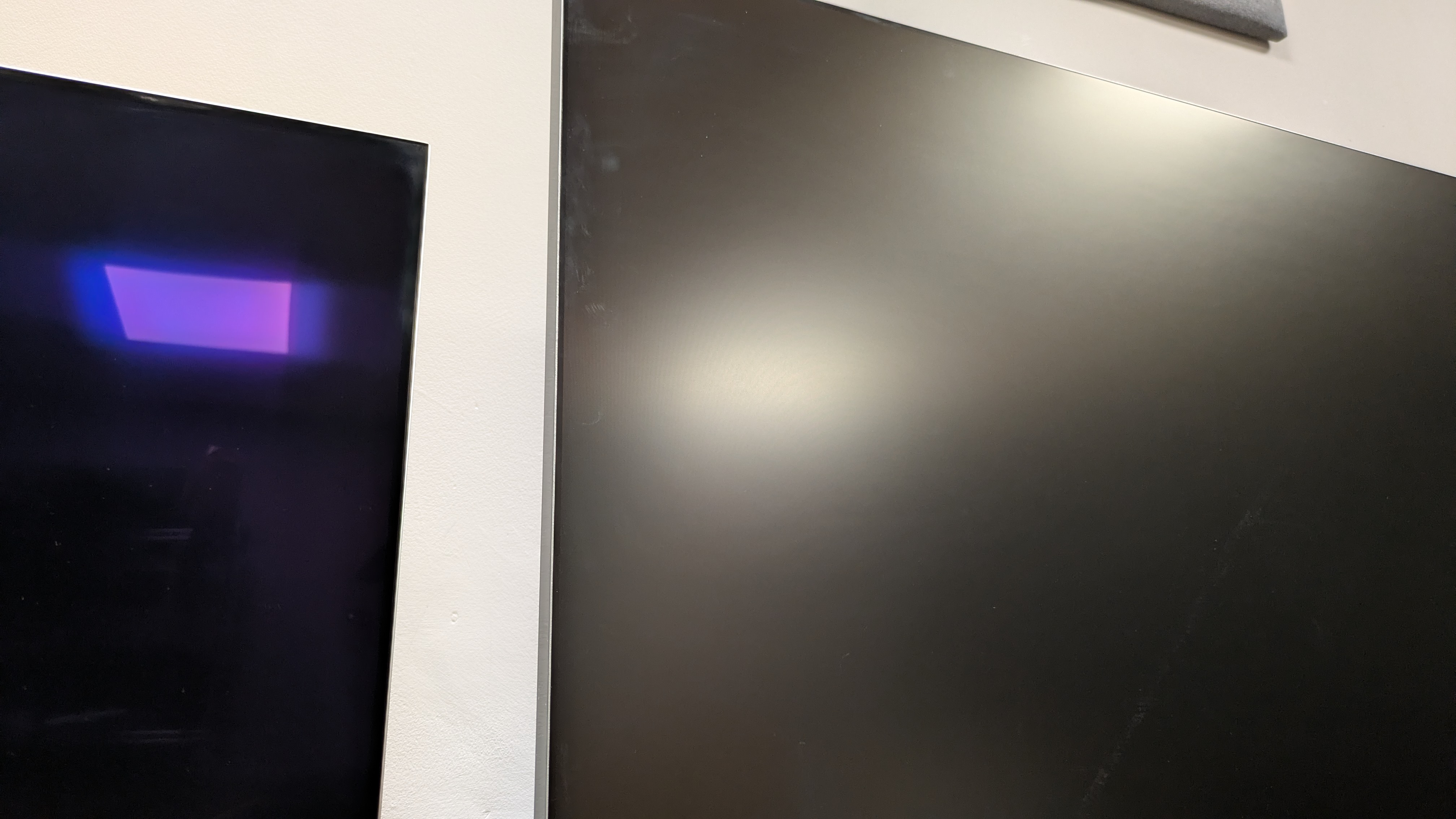
Bright-room viewing and mirror-like reflections have often been OLED’s kryptonite, due to the very glossy screens of these TVs. However, when I tested the G6 next to the Samsung S95H/S99H, the latter of which has a glare-free matte screen, I found that the G6’s anti-reflective screen was very effective at reducing reflections while maintaining strong black tones. The same is true here with the G6 and the R95H, though in terms of eliminating mirror-like reflections, the R95H, which is also equipped with the glare-free matte screen, does a better job. The G6 still impresses for an OLED, though.
Colors
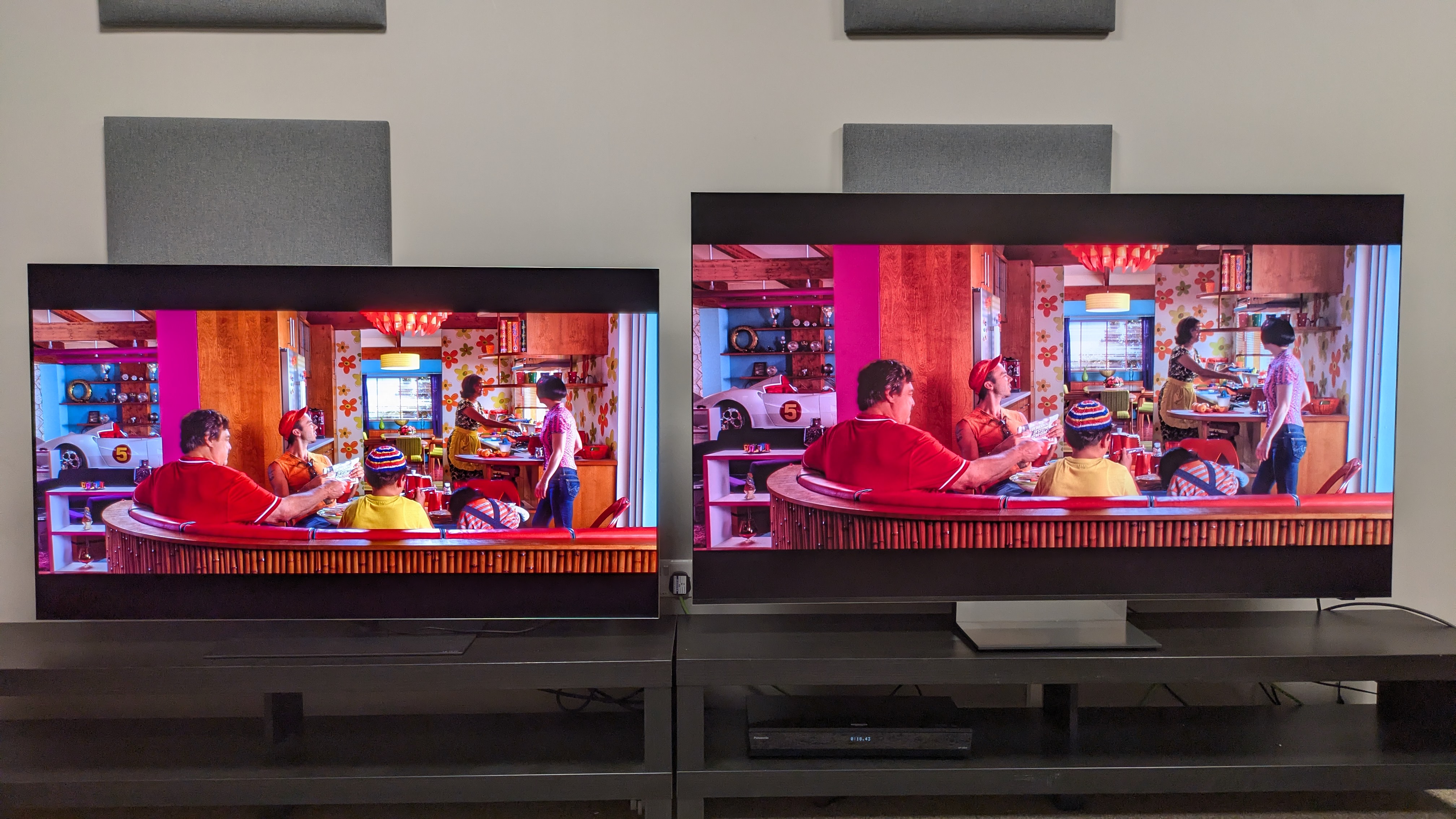
Color reproduction is one area where RGB TVs are being touted for their capabilities, and based on the ones I’ve tested so far, they certainly can deliver impressive results. OLED is known for the strength of its colors too, however.
In Speed Racer, both TVs deliver vibrant, punchy colors that really pop on screen. Both manage to reproduce the saturated, bright colors of the Racer household, with its orange walls, pink details and sometimes lime-green paintwork. The characters’ clothing, such as Trixie’s bright pink shirt and Spritle’s yellow shirt, are also expertly handled by both TVs. The real difference is each TV’s color profile. While the G6 delivers these colors with real depth and richness, the R95H’s colors are more subtle, and arguably more accurate and natural looking.
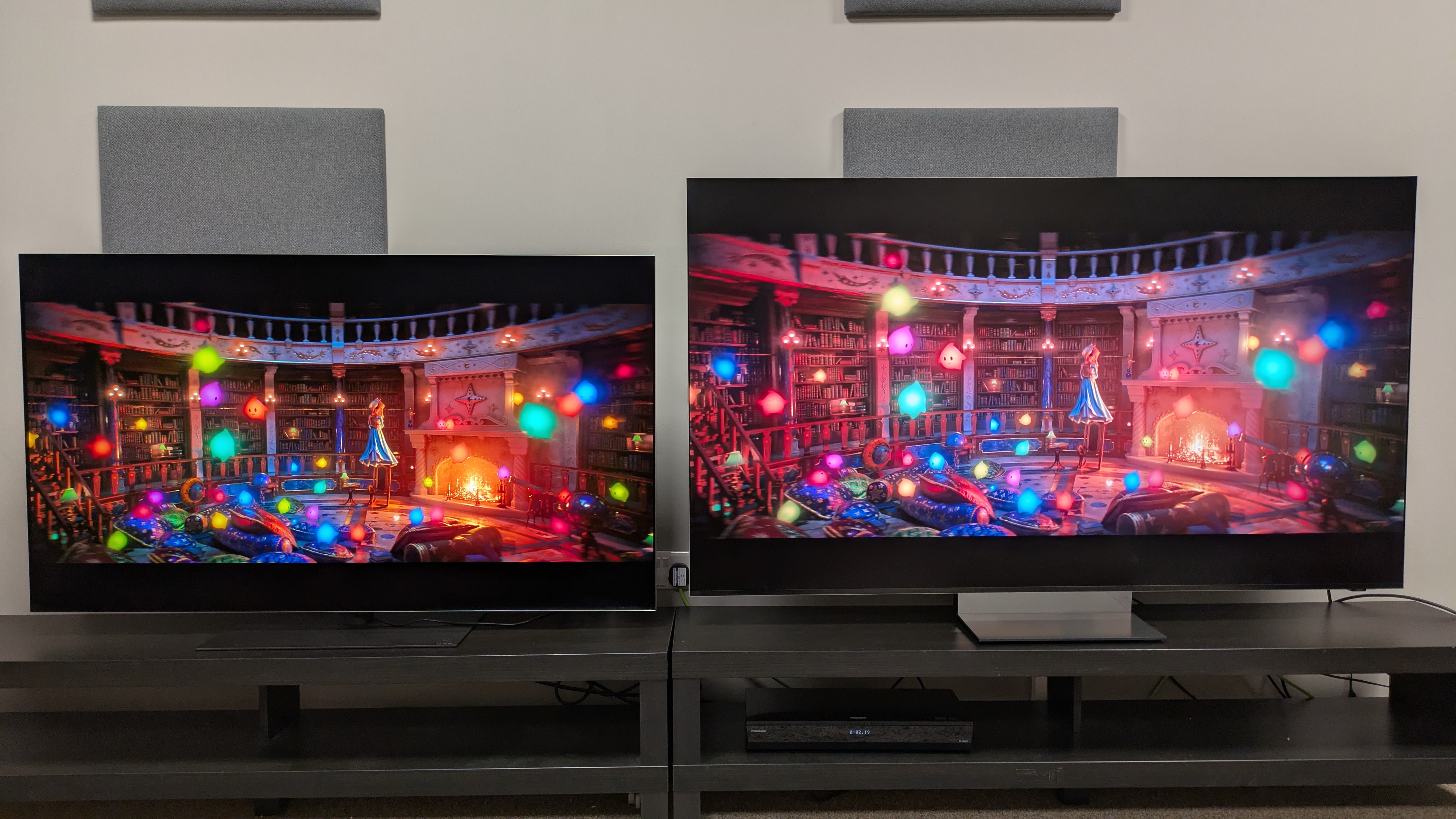
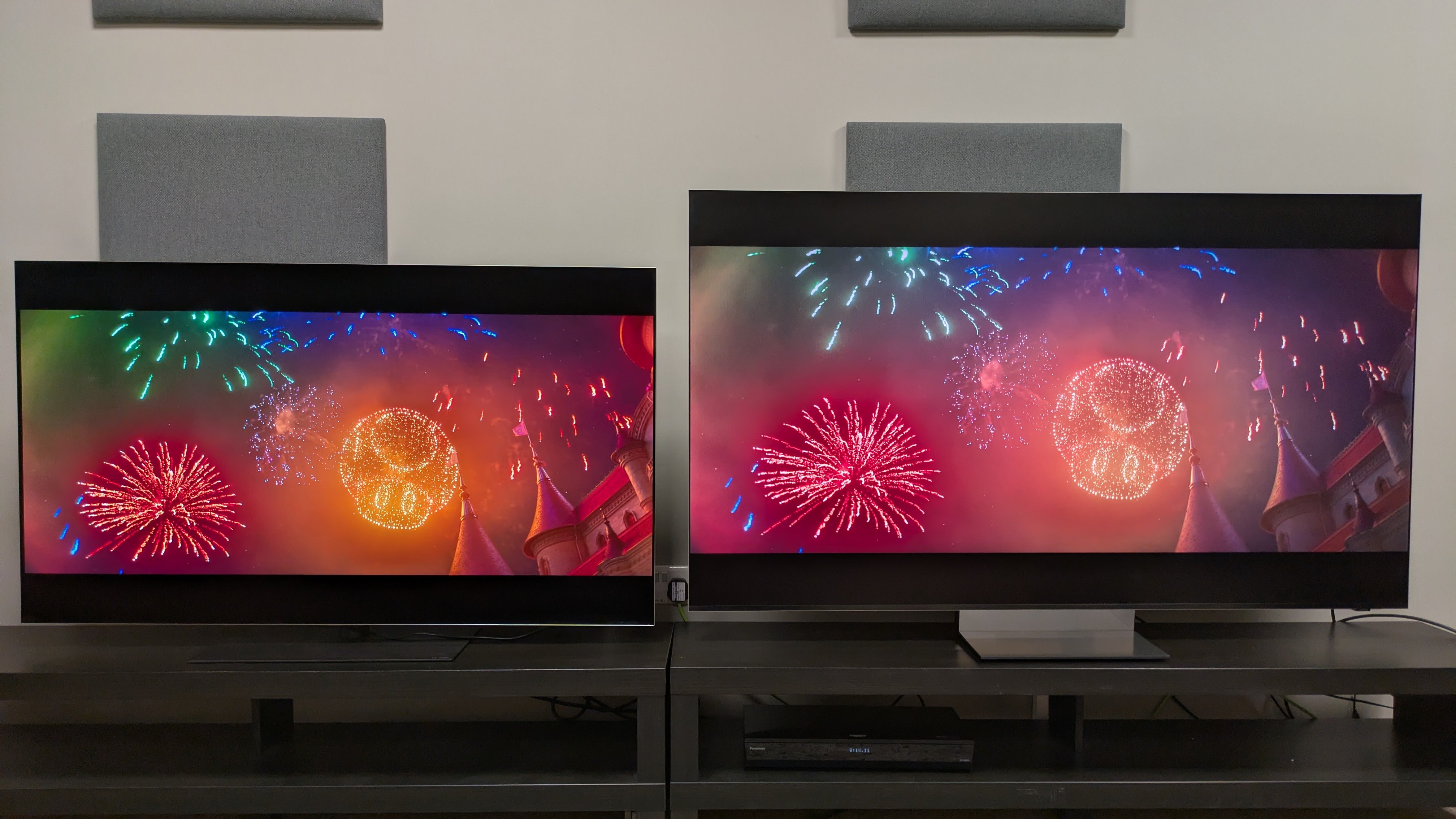
Switching to animation, in The Super Mario Galaxy Movie, both TVs again demonstrated excellent color reproduction, with a similar profile to what I’d seen in Speed Racer. As the Lumas gathered for story time, the various colors of their bodies popped on both TVs, and again the G6 had that beautiful depth and boldness, while the R95H had a more neutral but realistic look.
I did find at times that the G6 leaned a little too heavily towards red, which made some reds, such as Mario’s hat and overalls or the red of a toadstool, look a little oversaturated compared to the rest of the picture. The R95H had a much more uniform color profile, with no one color standing out. Still, the G6’s more vivid colors were hard to look over, and did really suit the crisp, colorful animation of The Super Mario Galaxy Movie.
Contrast and dark room viewing
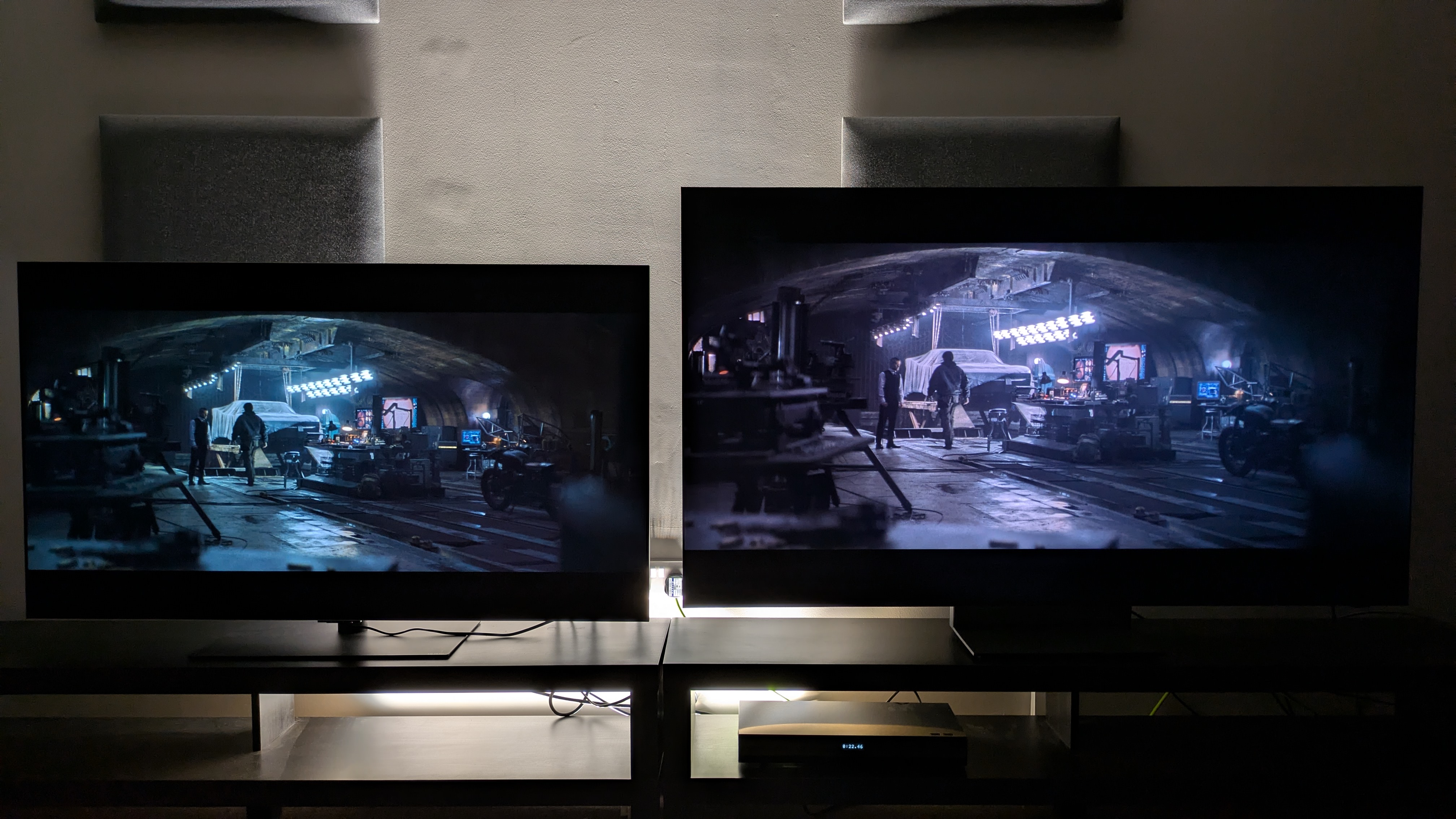
Switching both TVs to Filmmaker Mode for darker content, I started my comparisons with my go-to contrast-y movie: The Batman. While OLEDs tend to be the best option for high-contrast scenes, thanks to their self-dimming pixels for deeper dark tones, I was surprised by how close this particular contest was.
In high-contrast scenes, such as the exploration of the crime scene at Mayor Mitchell’s house, or as Bruce talks with Alfred in the Batcave, both TVs demonstrated an excellent balance between the dark tones of the environment and the lamps/overhead lights. While the G6 did show richer dark tones overall, the R95H’s highlights, such as light hitting the side of Commissioner Savage’s face at the aforementioned crime scene, actually had more impact, despite its lower peak HDR brightness.
Both TVs also showed superb shadow detail. When Batman stands on a darkened subway platform, his armor is completely legible, despite the dark surroundings and dimly lit nature of the scene; this is a scene that some TVs I’ve tested have struggled with. Both TVs also did a very good job preserving the dark tones while accurately displaying these details too.
Another thing I noticed while watching The Batman was that I actually preferred the R95H’s skin tones. On the G6, people’s skin tones in darker scenes looked a little washed out, while on the R95H they appeared to have more color, looking more true-to-life.
Sitting between the two TVs, I did notice that off-center, the R95H is prone to some backlight blooming (where bright objects against a dark background have a halo of light around them), whereas the G6 wasn’t, thanks to its self-dimming pixels and lack of backlight.
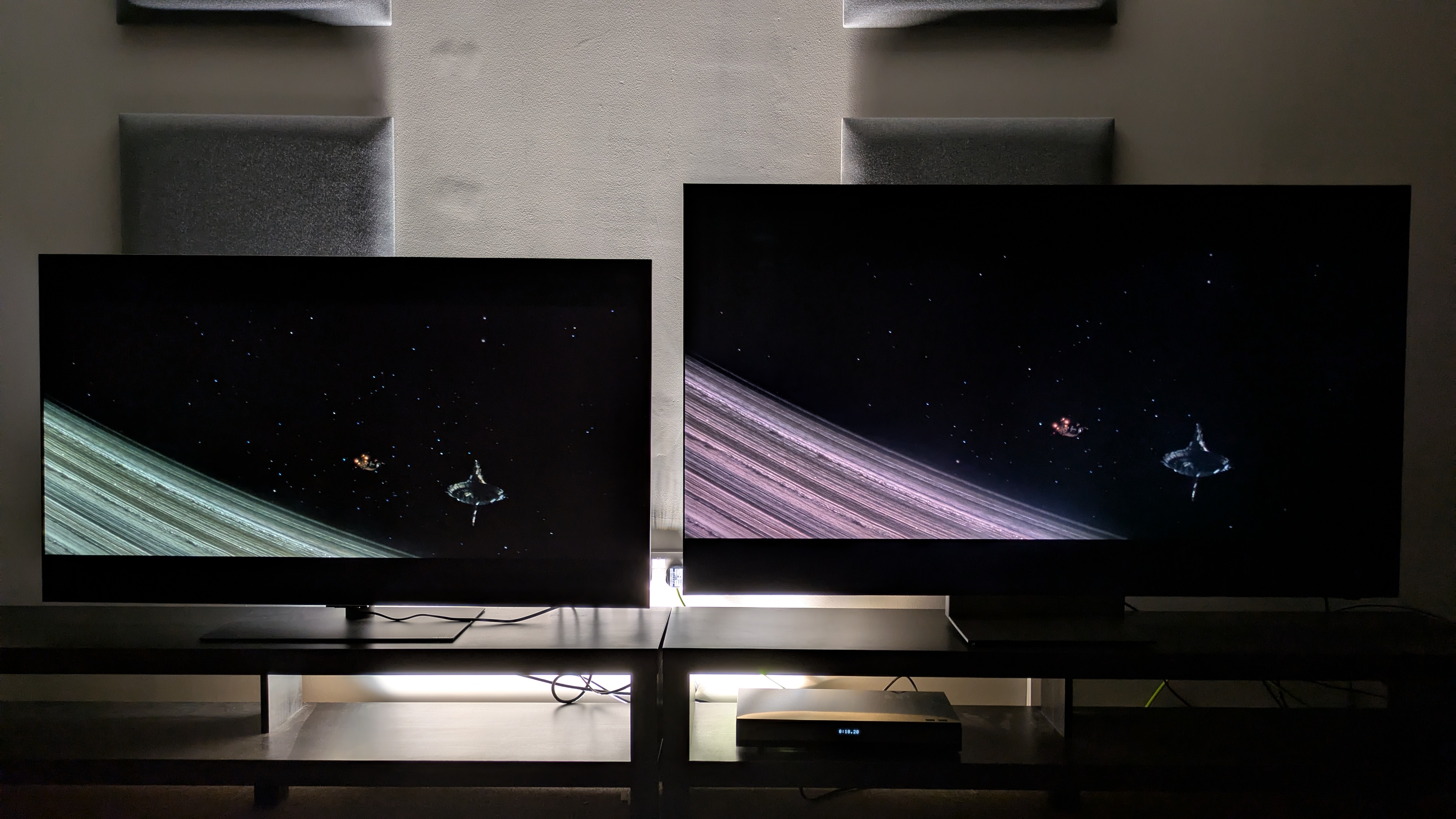
For one final test, I used a scene from Alien: Romulus, in which the team approaches the Romulus station for the first time. Both TVs did a fantastic job rendering the deep, black tones of space, and while I expected this from the G6 OLED, I was pleasantly surprised by how rich the R95H’s blacks were, especially for backlit TV.
OLED vs RGB: who comes out on top?
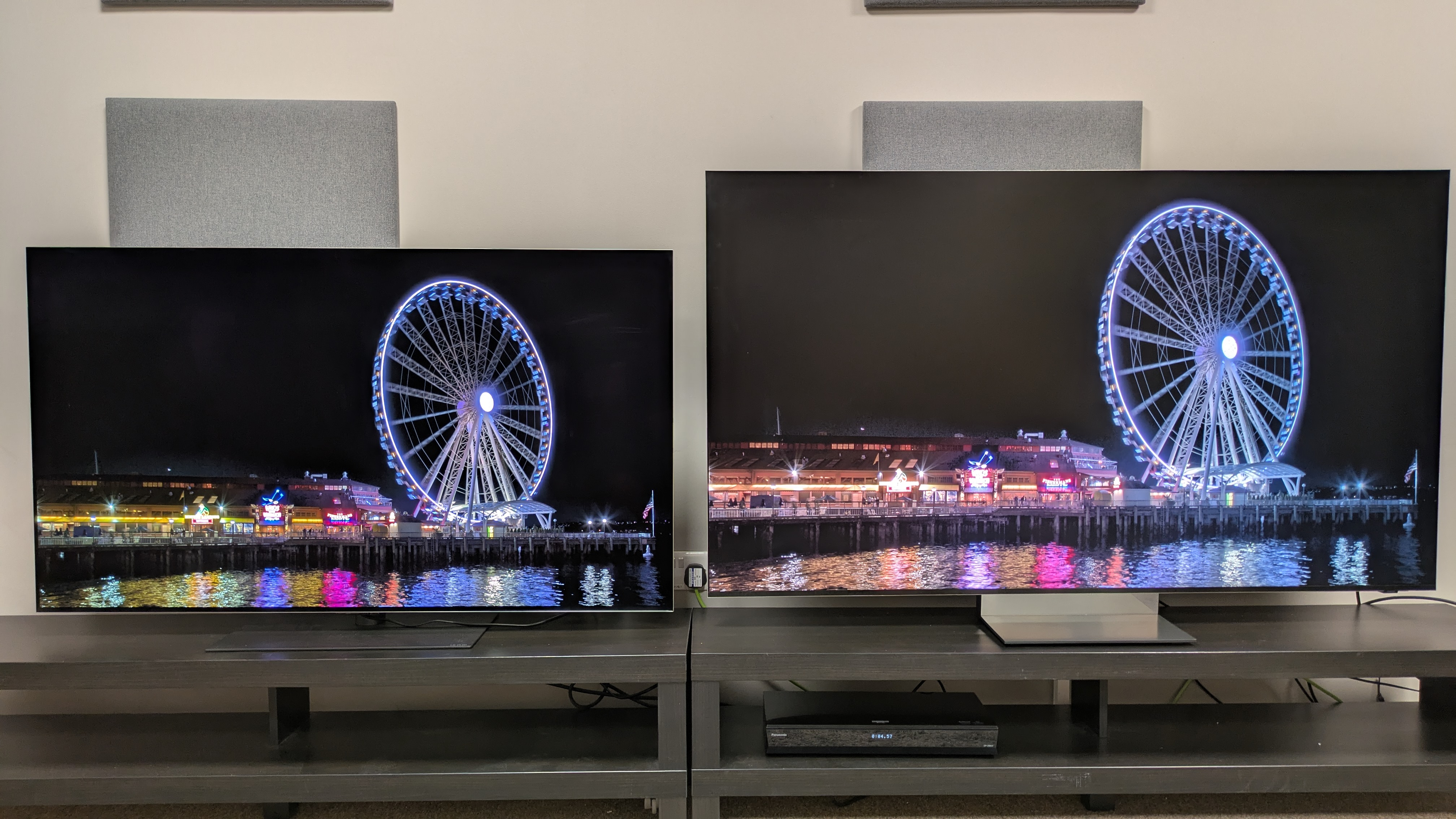
In terms of pricing, these two TVs are on a level pegging. A 65-inch G6 costs $2,999 / £2,999 / AU$4,999, while a 65-inch R95H costs $2,999 / £3,099 / AU$4,999. So, while they may both be at the very premium end of the market, if you have that kind of money, price isn’t really a factor here, as there’s nothing much between them.
So it really comes down to performance. I’ve said before that RGB TVs, at least the ones I’ve tested, haven’t achieved ‘OLED-killer’ status just yet, and the same is true here — but it’s getting close. For me, I preferred the G6’s overall contrast, textures and color performance, but that doesn’t mean the R95H didn’t impress, especially for darker-room viewing, and when prices start to drop for these two TVs, my decision could swing the other way. OLED may be the current king, but RGB is hot on its heels. Over the next couple of years, this is going to be a thoroughly intriguing contest.
Thinking of buying a new TV?
Try our TV size and model finder! You tell it how far you sit from your TV, we’ll tell you what size to buy based on viewing angle advice from image quality experts, and we’ll recommend our three top TVs at that size for different prices.
This articles is written by : Nermeen Nabil Khear Abdelmalak
All rights reserved to : USAGOLDMIES . www.usagoldmines.com
You can Enjoy surfing our website categories and read more content in many fields you may like .
Why USAGoldMines ?
USAGoldMines is a comprehensive website offering the latest in financial, crypto, and technical news. With specialized sections for each category, it provides readers with up-to-date market insights, investment trends, and technological advancements, making it a valuable resource for investors and enthusiasts in the fast-paced financial world.