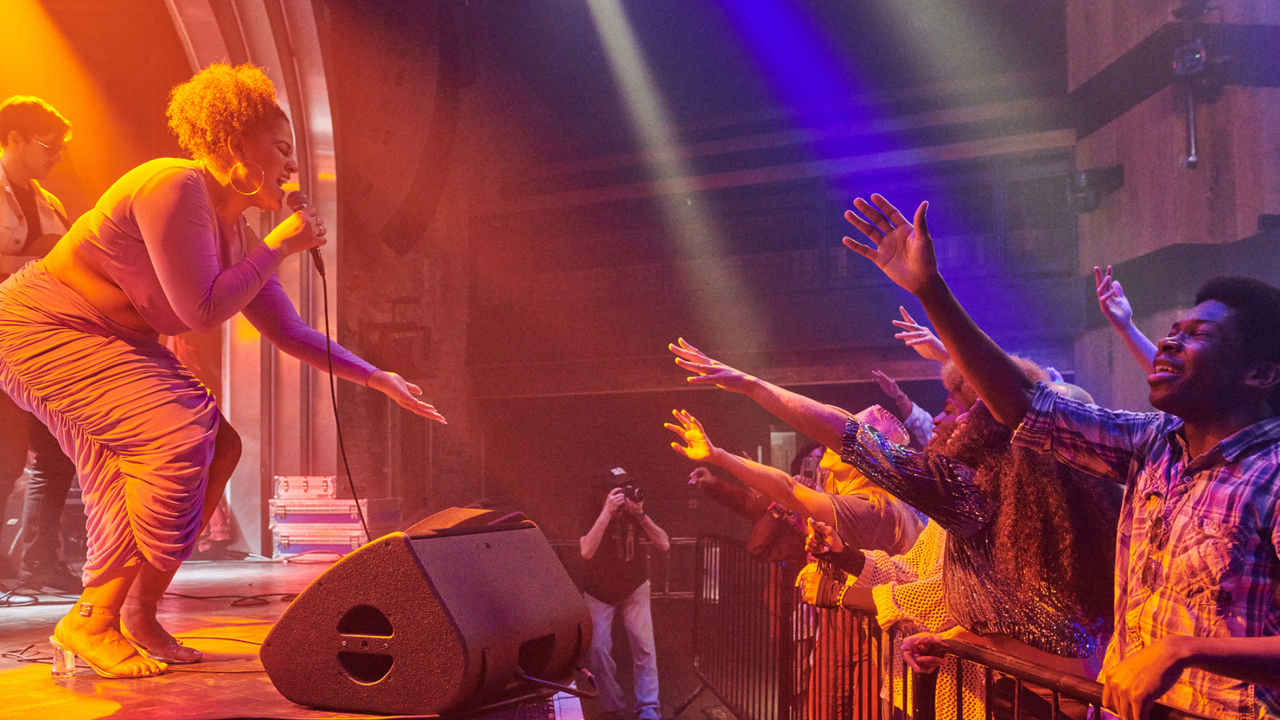
“Lyrics are where people find meaning in music.”
So says Marco Paglia, Chief Product Officer at Musixmatch – the platform delivering time-synced lyrics and translations across all major music streaming services.
At a time when passive background streaming feels like it dominates the landscape, I spoke to Marco to find out how lyrics are changing the game for musicians and their listeners.
In an era of passive streaming, why are lyrics still an important tool for turning casual listeners into diehard fans?
A playlist plays at you, while lyrics make you lean in, follow the words and recognise something about yourself.
Lyrics represent one of the few moments in streaming when the listener stops being passive. A playlist plays at you, while lyrics make you lean in, follow the words and recognise something about yourself in what an artist is saying. That moment of connection is often where a casual listener starts to become a fan.
This experience has changed significantly over the last few decades. Lyrics used to be a souvenir: you bought the CD, pulled out the booklet, and read along. Now they are a fundamental part of the listening journey itself – time synced, translated and available immediately on screen as the song plays.
The scale of that behaviour is significant, with 88% of premium subscribers actively using lyrics. People read along, search for a chorus to find a track, share a line on Instagram or TikTok and print it on shirts.
Lyrics are where people find meaning in music. We see that reflected in listening behaviour too: tracks with lyrics generate 3.5x more saves, one of the clearest signals that someone wants to come back to a track. None of that is passive.
Ultimately, that’s why lyrics are such a powerful connective tissue between a song, an artist and the people who become invested in it.
On social media, a track can blow up in 24 hours. How much momentum does an artist lose if their lyrics aren’t synced on day one?
If there is no lyric card to screenshot, no sticker, no karaoke moment, you’re leaving fan engagement on the table right as curiosity peaks.
More than most artists realise, and that loss isn’t recoverable! The first few days of a release are a unique window: attention is at its highest, fans are actively searching for the track, and the moments that shape its trajectory are starting to build. Once that window passes, you can’t recreate it.
There are three things happening all at once in that initial period. Firstly, discovery: 81% of listeners search for lyrics online, so if a track’s lyrics aren’t available, it risks missing people actively trying to find it through words they’ve heard.
Secondly, algorithmic weighting: days one to seven are when saves and completion count most, and lyrics drive both of these things.
Thirdly, social engagement: lyrics give fans something to interact with and share. If there is no lyric card to screenshot, no sticker, no karaoke moment, you’re leaving fan engagement on the table right as curiosity peaks.
Then the window closes. Add lyrics on day eight and the opportunity to capture that initial release-week momentum has already passed. At that point, the focus shifts to longer-term discovery – and there’s no way to recreate that first week.
That’s exactly why we built Pre-Release, which means lyrics, sync and translations can all be in place and live from the moment a track drops.
For example, when the Rolling Stones released their latest album it launched fully covered, with lyrics, sync and translations in eight languages. Day-one lyrics aren’t a nice-to-have. They have to be part of the release itself.
How much manual effort is actually required from an artist or manager to get their lyrics and metadata release-ready across all platforms?
Historically an enormous amount, and almost all of it is invisible, unglamorous work: transcribing, time-syncing line by line.
Historically an enormous amount, and almost all of it is invisible, unglamorous work: transcribing, time-syncing line by line, getting the structure and credits right.
Our job is to collapse that process. Customers can get verified in one step, we then pull their catalogue automatically from distributor data and audit it against what’s live on every Digital Service Provider (DSP). That produces a coverage report showing exactly where lyrics are missing, and prioritising the tracks where filling those gaps will have the greatest impact.
From there, customers can use our AI tools to transcribe and sync lyrics, or hand it to our expert curators. Our transcription engine is built specifically for the singing voice, and is more than twice as accurate as general speech tools.
That technology is backed by a global curator network that can help with proofreading across 100+ languages. Once everything is ready, it can be distributed to 25+ platforms simultaneously, with live status tracking. What could have taken months, now takes days.
There’s another part of this that catalogue managers sometimes underestimate: the same process can power the campaign around a release. Once the lyrics are ready ahead of release day, that file can also produce the vertical video loops for TikTok, Instagram, Spotify Canvas assets, and the YouTube lyric videos ready to go live alongside the track. One deliverable, every surface, no video shoot.
You describe Music Lens as ‘the world’s first Music Agent’. What does that mean in practice, who benefits and how?
It analyses meaning, but it doesn’t write songs.
Music Lens allows users to stop querying a database and to have a conversation with their catalogue. In practice, that means four things.
It can match a catalogue to a creative brief, it turns global trends into readable insight so you can see a breakthrough moment while it’s still happening, it gives clear visibility into royalties, splits and DSP performance (market by market), and it generates campaign-ready visuals from songs in seconds.
I like to think of it as an agent that develops through four stages: first, a musicologist, reading lyrics and extracting meaning, moods and themes. Then a DJ, enabling search by feeling, rather than simply based on the artist or title. Then it becomes a music expert, reasoning through a brand brief in the way a human sync agent would. Finally, it is an analyst, mapping how an artist’s themes evolve and identifying patterns across countries and genres.
The biggest beneficiaries are publishers and labels with catalogues too large to know intimately, sync teams doing the matching process from memory, and independent artists who’ve never had this class of analysis available to them at all.
And the part I care most about is that it’s non-generative: it analyses meaning, but it doesn’t write songs. It’s built on derived data, meaning new information created by processing a catalogue of over 100 million works. It’s permission-based, with no scraping, no unlicensed content and no raw lyric ever surfaces in the output. That was a hard licensing constraint and it shaped every architectural decision downstream.
Do platforms like this level the playing field for artists to build a career without needing the support of a major label?
Now the words travel with the music.
We give independent artists access to the tools and the infrastructure that historically were much harder to access without the support of a major label. We can offer reach across every platform, control over metadata, professional-grade catalogue intelligence, a merchandising operation, and the one people often forget: translation.
For example, an independent artist can verify their profile, own their lyrics, sync them for free, distribute them to 25+ platforms, ask Music Lens which of their songs has untapped potential, turn a lyric into merchandise, and reach fans in their own language on day one.
More than 1.5 million artists already use Musixmatch Pro to do exactly this. Ten years ago, much of that capability would have sat behind a label services deal.
Translation is the most underrated part of that shift. An artist making music in a bedroom in Bologna with listeners in São Paulo used to have no way to close that gap. Now the words travel with the music.
There are of course elements of labels that we don’t replace, and which are still a real advantage, such as capital, generating radio and playlist relationships and dedicated teams focused on building an artist’s career.
But we have certainly helped level the playing field by putting more information, tools and infrastructure directly into the hands of independent artists.
Beyond backend metadata and licensing, how do you plan to turn your platform into an active community and a richer experience for fans?
The part I find most interesting is what happens when an artist opens that experience up to their fans.
Musixmatch has always been a community, a large one, made of people who care enough about a song to get its words right. That passion is our asset. What we’re building now is the layer where fans and artists actually meet.
Translation is one of the most powerful examples. Most people know lyrics in languages they don’t speak, and translation turns that from a novelty into belonging.
Last November, we powered Spotify’s first global rollout of lyric translations on Rosalía’s LUX: 14 languages on one record, 23 translations synced for release day. It became the most-streamed album in a single day by a Spanish-speaking female artist. When language stops being a barrier, fandom stops being local.
Merchandise, and specifically fan-personalised merchandise, is another opportunity. Our Lyrics Merch tool allows an artist to turn a lyric into something a fan wears: designed, printed and sold through us, with the artist keeping 100% of sales. But the part I find most interesting is what happens when an artist opens that experience up to their fans.
If they want to offer it, the fan can choose their own favourite line from the song and have that printed on a shirt. It’s a completely different relationship from buying tour merch. The fan isn’t picking from what the artist decided to print, they’re telling the artist which words mattered most to them. Every shirt becomes a small piece of feedback about which lyric actually landed, and the fan ends up wearing a line they chose themselves.
Finally, there’s participation. We have a global community made up of music lovers, who transcribe, sync and translate lyrics. Our curators help us to ensure lyrics are accurate, properly synced and accessible to fans around the world. The more credit and better tools we give them, the better the data gets, which improves the experience for everyone.
This articles is written by : Nermeen Nabil Khear Abdelmalak
All rights reserved to : USAGOLDMIES . www.usagoldmines.com
You can Enjoy surfing our website categories and read more content in many fields you may like .
Why USAGoldMines ?
USAGoldMines is a comprehensive website offering the latest in financial, crypto, and technical news. With specialized sections for each category, it provides readers with up-to-date market insights, investment trends, and technological advancements, making it a valuable resource for investors and enthusiasts in the fast-paced financial world.