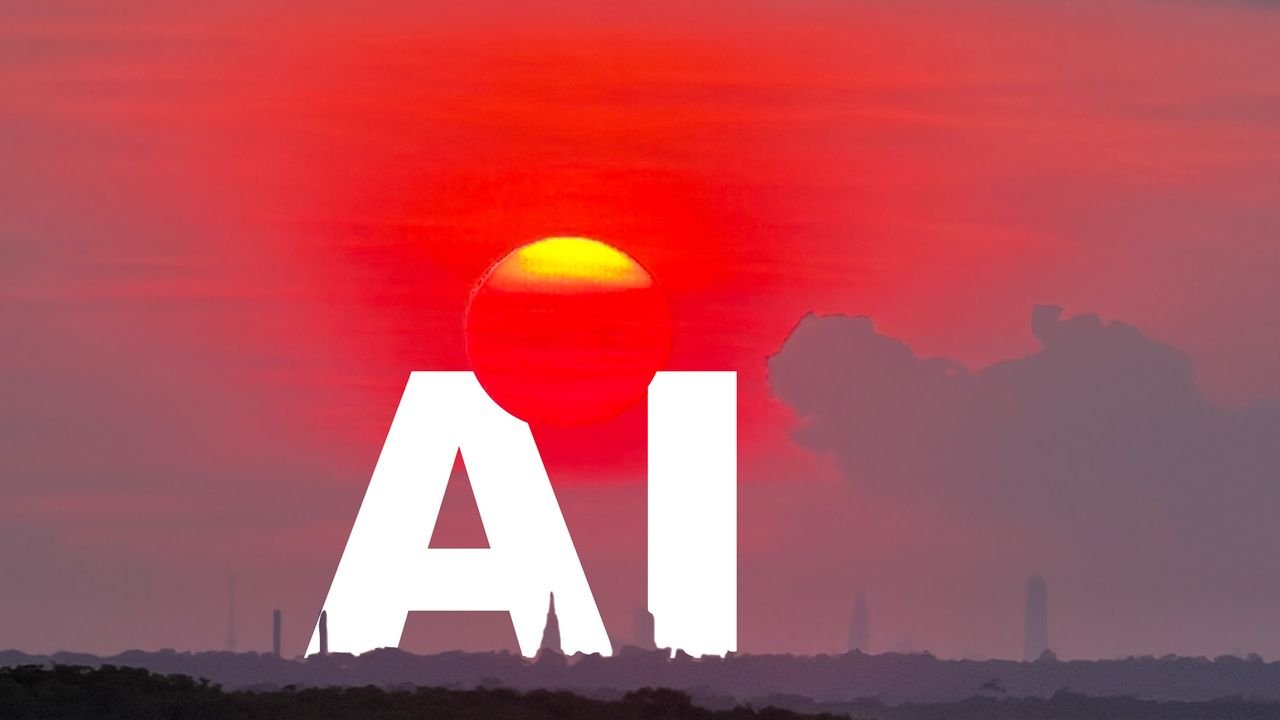
Imagine AI is the sun and businesses are Icarus. By now, most of us are basking in the light of this transformative innovation, which sometimes feels too hot and other times disappears behind clouds so dense we wonder why we ever trusted it in the first place.
Some intrepid businesses not only gaze at AI’s warm light, but openly worship it. They don wings, and fly as close as they can to its surface. The goal: scoop up a bit of that generative magic, and fly back to Earth with agents, which, to carry this insane metaphor further, can be fashioned into people-like workers capable of doing what we do, but at scale and with little-to-no monitoring.
Of course, the flight to AI’s core is dangerous, and so we have episodes like Meta’s recent Quixotic adventure which, according to an extensive Reuters report, saw it attempt to transform a vast portion of its workforce (reportedly 60%) into AI agents overseen by a much smaller set of highly skilled workers.
That Meta’s wings almost immediately started smoking from its proximity to the AI core is no surprise, at least not to me.
Slow down
I talk and write about AI a lot, and I’ve been covering it in some form or another for almost 25 years, back when companies like IBM and Microsoft were the AI leaders, and we thought Deep Blue beating Kasparov was the apex of what we could expect from artificial intelligence.
Modern generative AI burns far brighter, and shows in real time such vast potential that enthusiasm is not just rampant; it’s out of control.
AI agents, which Meta apparently started using at scale, are driving much of this mania. These automated tools offer the promise of handling drudgery-filled tasks in innumerable businesses, and could solve not just productivity problems, but be the answer to workforce issues, including hiring problems, underperformers, and burnout. Agentic AI can not just handle repetitive tasks; it can cobble together disparate systems to complete work.
From Meta’s perspective, especially as a company that is primarily a software business, AI that could work across tools and systems to not only help keep things running but build new work (under the supervision of a smaller set of super-performers) probably seemed like the perfect solution.
Conclusions like this are not exclusive to Meta or companies of its size. Conversations about the use of AI in business persist in every industry and at every level.
AI has gone to work in healthcare, retail and e-commerce, manufacturing, financial services and banking, entertainment, and media. All with varying degrees of success and implications.
It’s a stunning fact when you consider that we only met OpenAI’s ChatGPT in 2022. Never has a technology so quickly infiltrated every facet of life, and so consumed daily conversation. AI Time is triple time (3x the speed of any previous innovation), and that includes adoption.
There is, at least in business, a shocking level of trust in what is still, in many ways, an untested solution. I’m not saying AI does not work, but there is the assumption right now that it works in every situation.
Certainly, if the Reuters report is accurate, and Meta essentially verified 90% of it (it claims it was never planning on laying off 60% of its workforce), Meta is guilty of this.
Do you smell something burning?
With AI, the act of implementation and business transformation tend to happen in parallel, so as Meta was planning and enacting its reorganization and layoffs, it was already employing Agentic AI.
“Infrastructure teams were also warning of ‘reliability warning signs’ caused by the AI coding surge, according to an internal post,” wrote Katie Paul for Reuters.
There was, the author adds, evidence that these issues (and basically faulty work) were visible in June when hackers used Meta’s AI chatbot to hack celebrity Instagram accounts.
Between that and what appears to be a company revolt (my favorite part was the bathroom stall notices encouraging people to protest Meta’s use of keystroke tracking), it was clear Meta has gone too far, too fast with AI for everyone’s tastes.
In the end, with its feathers on fire, Meta retreated from the AI sun (or at least its plan) and canceled layoffs and even undid some of the reorg.
The lesson here is not that AI is too dangerous to approach closely or that AI and business are a bad match. But, as we are seeing, pronouncements that AI would transform businesses without removing or replacing jobs were misinformed, and allowing AI to produce work without adequate human oversight at every stage of the process is, for the time being, ill-advised.
As Mark Zuckerberg tries to rewrite his own script to be more people-first, it might be time for everyone to take a beat and reassess how AI fits into their businesses, workflow, and life.
AI might feel like the sun, but it can’t be our sole source of light and warmth. It’s still just another tool — sure, a powerful and incredibly fungible one, but still a tool — and overreliance on it will undoubtedly lead to frustration or worse.
Meta learned a hard lesson: your AI plans must be grounded in a human-centric approach; otherwise, the humans will rise up and clip your wings.
This articles is written by : Nermeen Nabil Khear Abdelmalak
All rights reserved to : USAGOLDMIES . www.usagoldmines.com
You can Enjoy surfing our website categories and read more content in many fields you may like .
Why USAGoldMines ?
USAGoldMines is a comprehensive website offering the latest in financial, crypto, and technical news. With specialized sections for each category, it provides readers with up-to-date market insights, investment trends, and technological advancements, making it a valuable resource for investors and enthusiasts in the fast-paced financial world.