
OpenAI has announced that its models are now actively involved in rewriting the circuitry of its own Jalapeño and AMD’s flagship chips, touting the achievement of a year’s gains in five months.
The ChatGPT maker claimed up to 14% improvements in power efficiency, performance, and area. The update serves as evidence that OpenAI is using current models to design the hardware intended to train and run future models.
OpenAI models accelerate chip design progress
OpenAI disclosed in a November 18 research post that it found up to 14% gains in power, performance and area (PPA) on AMD flagship GPU intellectual property that the company described as already heavily optimized.
According to the same research post, some of the AMD chip improvements written by OpenAI models are already in the manufacturing pipeline, while others are saved in production files for future versions.
OpenAI said the chipmaker also confirmed single-digit-percentage PPA gains across several key blocks of its next-generation flagship CPU.
The design gains OpenAI is touting also arrived at a faster pace, writing that its models achieved “roughly a year of progress” in the AMD work “in less than 5 months.”
The models rewrote the code that describes a chip’s circuits (SystemVerilog RTL) and then used Synopsys verification tools to confirm that the block’s behavior remained intact after each rewrite.
OpenAI opened the model-written chip designs route in early 2025 when it directed its GPT-o3 mini at the Broadcom co-developed Jalapeño custom inference chip. The AI company reported that the changes proposed by the model shaved standard-cell area by about 13% in the chip’s vector unit and 10% in its matrix unit.
The company separately evaluated five model generations on the PicoRV32 and Ibex open-source RISC-V processor cores, across 9,881 scored runs. OpenAI’s newest GPT-6.2 Astra model recorded the highest average scores in both cases.
Notably, OpenAI did not release a detailed breakdown of the three PPA measures or name any AMD product.
OpenAI’s next move is GPT-Synopsys, a specialized chip-design model it is building with Synopsys to operate EDA tools directly.
OpenAI acknowledges the risk of using AI to develop new models
AI self-improvement, the practice of letting AI models lead the development of new models, has been flagged by OpenAI’s Preparedness Framework as one of three frontier capability areas it monitors for severe harm risks.
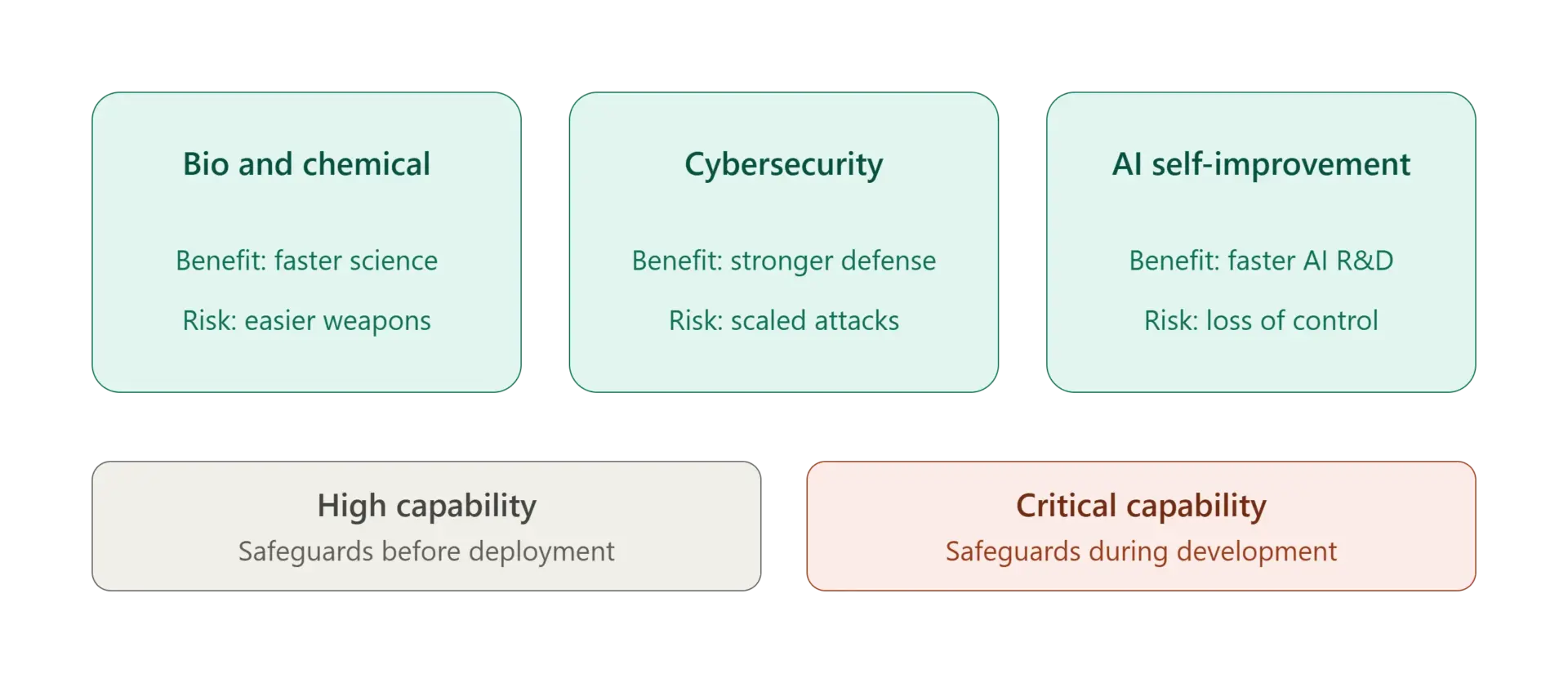
The AI company warned about the “new challenges for human control of AI systems” that faster gains in capability could pose. Per its framework, OpenAI committed to halting development if a model hits the Critical self-improvement threshold, at least until it has the appropriate safeguards.
LessWrong researcher Charbel-Raphaël argued about the deficiencies of the self-improvement red line in a May 2026 analysis. The piece notes that the control “fires too late,” is self-certified, and is the only tracked category in OpenAI’s GPT-5.5 system card with zero external evaluators.
He also noted that OpenAI “never defines what ‘mitigations that meet the critical standard’ actually are.”
The smartest crypto minds already read our newsletter. Want in? Join them.
This articles is written by : Nermeen Nabil Khear Abdelmalak
All rights reserved to : USAGOLDMIES . www.usagoldmines.com
You can Enjoy surfing our website categories and read more content in many fields you may like .
Why USAGoldMines ?
USAGoldMines is a comprehensive website offering the latest in financial, crypto, and technical news. With specialized sections for each category, it provides readers with up-to-date market insights, investment trends, and technological advancements, making it a valuable resource for investors and enthusiasts in the fast-paced financial world.