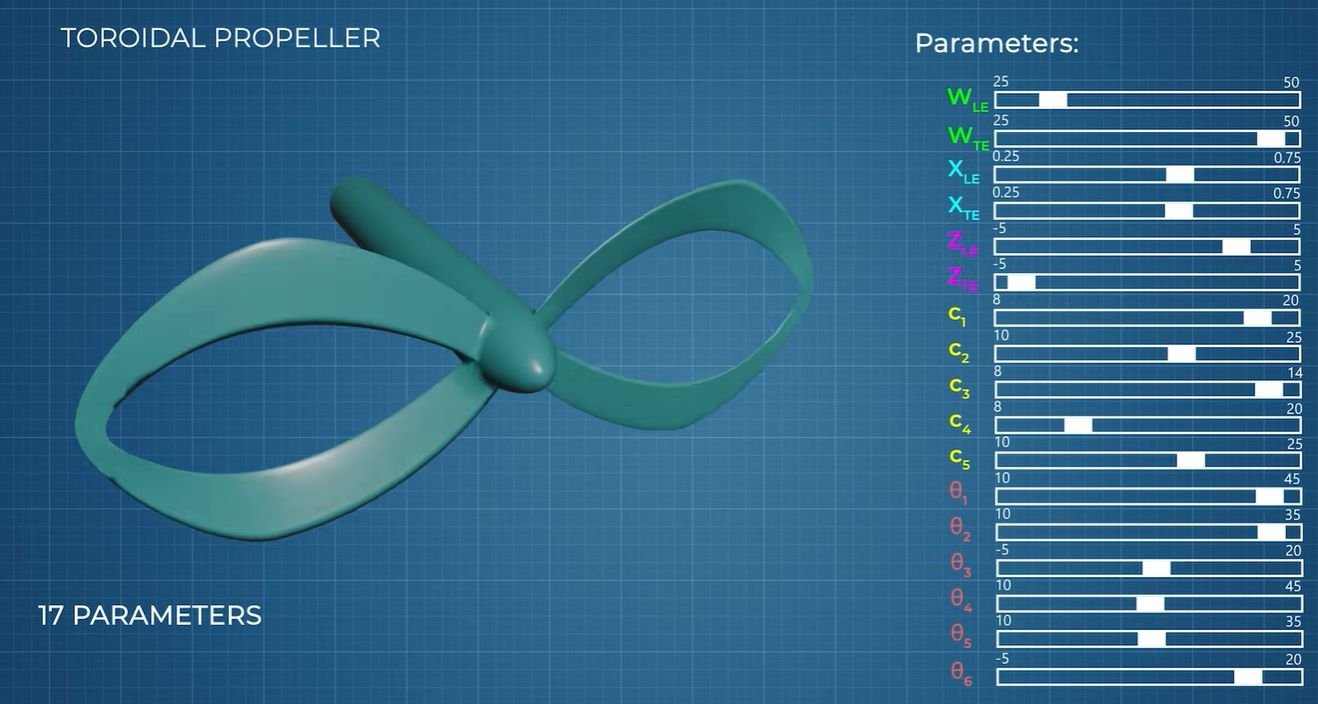
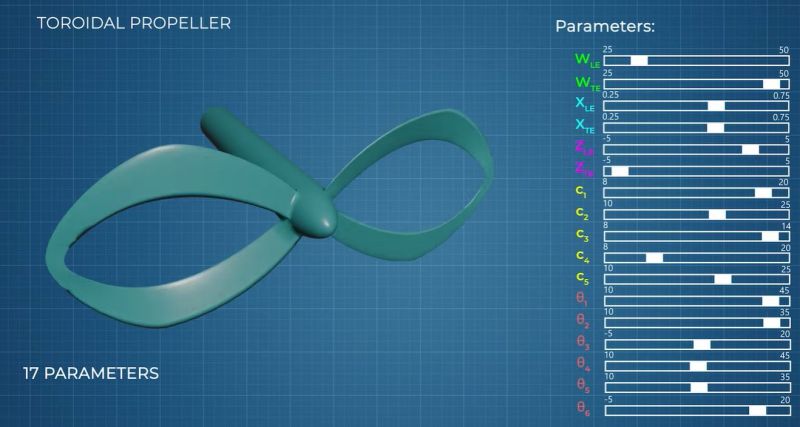
Although we often think that we got certain aspects of aerodynamics pretty much licked at this point, details like the optimal shape of a propeller remains hotly debated, both in- and outside of academics. This also includes wilder designs like toroidal propellers that even after more than a hundred years are still mostly just being evaluated. Recently [Neuronautics] took a shot at figuring out whether toroidal propellers even make sense.
In order to do this, first an efficiency baseline was established using a conventional and highly optimized propeller. After scanning it in to get its exact geometry and running it through a computational fluid dynamics (CFD) simulation, the software spat out a number of about 73%.
This left figuring out an optimized shape for the toroidal propeller to pit against it. While you can absolutely brute-force the seventeen shape parameters being considered here and test them in CFD, this would take insanely long. The hack here is to use multiple reference frame (MRF) to drastically speed up the selection process, though even then it still took two months. An example of using MRF with regular propellers is discussed in a 2019 paper by [Randi Franzke] et al. in Energies.
Although MRF saves a lot of simulation time, you still end up with a lot of data that has to be analyzed for interesting patterns. For this [Neuronautics] trained a artificial neural network to automate filtering the many options for the most optimal ones, until converging onto a single design.
This G1401 design was the lucky winner, though with only a simulated 62.9% efficiency. Subsequently the one aspect that had been left unchanged was also iterated through, in the form of many different airfoil shapes until the final design appeared.

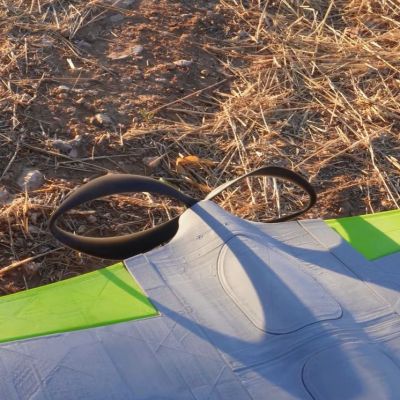
This design was then 3D printed in resin, which showed the first hurdle with the selection process, in that the printed versions were too thin and flexible to be usable as propellers. Cue many hours of manual tweaking of the design to make it actually printable.
Although the final design didn’t exceed 62% efficiency in a final test, the comment section to the video rightfully points out that the comparison was between a commercially made propeller and a DIY resin-printed one, which adds a whole other batch of variables. That said, it’s unlikely that there’d have been an obvious improvement either way, otherwise we’d already have seen toroidal propellers pop up everywhere on drones and aircraft.
This articles is written by : Nermeen Nabil Khear Abdelmalak
All rights reserved to : USAGOLDMIES . www.usagoldmines.com
You can Enjoy surfing our website categories and read more content in many fields you may like .
Why USAGoldMines ?
USAGoldMines is a comprehensive website offering the latest in financial, crypto, and technical news. With specialized sections for each category, it provides readers with up-to-date market insights, investment trends, and technological advancements, making it a valuable resource for investors and enthusiasts in the fast-paced financial world.