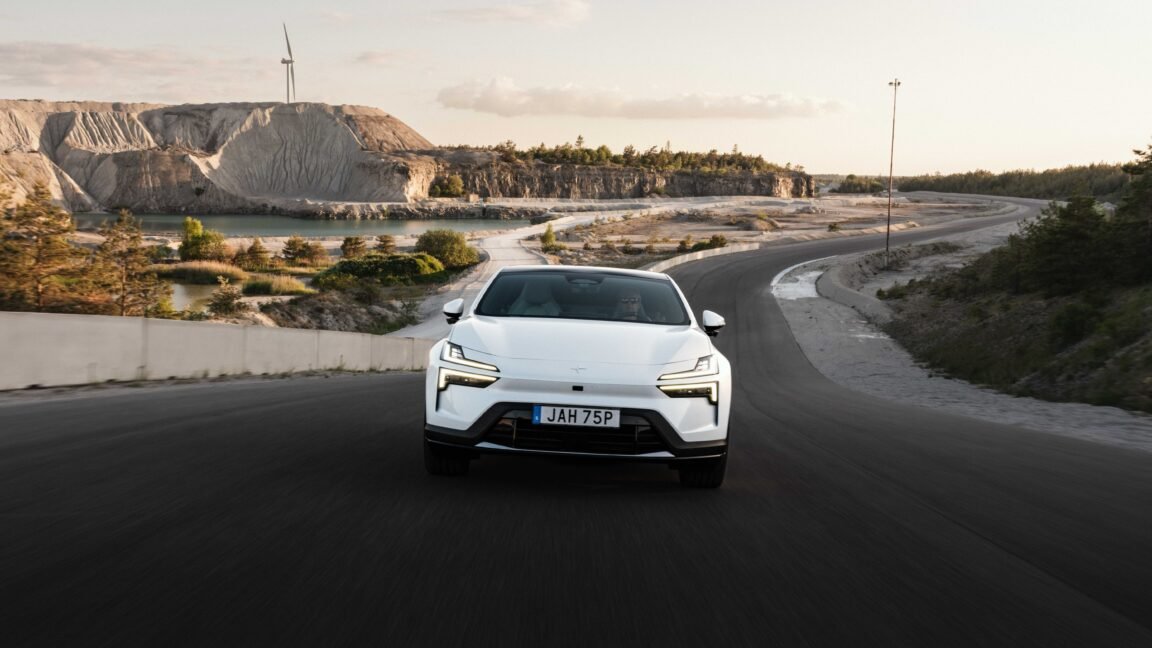
The human desire to go fast is old, dating back at least as far as the first time some adventurous Yamnaya saw a horse on the Pontic-Caspian steppe and thought, “I bet if I jumped on that thing’s back, it would be faster than walking.”
A thousand years later, someone else invented the wheel—and the chariot—and humanity was ready to roll. Now, about five millennia since that first horseback ride, equestrianism is mostly a leisure activity, and we drive cars, propelled by motors with more power than an entire herd of beasts could muster.
Acceleration, top speed, and lap times are the usual ways we quantify that performance, and performance electric vehicles are currently in an arms race to see which one can hit 60 mph in the least amount of time. But measuring a car’s performance is easy—all you need is a stopwatch and a track. How about measuring the effect of car performance on the driver? That’s a question Polestar is trying to answer with researchers at the University of Oxford.
This articles is written by : Nermeen Nabil Khear Abdelmalak
All rights reserved to : USAGOLDMIES . www.usagoldmines.com
You can Enjoy surfing our website categories and read more content in many fields you may like .
Why USAGoldMines ?
USAGoldMines is a comprehensive website offering the latest in financial, crypto, and technical news. With specialized sections for each category, it provides readers with up-to-date market insights, investment trends, and technological advancements, making it a valuable resource for investors and enthusiasts in the fast-paced financial world.