
- Russia has updated the concept of barrage balloons to defend oil refineries
- Barrage balloons were first deployed over 100 years ago to defend against air raids
- It is not clear what the measures are defending against, as they only appear suitable for disabling smaller drones
Russia has deployed barrage balloons around its oil refineries to defend against Ukraine drone attacks – but the demonstration using a small drone has raised questions about the effectiveness of the measure.
Protecting oil refineries from drone strikes is key to Russia’s economic strength and supports its efforts in the invasion and occupation of Ukraine. But while the barrage balloons employ intriguing radar-based altitude-adjusting motors to ensure drones are slowed or caught, the deployment seems unsuited to the drones Ukraine would actually send for such a strike.
Sharing the information via Telegram, the Vesti news organization has reported on the deployment of the modern barrage balloons. But the report has a sense of propaganda, rather than portraying a competent military defense strategy.
Oil refinery targets
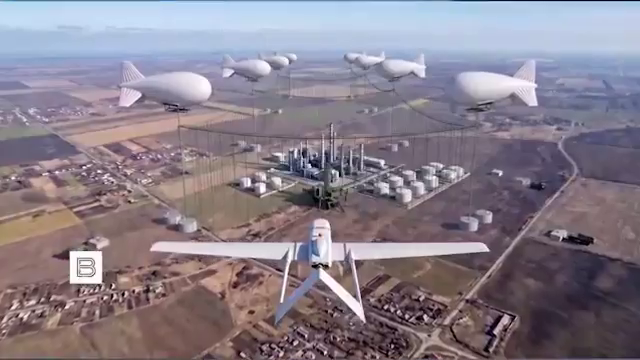
Russia’s defense of its oil refineries from Ukrainian drone strikes has so far relied on balloon-attached nets, which are designed to create a barrier. The problem with that solution is that drones can just fly over the net.
So, its latest solution is a series of cables, elevated by barrage balloons, and a system of motors that adjusts the height of the balloons and the cables. This is controlled by a system that uses radar information to detect the height of the incoming drone strike. So far so good – it seems like a sound deployment
But is it successful? To date, the strategy hasn’t been tested. Demonstrations, such as the one shared on Telegram, indicate that smaller unmanned aerial vehicles might run into trouble. However, the demo uses a smaller craft, and it isn’t unreasonable to foresee Ukraine mounting its drones’ wings with blades to cut through the cables…
V1s and UAVs
The original deployment of barrage balloons occurred towards the end of the First World War, when Britain and Germany both employed the countermeasure. Their targets were early aircraft engaging in bombing raids, and the use of balloons was successful enough to be repeated by Britain again in the 1940s to defend against V1 rockets.
Launched from Nazi Germany’s territory, the V1s were essentially single-use drones, rockets deployed with enough fuel to reach the target. But in the 1940s, the use of barrage balloons took out around 200 V1s as they descended onto their targets, but were ineffective against high altitude bombers.
The deployment of barrage balloons by Russia in an attempt to defend its oil refineries appears almost ingenious. But a few moments of analysis indicate the unsuitability of the countermeasure for drones and UAVs, leaving us to suspect that this could merely be some elaborate propaganda.
This articles is written by : Nermeen Nabil Khear Abdelmalak
All rights reserved to : USAGOLDMIES . www.usagoldmines.com
You can Enjoy surfing our website categories and read more content in many fields you may like .
Why USAGoldMines ?
USAGoldMines is a comprehensive website offering the latest in financial, crypto, and technical news. With specialized sections for each category, it provides readers with up-to-date market insights, investment trends, and technological advancements, making it a valuable resource for investors and enthusiasts in the fast-paced financial world.