The SEC is changing its enforcement strategy in the cryptocurrency domain to concentrate more on fraud and investor losses. During a podcast on October 16, Chairman Paul Atkins and Enforcement Director David Woodcock highlighted the need for clarity in the rules and for harsher actions against deliberate misconduct. For the industry, the clearer rules will not provide it with immunity from prosecutions.
“Back to basics” instead of case counts
The changing strategy of the SEC towards enforcement goes beyond just the fact that it files a smaller number of cases. Woodcock wants investigators to focus on the type of misconduct that causes real losses because he believes that counting the number of cases is not an assessment of success. He explained this in a podcast aired on October 16:
“Back to basics means looking for real investor harm, looking for real intentional misconduct.”
— David Woodcock, SEC Material Matters podcast
According to Atkins, companies must not have to wait for a lawsuit from the SEC to learn about the rules. He believes the rules should be made clear from the start.
“When we talk about not having regulation through enforcement, we’re talking about setting clear expectations, clear rules.”
— Paul Atkins, SEC Material Matters podcast
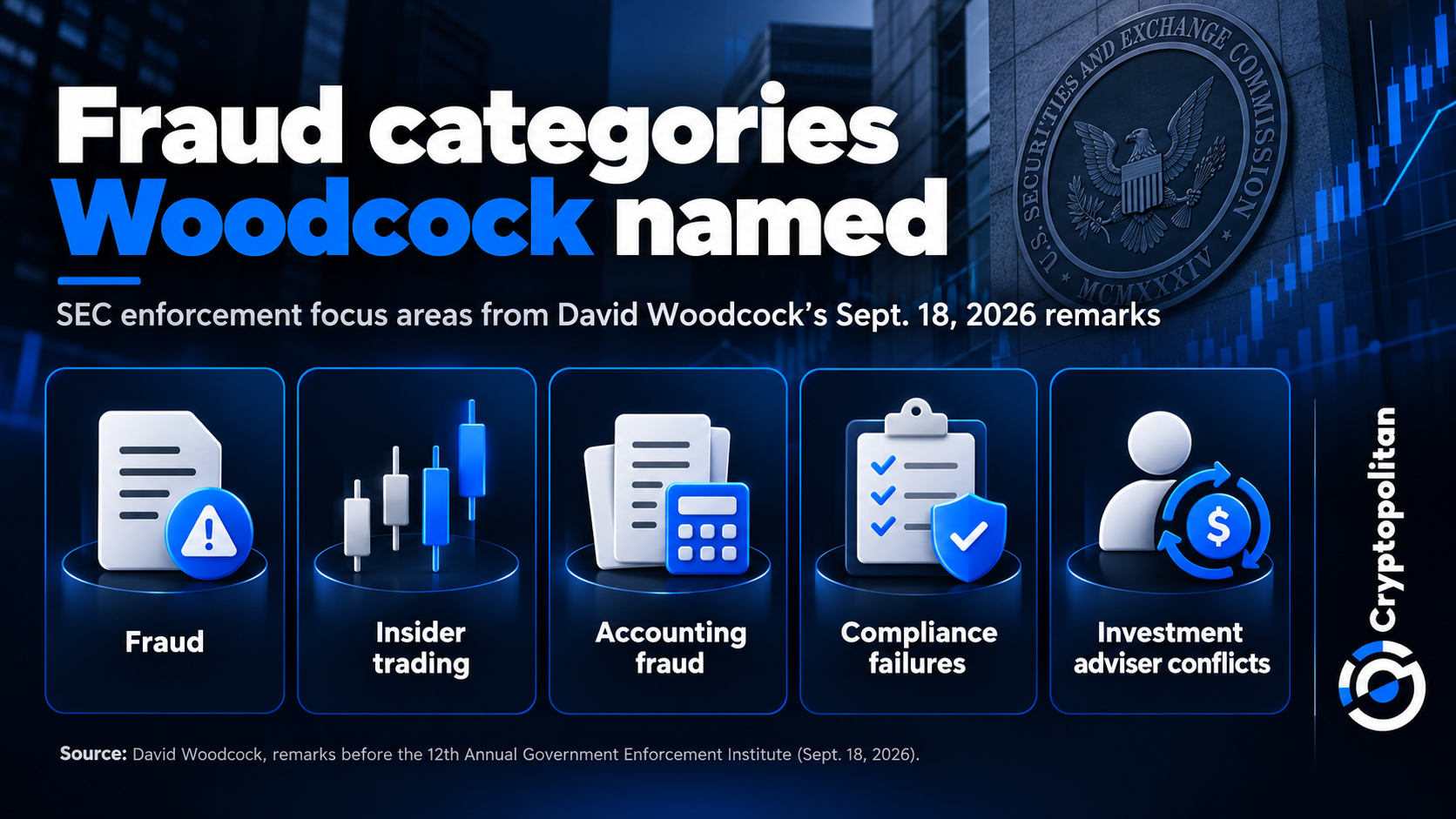
Woodcock’s remarks in September already indicated the development of this strategy. He promised to pursue cases of insider trading, accounting fraud, and compliance failures, and at the same time claimed the number of cases is not sufficient to measure the level of investor protection.
The fraud cases that fit the template
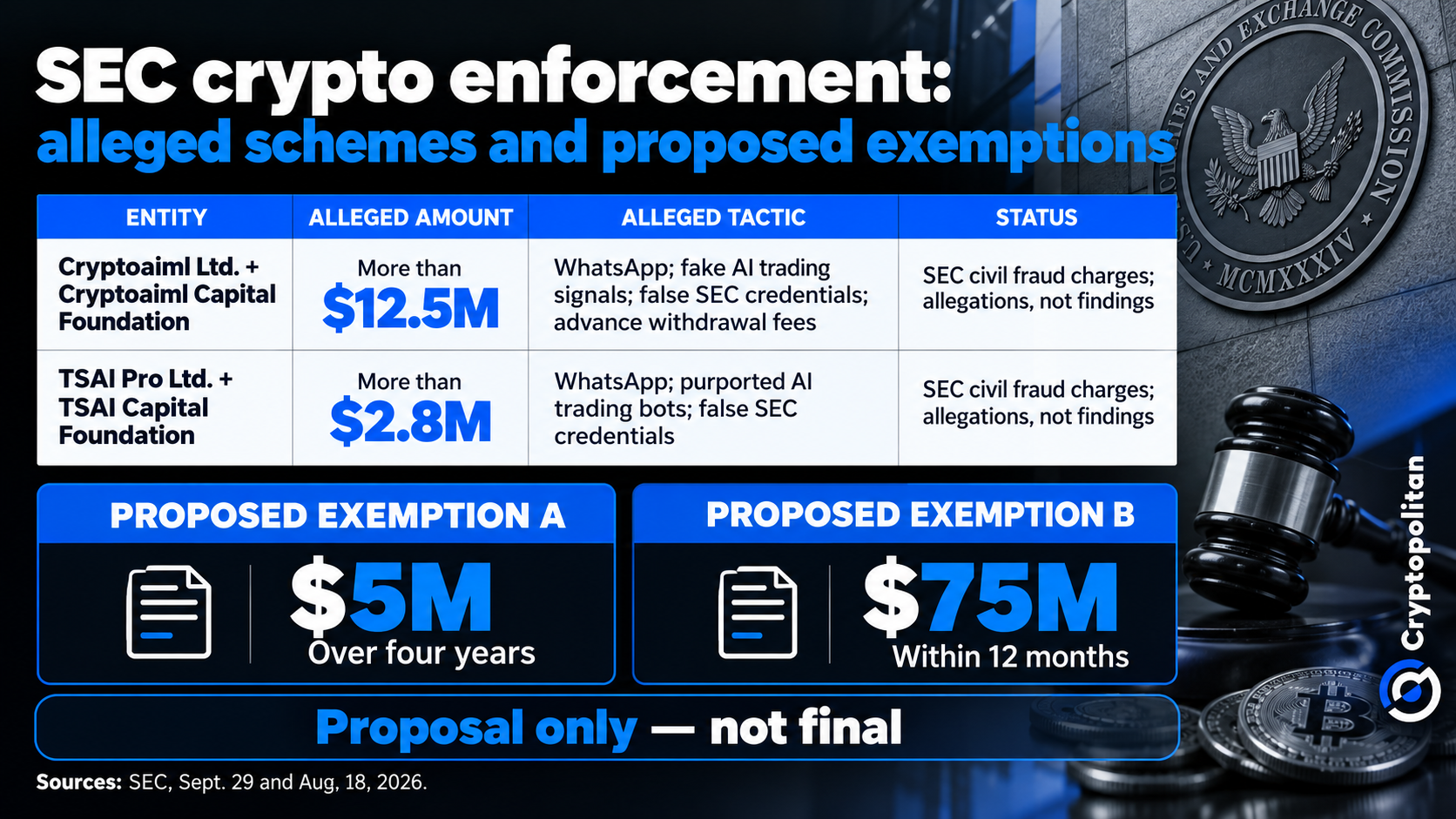
The SEC’s September 29 lawsuits demonstrate the kind of misconduct that Woodcock is asking investigators to pursue. In two separate lawsuits, the SEC claimed that Cryptoaiml Ltd. and Cryptoaiml Capital Foundation stole more than $12.5 million from investors. TSAI Pro Ltd. and TSAI Capital Foundation allegedly stole another $2.8 million. Both cases involve allegations that have yet to be proven in court.
As per the SEC, the companies utilized WhatsApp to earn the trust of investors while pretending to have received regulatory approval. Cryptoaiml promoted AI trading signals with made-up gains and required clients to pay fees before being able to withdraw their money. TSAI promised returns through AI trading bots that allegedly never existed.
The lawsuits show where the SEC is drawing the line: clearer crypto rules won’t protect businesses accused of deceiving investors and taking their money.
Clearer rules that are still mostly on paper
The SEC has also been working towards clarifying the relevant regulatory framework to crypto companies. In a March 17 interpretation, issued together with the CFTC, the agency clarified that most crypto assets are not securities in themselves. However, how those assets are offered or sold can still bring them under securities laws.
A proposal released on August 18 can simplify the fundraising process. It features exemptions for both offerings under $5 million that occur over a timeframe of four years and under $75 million within a 12-month period. It also suggests a conditional safe harbor to clarify when investment contract status ceases to exist.
Currently, the proposed changes remain just that – proposals. Crypto companies still don’t know when the changes may come into effect and what the changes will ultimately look like in practice.
Lawsuits and disclosure risks
Having clearer regulations will not get rid of the legal challenges. Skadden indicated that lawsuits could arise from false commitments made by issuers, as well as misleading transitional disclosures. The SEC formed a Financial Reporting and Accounting Unit to address this problem, led by Timothy Zimmerman. Its goal is to target any misconduct relating to reports or disclosures, which can also place pressure on crypto companies.
A global scam problem and a market that held
Crypto scams pose great challenges worldwide. Chainalysis said that $14 billion has already been traced to scammers in 2025 and that the number may reach close to $17 billion. Scams linked to AI were particularly lucrative, bringing in 4.5 times more per operation than those without identified AI-vendor links.
Despite these losses, people still use cryptocurrency. Chainalysis reported $9.4 trillion in global crypto activity in the year through June 2026, a drop of just 1.6%. This happened despite the market having almost lost half its value.
For regulators, the challenge is to protect investors from fraud without making it difficult for legitimate crypto businesses to operate. How well the SEC manages that balance could matter far beyond the US.
Don’t just read crypto news. Understand it. Subscribe to our newsletter. It’s free.
This articles is written by : Nermeen Nabil Khear Abdelmalak
All rights reserved to : USAGOLDMIES . www.usagoldmines.com
You can Enjoy surfing our website categories and read more content in many fields you may like .
Why USAGoldMines ?
USAGoldMines is a comprehensive website offering the latest in financial, crypto, and technical news. With specialized sections for each category, it provides readers with up-to-date market insights, investment trends, and technological advancements, making it a valuable resource for investors and enthusiasts in the fast-paced financial world.