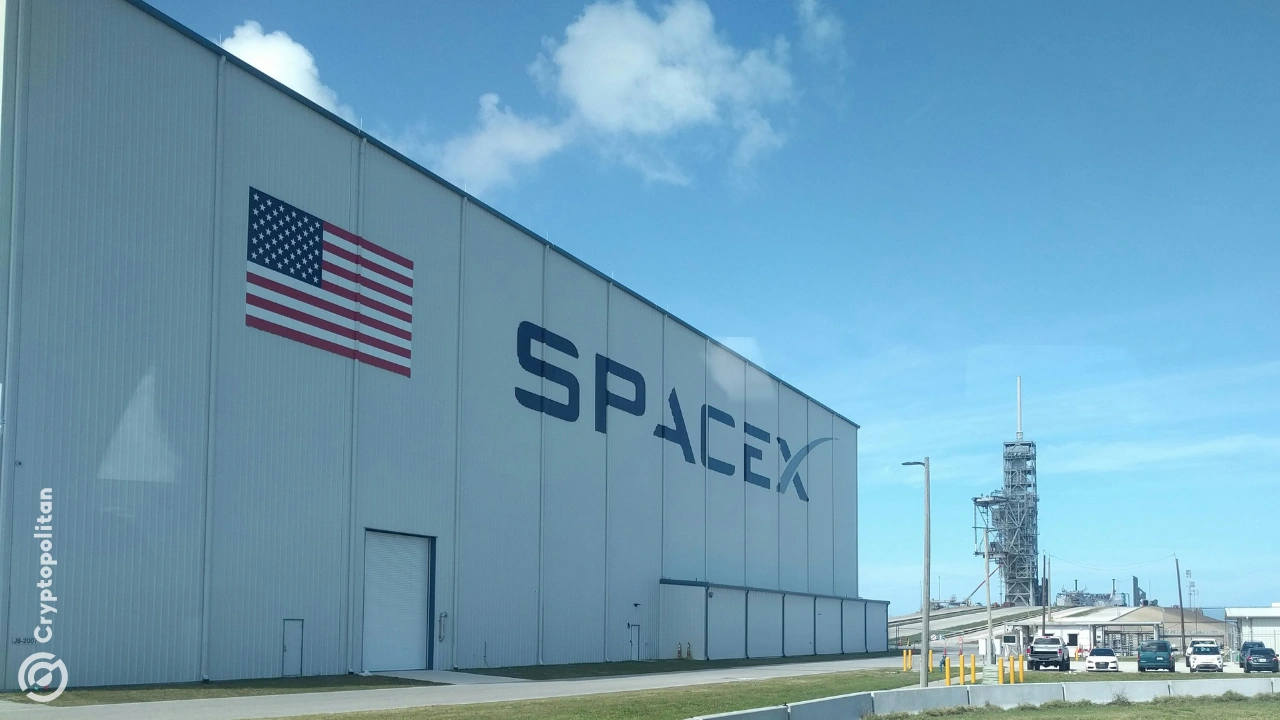
SpaceX President Gwynne Shotwell told FAA Administrator Bryan Bedford the company is targeting 10,000 rocket launches a year within five years. “I don’t think today we’re the limiting factor,” Bedford added.
The target aligns with Elon Musk’s March 31 post on X: “In 4 or 5 years, there will be a launch every hour.” Hourly launches would total about 8,760 annually.
SpaceX currently flies about 160 orbital missions a year. It completed 154 launches in 2025 and hit 50 by late April 2026, per SpaceDaily. The entire world managed about 250 launches last year.
The 10,000 target represents a roughly 60-fold increase over SpaceX’s own current pace and a 40-fold increase over global output.
SpaceX needs 51 times its current FAA approval to hit the target
The FAA has approved SpaceX for a combined 195 launches per year across its four active sites. Starbase in Texas holds a 25-launch annual cap after the FAA raised it from 5 in May 2025.
Kennedy Space Center’s Launch Complex 39A was cleared for 44 Starship launches per year in a February 2026 environmental impact statement. Two new Starship pads at Cape Canaveral Space Force Station can handle 76 annually. Vandenberg in California was recently approved for 50 Falcon 9 launches, up from 36.
Getting from 195 approved launches to 10,000 requires more than building rockets. Laura Forczyk, founder of space consultancy Astralytical, has said the challenge extends to “airspace integration, supply chain and regulatory scaling.”
Casey Dreier of The Planetary Society has argued it would mean “moving from bespoke launch licensing to something closer to airline-style operational approvals.”
Starship V3 is behind schedule and two test flights have failed
Falcon 9 cannot sustain the kind of frequency Shotwell described. Its current pace of one launch every two to three days is already the fastest sustained cadence any orbital rocket has achieved. The 10,000 target depends on Starship reaching full reusability and rapid turnaround.
SpaceX’s next Starship flight test is scheduled for no earlier than May 21 from Starbase. The mission will test upgraded versions of both Super Heavy and Starship, deploy 20 Starlink satellite simulators, and attempt a booster landing at sea.
Two earlier test flights broke apart during flight. The V3 variant is behind the original schedule.
FAA Deputy Associate Administrator Minh Nguyen said at the ASCEND 2026 conference on May 19 that the agency expects “another 1,000 launches and reentries, likely in the next four or five years. SpaceX’s stated target is ten times higher.
Don’t just read crypto news. Understand it. Subscribe to our newsletter. It’s free.
This articles is written by : Nermeen Nabil Khear Abdelmalak
All rights reserved to : USAGOLDMIES . www.usagoldmines.com
You can Enjoy surfing our website categories and read more content in many fields you may like .
Why USAGoldMines ?
USAGoldMines is a comprehensive website offering the latest in financial, crypto, and technical news. With specialized sections for each category, it provides readers with up-to-date market insights, investment trends, and technological advancements, making it a valuable resource for investors and enthusiasts in the fast-paced financial world.