Jane Schoenbrun has long established herself as a unique and powerful voice in queer independent cinema. In both her debut feature, We’re All Going to the World’s Fair, as well as her breakthrough hit, I Saw the TV Glow, Schoenbrun has shown a mastery for capturing the queer experience on film in a beautiful and mesmerizing way like no other. However, Teenage Sex and Death At Camp Miasma may be her most impactful and brilliant work yet, and should cement her as one of the most interesting and important filmmakers working in the industry today.
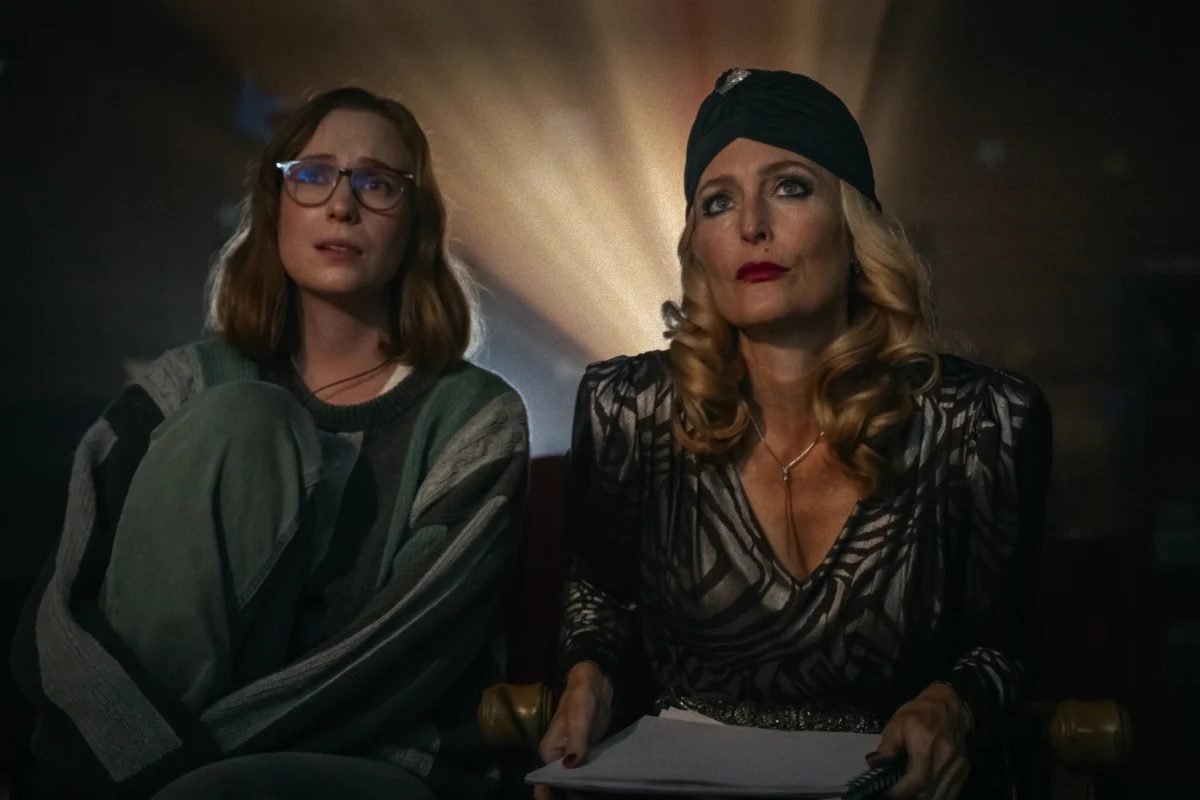
On the surface, Teenage Sex and Death At Camp Miasma is an ode to the ‘80s slasher films or yore. Following a young filmmaker, played by Hacks star Hannah Einbinder, as she is tasked with reviving a long dead and controversial horror franchise, the titular, Camp Miasma. This leads her to seek out the original film’s reclusive final girl, played by Gillian Anderson, and the two quickly find themselves entangled in something much deeper than simply resurrecting “zombie IP”.
In the same way that Gillian Anderson prepares an elegant feast of KFC for Einbinder’s director in the movie, Schoenbrun delivers the audience a bountiful meal of pleasure and excess on an arthouse silver platter. It is a perfect metaphor for the slasher sub-genre of the ‘80s and ‘90s, and Schoenbrun’s exploration of forbidden desire and the complex relationship between queer identity and sex. After all, as Anderson’s character so plainly puts it, these films are about two things– flesh and fluids.
The layers of the film go so much deeper, however. Exploring not only themes of queer love, but also meta commentary on the film industry and its current cycle of IP regurgitation and creative bankruptcy. Undoubtedly a reflection of Schoenbrun’s own experiences navigating their career leading up to this film. The director herself admitted that the road to getting Camp Miasma made was a long and challenging one, even despite her proven success.

Beyond the dazzling visual spectacle of Camp Miasma, the real power of the film is in the magnetic chemistry between the two leads, Hannah Einbinder and Gillian Anderson. That’s not to say there aren’t standout performances in the supporting ensemble– Einbinder’s agent played by Sarah Sherman, and the delightfully cast comprising the Camp Miasma movie within a movie are all wonderful.
However, the movie is Einbinder and Anderson. Well, and of course, Little Death, played by Jack Haven. The complex and ever evolving dynamic of tension between the leads–and their looming symbol of repressed desire–is the heartbeat that gives the film life and meaning. Every look, every bated breath, every lingering touch reverberates throughout the narrative.
That said, it’s clear Schoenbrun has a deep love of the genre with which they have chosen to immerse their film in as well. There are obvious aesthetic and narrative nods to classic camp slashers like the Friday the 13th and Sleepaway Camp films, but the slasher roots run much deeper.
One of the most beautiful scenes of the film involves Haven’s killer, Little Death, going on their bloody rampage through an extended sequence of the original Camp Miasma film. In it, we see the perspective of the montage slowly shift from Little Death’s POV (in traditional slasher style), as it slowly transforms into a surprisingly intimate and heartbreaking reversal on Little Death’s mask. Where, though a small opening at the center, we can see Haven’s eyes, drenched in blood and painting a picture worth a thousand words.

The subtle nuance aside, the film plants its tongue firmly in cheek from the get go, and doesn’t shy away from its clear inspirations and parallels. These include numerous references to Sunset Boulevard, and a hilarious bit acknowledging the meta, fourth-wall bending similarities of Wes Craven’s New Nightmare. You know, “Frightmaster” Wes Craven.
However, like I Saw the TV Glow and its heavy influence from ‘90s shows like Buffy the Vampire Slayer, Teenage Sex and Death At Camp Miasma merely uses these genre tropes in service of a more intimate and personal exploration of queer identity. And that is what makes Camp Miasma and Jane Schoenbrun as a filmmaker so special.
While it may not land with all audiences, for those that it does resonate with, Camp Miasma is a delicious feast of campy forbidden pleasure that will stay with you long after the credits roll.
Teenage Sex and Death at Camp Miasma ⭐ (5 of 5)
Teenage Sex and Death at Camp Miasma will hit theaters on August 7.
The post TEENAGE SEX AND DEATH AT CAMP MIASMA Is a Transformative Work of Queer Cinema appeared first on Nerdist.
This articles is written by : Nermeen Nabil Khear Abdelmalak
All rights reserved to : USAGOLDMIES . www.usagoldmines.com
You can Enjoy surfing our website categories and read more content in many fields you may like .
Why USAGoldMines ?
USAGoldMines is a comprehensive website offering the latest in financial, crypto, and technical news. With specialized sections for each category, it provides readers with up-to-date market insights, investment trends, and technological advancements, making it a valuable resource for investors and enthusiasts in the fast-paced financial world.