There is a moment that repeats itself throughout The Boys, though the details constantly change. A character stands before cameras, livestreams, or cheering crowds and realizes something intoxicating: being seen matters more than being good. That revelation powers nearly every major tragedy in the series.
For all its graphic violence, exploding bodies, parodies, and corporate satire, The Boys may ultimately be one of television’s best examinations of modern attention addiction. Not fame in the traditional sense, but the constant pressure to remain relevant. In the world of The Boys, attention functions as currency, validation, influence, and identity all at once. The characters admire it and rely on it as a survival tool. And increasingly, so do we.

According to data from the Pew Research Center, this fixation isn’t just a Hollywood pathology; it is a defining feature of contemporary American culture. In their studies on teen digital habits, 29% of teenagers reported feeling immense pressure to post content that would garner high volumes of likes or comments, while the vast majority noted that social media platforms now function as their primary ecosystem for connection and validation.
In other words, attention is no longer an asset exclusive to celebrities. For a generation of younger Americans, being seen has become fundamentally intertwined with belonging and status. Over its entire run, The Boys held up a mirror to this reality, proving that in a world governed by algorithms, the most dangerous superpower of all is the desperate need to be noticed.
Homelander Craves Attention More Than Power
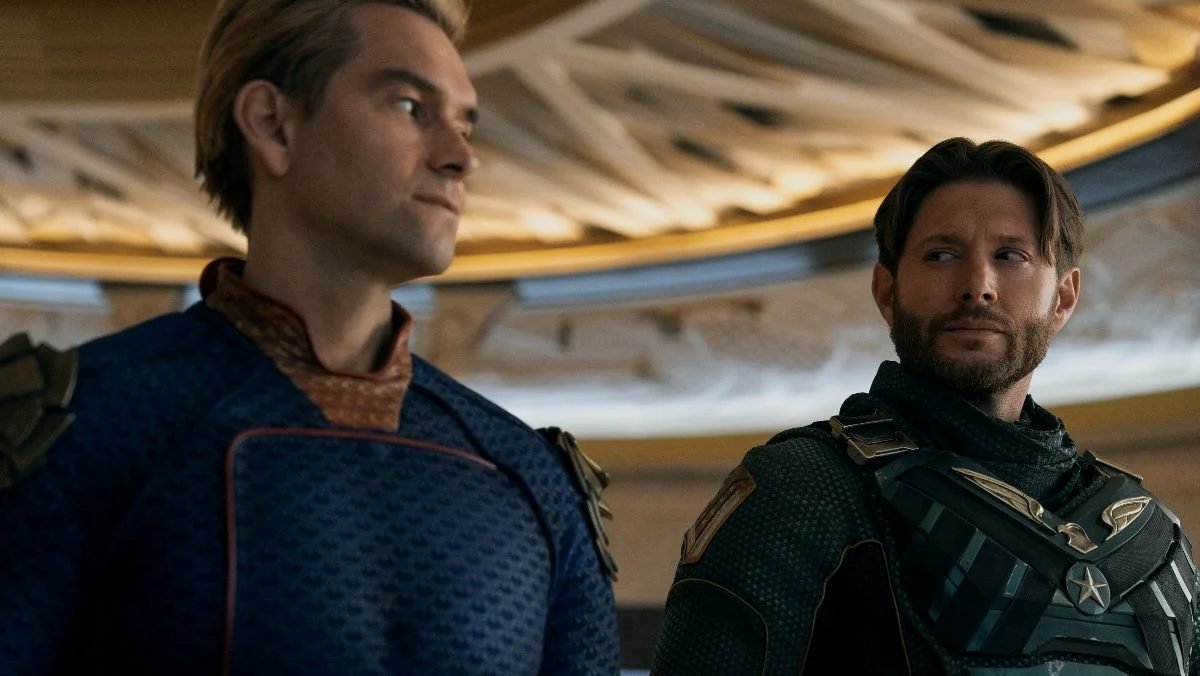
No character embodies that terror more completely than Homelander (played by Antony Starr). What makes Homelander frightening is not just his powers and abilities. Popular culture is filled with violent men. What makes him disturbingly recognizable is his emotional dependence on public affirmation and his desperate, toxic desire for family approval (namely, his father Soldier Boy). His ego and mental state got so bad that he wanted to be worshiped like a god. Every smile, every chant, every camera flash functions like psychological fuel. When admiration weakens, he spirals emotionally like a little child. Homelander hungers for control but even more for validation.
That distinction matters because The Boys understands something uncomfortable about modern life. People will often sacrifice morality in exchange for visibility. The show’s world repeatedly rewards performance over sincerity, confidence over competence, and spectacle over truth. Look no further than characters like The Deep and Firecracker, whose narrative arcs are defined by a complete lack of moral dilemmas. They are characters who willingly sacrifice their dignity and moral compass in exchange for Homelander’s approval and the public’s attention.

In many ways, Homelander resembles a modern influencer, media personality, or algorithm-driven celebrity more than a traditional supervillain. Researchers at Harvard Business Review have written extensively about how digital platforms reward outrage, emotional extremity, and constant visibility because engagement itself has become economically valuable. Attention is profitable even when it is destructive. Homelander operates on that same logic.
Vought Understands That Outrage Is Profitable
Vought International thrives not because people believe in heroism, but because it understands how effectively fear, aspiration, and emotional identity can be monetized through media.
The company does not sell superheroes. It sells attention. Every carefully staged apology, every choreographed rescue, every patriotic slogan and empowerment campaign reflects a culture where emotional reactions themselves become products. In one of the show’s most unsettling observations, outrage and admiration begin functioning almost identically. Both generate engagement. Both maintain visibility. Both keep audiences emotionally invested.
These ideas feel less like science fiction every year. A 2022 MIT study examining online misinformation found that emotionally provocative content consistently spreads faster than neutral information across social media ecosystems. Vought’s genius lies in recognizing that attention need not be positive to remain impactful.
Butcher Represents a Different Kind of Attention Crisis
Even Billy Butcher (played by Karl Urban), who positions himself as morally detached from the system, repeatedly turns conflict into a way of life. His war against superheroes gives him purpose and something to believe in. Butcher represents a different response to the attention economy than characters like Homelander. He doesn’t crave public validation. If anything, he views anyone seeking attention with suspicion and outright contempt.
Part of that feels distinctly Gen X. Unlike Gen Z, Gen X came of age before a lot of current social media platforms, when identities were formed without likes, followers, and algorithms shaping every interaction. That doesn’t mean they reject digital culture, but many approach influencer culture with some skepticism. Butcher embodies that distrust. He assumes corporations, politicians, superheroes, and institutions are all corrupt, self-serving, and beyond redemption.

Yet his cynicism becomes its own kind of trap. It is a worldview shaped by decades of scandals, broken promises, and growing distrust of authority. The Boys suggests that cynicism can become just as consuming as narcissism. Homelander needs constant validation from an audience. Butcher needs constant confirmation that the world is as broken as he believes it is. He spends so much time exposing others’ hypocrisy that he struggles to imagine a future beyond fighting it.
Soldier Boy Represents the Last Era Before Attention Became Permanent
Unlike Homelander, Soldier Boy (played by Jensen Ackles) comes from a version of America where fame still had limits. He belongs to what historians and demographers define as the Greatest Generation, the cohort born between 1901 and 1927 that came of age during the hardships of the Great Depression and went on to fight in World War II. Researchers who study generational trends often describe this era as one shaped by personal humility, emotional stoicism, and a clear separation between public duty and private life.
Soldier Boy was built for mid-century television appearances, military propaganda, and old-school celebrity culture, but not for the endless surveillance of the digital age. He expected the kind of admiration that came with walking into a room and instantly commanding respect, along with the privileges he believed came with it. What he never anticipated, however, was the modern demand for minute-by-minute emotional validation from millions of strangers online, or even from his own adult son.

Soldier Boy embodies an older, deeply flawed version of American masculinity that’s emotionally shut down, violent, and obsessed with dominance, but he still carries himself like someone shaped by a world where a public image could eventually switch off. A television interview ended. A commercial stopped airing. A newspaper cycle moved on.
He belongs to a pre-algorithmic era, which makes his arrival in the 2020s feel like a complete system shock. More than anything, Soldier Boy wants respect and to be left alone. With The Boys spin-off Vought Rising arriving next year, we’ll have an opportunity to see the world that he knew and was impacted by.
Why We See Ourselves in The Boys
The lasting appeal of The Boys may be that its central characters are not simply superheroes and villains. They are generational responses to the same cultural problem. Most viewers probably recognize themselves somewhere within that spectrum.
Some miss the privacy Soldier Boy took for granted. Others share Butcher’s distrust of institutions and public figures. And many understand, even if they rarely admit it, the desire to be seen, validated, and remembered that drives Homelander is what drives them, too.

That is what makes The Boys feel so contemporary, because it’s a story about Americans trying to navigate a culture where attention has become one of our most valuable resources.
The true horror of The Boys isn’t that a drug can give someone godlike abilities. It’s that the show understands how easily modern culture can transform attention into power and how difficult it has become to imagine ourselves without it.
The post THE BOYS and America’s Unhealthy Relationship With Attention appeared first on Nerdist.
This articles is written by : Nermeen Nabil Khear Abdelmalak
All rights reserved to : USAGOLDMIES . www.usagoldmines.com
You can Enjoy surfing our website categories and read more content in many fields you may like .
Why USAGoldMines ?
USAGoldMines is a comprehensive website offering the latest in financial, crypto, and technical news. With specialized sections for each category, it provides readers with up-to-date market insights, investment trends, and technological advancements, making it a valuable resource for investors and enthusiasts in the fast-paced financial world.