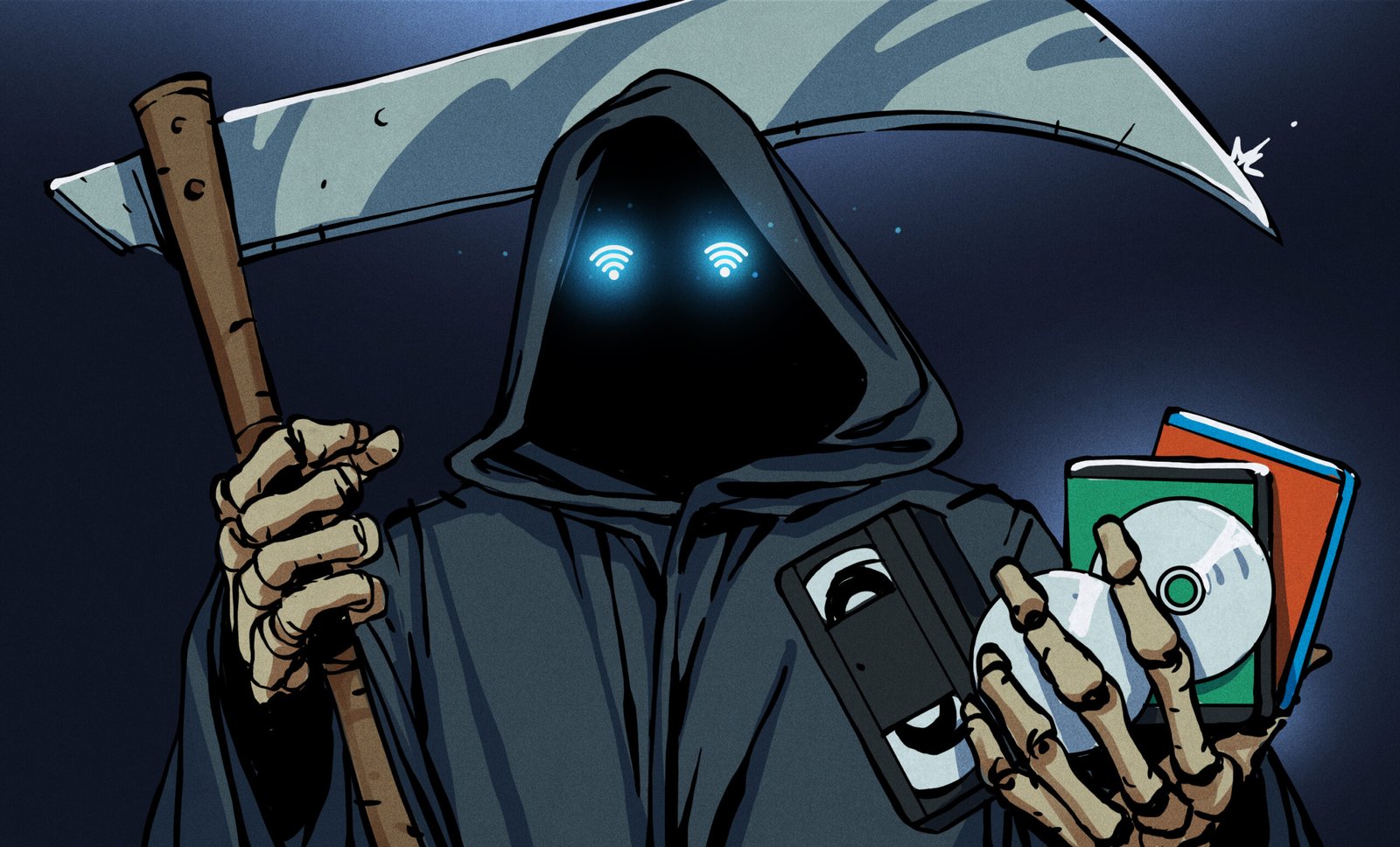
Along with the many displays of outrage, gnashing of teeth and other displays of profound grief at the recent news that Sony will no longer manufacture physical game discs come 2028, we have also heard some voices pipe up with a variety of statements, such as that this decision makes game archiving basically impossible. Of course, the truth of the matter is that software archiving in general has become much harder already over the past decades, while game consoles are just late to the archiving-hostile party.
As an example, one merely has to contrast Sony’s PlayStation with e.g. the Valve Steam store and software by juggernauts like Adobe and Autodesk. Here the former moved after the Creative Suite (CS6) series of Photoshop and other tools fully over to the Creative Cloud (CC) subscription model, where DRM and constant rental software renewals are in order. Unlike that disc copy of CS6 Master Collection that will stay good practically forever, there’s nothing really to archive with Adobe’s CC software.
Similarly, with digital game downloads and their constant patches now put inside a heavily encrypted environment that relies on a special launcher, preserving video games has been turned into into a virtual nightmare for many years now.
Why Archive
 Archiving is about accumulating historical records or materials. The scope and reason for a particular archive can differ, such as a company’s archive with financial records, an engineering department’s archive of technical references, or a museum’s archive of physical artefacts. Whatever the reason, the same goal applies: the maintaining or creating of a historical timeline that can be later referenced as needed.
An essential part of archives is to act as a primary reference source: where possible archives containonly the original documents and artefacts, making them as close to an objective source of history as possible. This is both extremely useful for a company when the tax office does a surprise inspection, but it is also for anyone who wishes to do any kind of historical research. This includes research into the development of a certain kind of software over the centuries and all types of related hardware.
Within the world of software archiving not much changes about this primary mission, except for the digital aspect that earns it the title of digital preservation. At least until fairly recently this meant mostly making copies of physical storage media and any associated physical media like documentation and manuals, but increasingly the subject of such preservation and archiving entails digital data that never was bound to or accompanied by any kind of physical media.
Such digital preservation is a big part of organizations like the Internet Archive, whose archives contain copies of software and games that might otherwise have been lost to the ages. The cases of retro enthusiasts coming across a floppy disk or CD containing some obscure game or set of drivers and uploading a copy to the Internet Archive are both numerous and an excellent example of digital preservation.
Other archives like the Video Game History Foundation (VGHF) have a more narrow focus, as their name implies. Their basic mission is no different, of course, with creating an archive that preserves history. Here the best part about digital preservation is that it makes it possible to create virtually infinite bit-perfect copies of the materials, making it incredibly easy to share and enjoy multimedia, gaming, and other content from these archives.
Digital Restrictions

Of course, if that was all that there is to be said about digital archiving and preservation then this is basically where we could conclude merrily that all is well, and that whether software is distributed digitally or on some kind of physical storage media is of no concern. In this scenario said software can be copied around to one’s heart’s content, burned to optical media and so on without restrictions, ensuring its preservation.
With distributors of software having had fits about how easy it is to copy and distribute said software since at least the 1980s, it’s little wonder that they haven’t seen fit to rely on the fact that copyright infringement is illegal, and instead sought to make it impossible to copy the data of software. This led to a wide variety of copy restriction implementations, including on floppy disks, such as Electronic Arts’ Interlock system, while Nintendo’s game cartridges mostly relied on this more obscure format to keep people from creating their own cartridges.
In the face of these hurdles, the US Library of Congress notes that, for some software, it’s not enough to have the software on some medium, but also the console or hardware to play it on.
These copy restriction mechanisms are a form of digital restrictions management (DRM), euphemistically called ‘rights management’, since DRM only removes rights. As software became decoupled from physical media by the late 90s along with multimedia content like MP3 music, alternate DRM schemes were developed that restrict copying, generally through encryption and a convoluted decryption scheme that even includes hardware-level encryption such as High-bandwidth Digital Content Protection (HDCP).
The upshot of all these copy restriction schemes is that you have to jump through many hoops to still create a copy, whether it involves breaking a floppy copying scheme, using an HDMI splitter that accidentally forgets to re-apply HDCP before sending the content off to a capture card, catching a lucky break with a leaky DVD CSS implementation, or using the analog hole to create that ‘good enough’ copy.
Nobody buys games on DVDs anymore, however. When a digital game is provided via an online store service, how can this be preserved in a digital archive? Since all of these rely on an internet-dependent DRM scheme which fails the moment there’s an issue anywhere in the chain, or if said authentication servers are turned off in N years from now, all preservation schemes here are by definition flawed or at least legally awkward.
A Digital Void
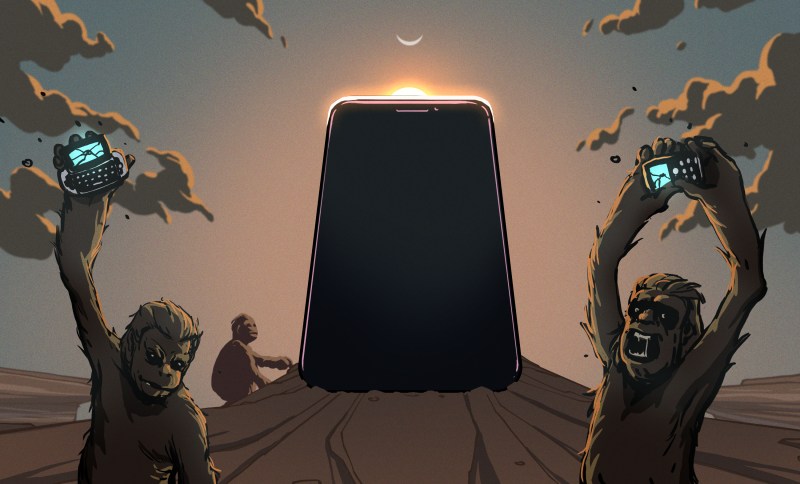
When EA created its Interlock copy restriction scheme it was likely not concerned with whether or not copies of their games would survive into the 2020s, never mind whether anyone would still be using FDDs. It does however indicate the central problem here, one that goes far beyond a black-and-white physical media vs digital-only show-off. Especially since physical media could be argued to be flawed enough that it deserved it to die.
In today’s inevitable march towards a future in which we’re all consuming content using ‘our’ Smart Terminal Devices that rely on any number of paid subscriptions to gain access to the actual content stored on the servers of our benevolent Content Overlords, what probably rankles people the most about the PlayStation physical media announcement is less the demise of physical media and more a reminder of how much has already been taken from us.
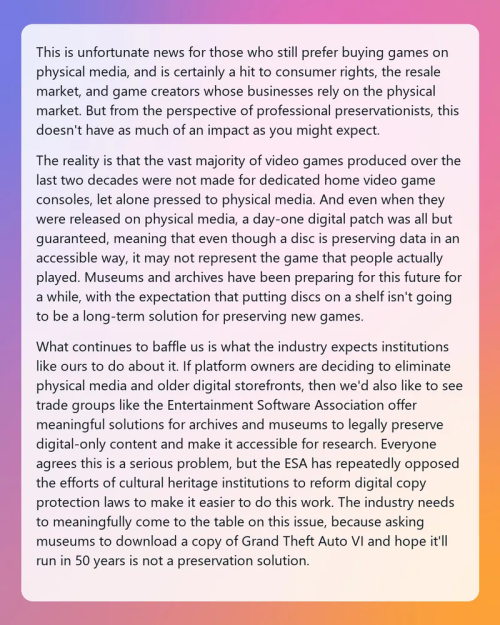
In statement made by VGHF director Frank Cifaldi on the end of physical PlayStation discs – and the concurrent announcement of the shutdown of the PlayStation 3 and Vita online stores – this is put in the broader context of the digital void that we’re facing, in which a large part of video game history simply cannot be legally preserved.
The Legal Conundrum
Here we have to address the rather sizeable elephant in the room, in the form of copyright infringement. Here we see large groups of very nice people in friendly online communities who carefully strip any offending DRM that may even prevent the game from working, while ensuring that the freely provided bundle is kept up to date with only the best patches and anything of relevance.
Within these communities you can find entire swathes of video game history preserved for the enjoyment of connoisseurs, including tutorials, manuals, carefully curated collections mods and extensions, plus everything else that would make a professional digital archivist salivate.
But these ‘shadow archives’ are definitely illegal according to copyright law, ergo the only option available to VGHF and other organizations that are trying to stay on the light side of the law might be to wait a few decades, see which games enter the legal grey zone of ‘abandonware‘ and see whether they’ll still get hit by DMCA takedown request in 2050 for a game that ceased being offered for sale in 2026.
C’est la vie.
This articles is written by : Nermeen Nabil Khear Abdelmalak
All rights reserved to : USAGOLDMIES . www.usagoldmines.com
You can Enjoy surfing our website categories and read more content in many fields you may like .
Why USAGoldMines ?
USAGoldMines is a comprehensive website offering the latest in financial, crypto, and technical news. With specialized sections for each category, it provides readers with up-to-date market insights, investment trends, and technological advancements, making it a valuable resource for investors and enthusiasts in the fast-paced financial world.