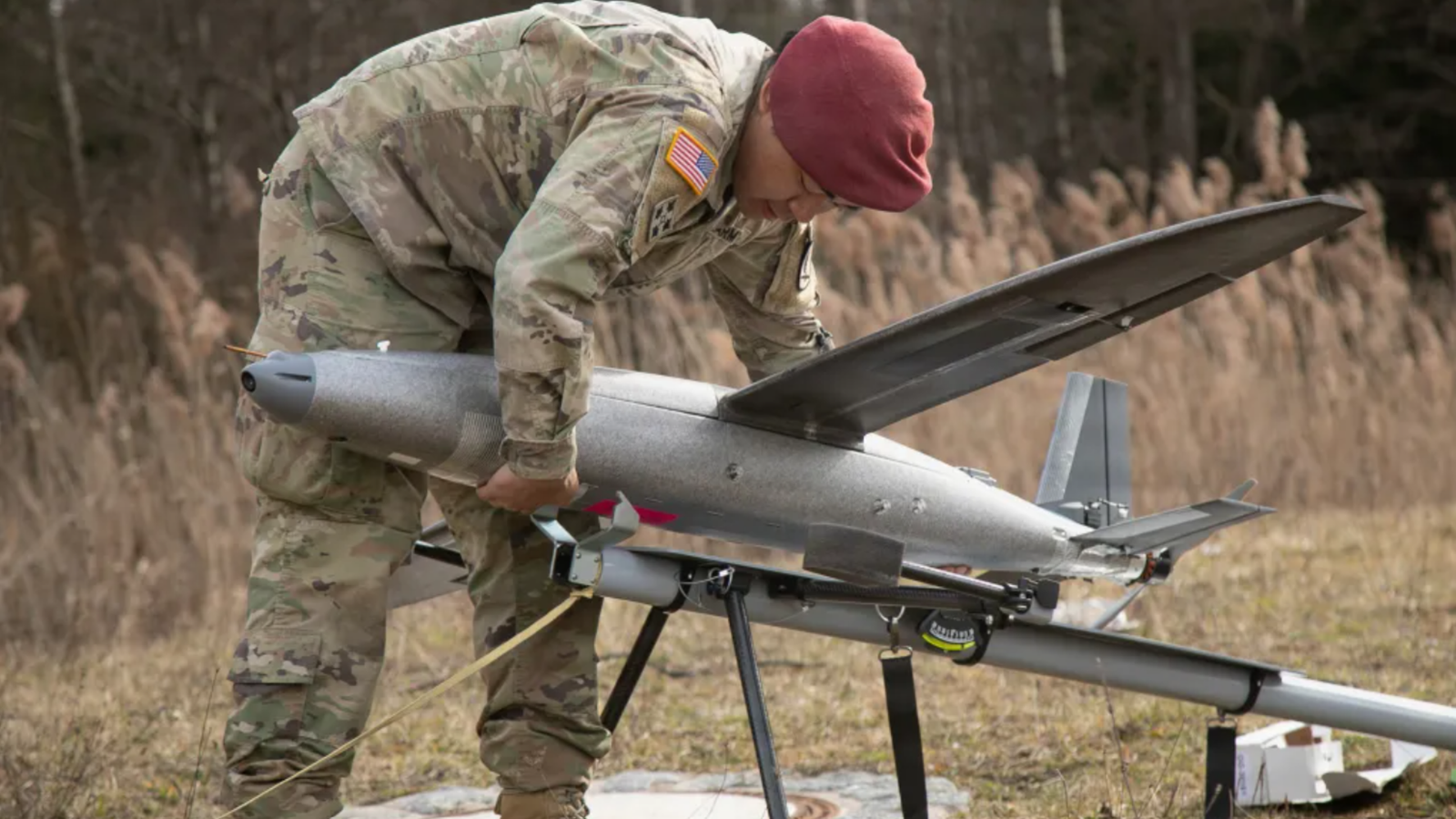
- Ukraine drone forces chief Robert “Madyar” Brovdi says humanity stands to lose control of AI-enabled weapons in the future
- Brovdi has been awarded a life sentence in absentia by Russian courts, while the Ukrainian military states he also has a $20 million bounty on his head
- The warning lands after Russia reportedly killed civilians with a fully autonomous drone, and weeks before a UN decision on whether to negotiate limits on such weapons
Robert “Madyar” Brovdi, commander of Ukraine’s Unmanned Systems Forces (USF), has warned that humanity is losing its grip on artificial intelligence in warfare.
The remarks came in an interview with The Daily Telegraph three days after The Wall Street Journal reported the Ukrainian command’s claims that Russia is offering $20 million for information on his whereabouts.
Brovdi, a former grain trader who has led the USF since June 2025, argued that combining AI with unmanned and robotic systems leaves humanity holding a weapon it will struggle to control, with consequences that reach far beyond the battlefield and into the future of civilization as we know it.
A hedged remark that also doubles as a warning
Brovdi was more direct than most in his position, as military planners continue to mix both approaches, embrace AI, and take a wait-and-see approach to how deeply they want to integrate it into their command-and-control systems.
“Humanity is losing control, in my opinion, however subjective it may be,” he said, applying the point to the current phase of development rather than AI as a whole, even as he said he did not intend to frighten his audience.
One could argue that autonomy already being leveraged en masse in modern drones meets some of the criteria he lays out for the loss of control. His examples include Ukraine, which lacks significant naval resources, having had tremendous success in stopping Russia’s shadow fleet from operating.
Russia’s shadow fleet is an interesting example here because it is key to the country funding its war effort and has been a topic of increasing contention between Ukraine, the US, and Russia alike, with the US president blaming the former for effectively driving up the price of oil by conducting attacks on both the latter’s energy infrastructure and supply lines, even as a defiant Iran manages to cap Middle Eastern oil exports, ironically with a mix of drones and mines.
He called drones “the plague of the third millennium,” a line he also used with Sweden’s SVT in August 2026, while he acknowledged their effectiveness in ‘blocking Crimea remotely’ without any presence on the ground.
The threshold he establishes, however, might already have been crossed, and it could have been on the other side that managed to strike the first blow.
The New York Times reported in August 2026 that a Russian Molniya drone carrying an Nvidia Jetson Orin module and no radio antenna chose its own final target, according to Ukrainian investigators, killing three civilians at a Zaporizhzhia gas station on July 6.
Diplomacy is moving much more slowly than it needs to; UN talks on lethal autonomous weapons under the Convention on Certain Conventional Weapons ended on September 5 with a final report that Human Rights Watch described as “significantly watered down,” naming Russia and the United States among the states that weakened it.
HRW counts 76 countries now backing negotiations on binding rules, and the convention’s review conference, scheduled for November 16 to 20, will decide whether those talks materialize.
Brovdi is hardly a neutral observer of this shift; In September 2024, he told The Economist that within six to eight months, Ukraine’s drones would no longer need human pilots, as Business Insider reported at the time. Needless to say, that has not yet come to pass, and even the Russian strike only used machine vision to lock on after a human operator had picked the target.
The result is a warning worth hearing from a messenger at the center of a conflict that has now entered its fifth year. The commander who says humanity is losing control of AI-enabled weapons is also urging allies to build drone forces faster, pressing the UK to create a dedicated unmanned branch and claiming, according to UNITED24 Media, that four NATO members are quietly designing their own, though he refrained from naming them outright.
The recent Russian strike suggests his concern is far from hypothetical, but it comes from a commander whose forecasts have outrun reality before, so one could argue that his timelines might be exaggerated heavily in favor of his narrative at a time when Ukraine continues to wage an asymmetrical war that places him squarely in the center of a conflict that already leverages AI on both sides for a variety of use cases such as targeting, loiter munitions, and monitoring supply lines.
This articles is written by : Nermeen Nabil Khear Abdelmalak
All rights reserved to : USAGOLDMIES . www.usagoldmines.com
You can Enjoy surfing our website categories and read more content in many fields you may like .
Why USAGoldMines ?
USAGoldMines is a comprehensive website offering the latest in financial, crypto, and technical news. With specialized sections for each category, it provides readers with up-to-date market insights, investment trends, and technological advancements, making it a valuable resource for investors and enthusiasts in the fast-paced financial world.