- Around four dozen US recon and intelligence Marines are joining NATO’s Baltic Sentry alongside Finland’s Coastal Brigade
- They were re-tasked from training rotations already in Europe and will feed drone and sensor data into NATO’s shared picture
- It is the Corps’ second Baltic Sentry stint, after roughly 40 Marines deployed to Finland in February 2025
A small team of US Marines is being redirected to the Baltic Sea to help NATO keep watch over the cables and pipelines on its seabed, some of the most exposed infrastructure in Europe.
Around four dozen Marines from 2nd Reconnaissance Battalion, 2nd Marine Division, and the II Marine Expeditionary Force Information Group will operate alongside Finland’s Coastal Brigade in support of NATO’s Enhanced Vigilance Activity Baltic Sentry.
Both units are based at Marine Corps Base Camp Lejeune in North Carolina, and Military Times reported a headcount of 48, in line with the recent release announcing the move at the start of October 2026.
Eyes on the water not on the helm this time
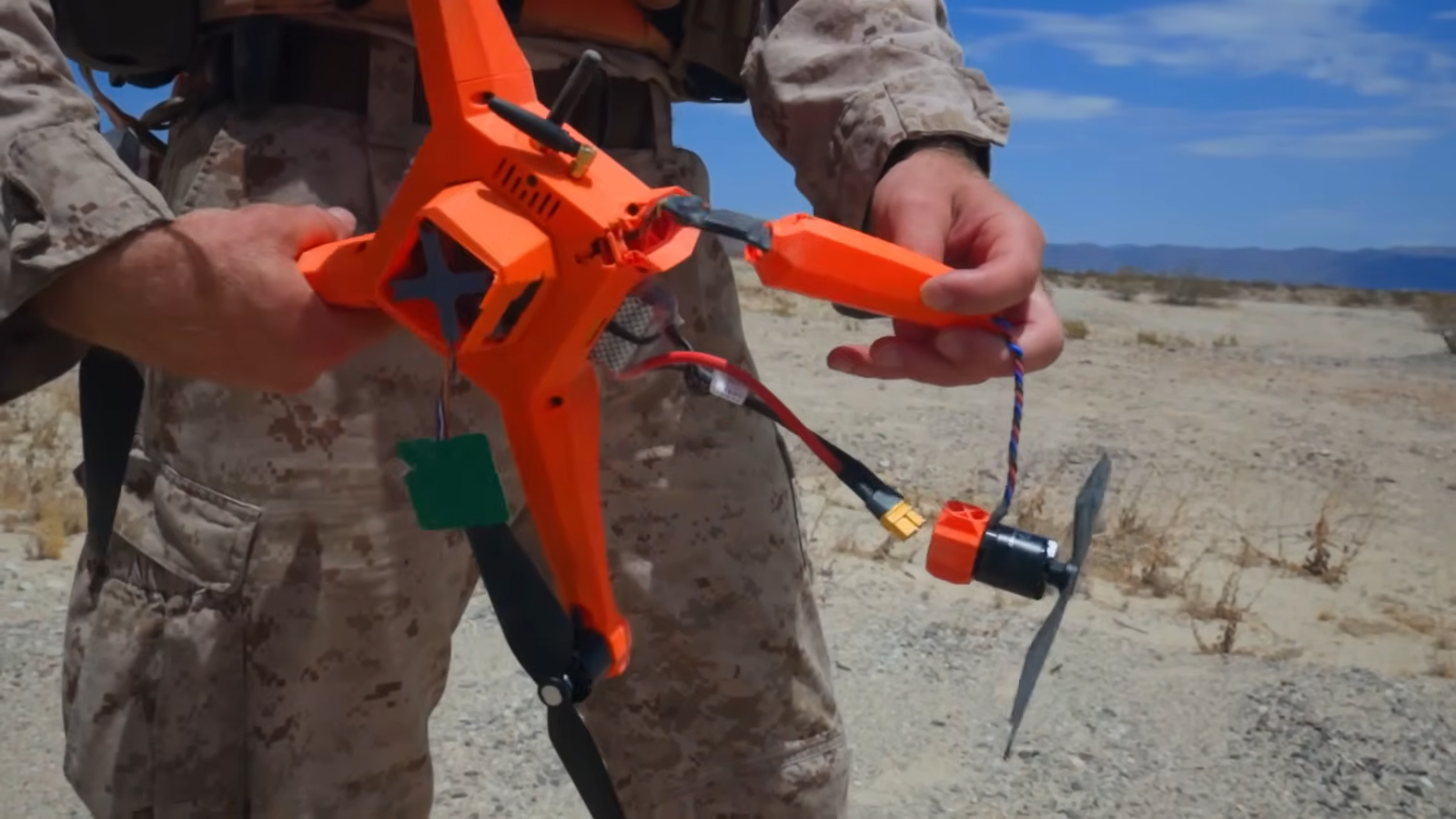
What the team brings is surveillance. The rotation will use small uncrewed aerial systems and littoral sensors to feed data directly into NATO’s shared common operational picture.
Washington is also keen to stress who is in charge to avoid overstepping: Baltic Sentry is led by European allies under Allied Joint Force Command Brunssum and Allied Maritime Command, with the Marine Corps serving in a “supportive, enabling capacity.”
Maj. Gen. Daniel Shipley, who commands US Marine Corps Forces, Europe and Africa, said working side by side with Finnish allies would build “a cohesive, lethal team to deter hybrid threats in the Baltic littoral.”
The Finnish Navy’s chief of operations, Capt. (N) Johan Tillander, said the Marines’ experience, skills and systems were “perfectly suited for supplementing our situation picture.”
This is not the first time recon Marines have taken on the task. In February 2025, roughly 40 Marines from the same battalion deployed to Finland with RQ-20 Puma drones, in what the Corps described as the first activity between Finland’s armed forces and the Marine Corps since a US-Finland defense cooperation agreement took effect in September 2024. At the time, the Corps said its expertise in coastline environments made it “a logical partner” for the mission.
Baltic Sentry itself launched in January 2025, after a run of incidents put the region on edge. Two fiber-optic cables more than 100 nautical miles apart were severed on November 17 and 18, 2024, and on Christmas Day the Estlink 2 power cable between Finland and Estonia was damaged along with four telecom lines, according to a Baird Maritime timeline.
Evidence of Russian interest in cables is more than just an assumption: A Telegraph investigation covered by TechRadar Pro logged more than 500 incidents in which 17 Russian trawlers loitered over or traced cables linking Britain to Europe and the US. UK telecoms minister Ian Murray said Russia was “starting to use commercial proxies,” and the UK has proposed replacing its 1885 cable law with penalties of up to 14 years’ imprisonment.
In the Arctic, British, Norwegian and American forces disrupted a Russian exercise near Svalbard this spring involving vessels tied to GUGI, Russia’s deep-sea research directorate, which was reportedly rehearsing with a device designed to cut cables while leaving little evidence behind. Norway’s defense minister, Tore Sandvik, said the operation “sent a clear message to Russia that they cannot operate covertly,” although reporting so far shows the device was rehearsed rather than used against a live cable.
The deployment lands amid sharpening tension with Moscow. Stars and Stripes reports that allies have accused Russia of repeated airspace violations, that Estonia has arrested suspects over an arson attack it says Russian special services ordered, and that Moscow has warned it could resort to nuclear weapons if NATO tried to isolate Kaliningrad. NATO Secretary General Mark Rutte dismissed the threat, saying “if anything happens, we are ready to counter it.”
At the same time, Pentagon officials have reportedly asked Lithuania, Latvia and Estonia to tone down their public rhetoric on Russia, according to four people who spoke to Reuters, with policy chief Elbridge Colby among those delivering the message. One European official summed up the request as “Just don’t be loud. Don’t make noise.” The Pentagon declined to discuss private conversations, and a review of US force posture in Europe could yet bring a sharp drawdown.
Read against that backdrop, a few dozen Marines re-tasked from an existing rotation, wrapped in language about European leadership, looks less like an escalation than a low-cost signal: Washington is still present in the Baltic, but quietly and in a supporting role. Whether that proves enough is only something that time will tell.
This articles is written by : Nermeen Nabil Khear Abdelmalak
All rights reserved to : USAGOLDMIES . www.usagoldmines.com
You can Enjoy surfing our website categories and read more content in many fields you may like .
Why USAGoldMines ?
USAGoldMines is a comprehensive website offering the latest in financial, crypto, and technical news. With specialized sections for each category, it provides readers with up-to-date market insights, investment trends, and technological advancements, making it a valuable resource for investors and enthusiasts in the fast-paced financial world.