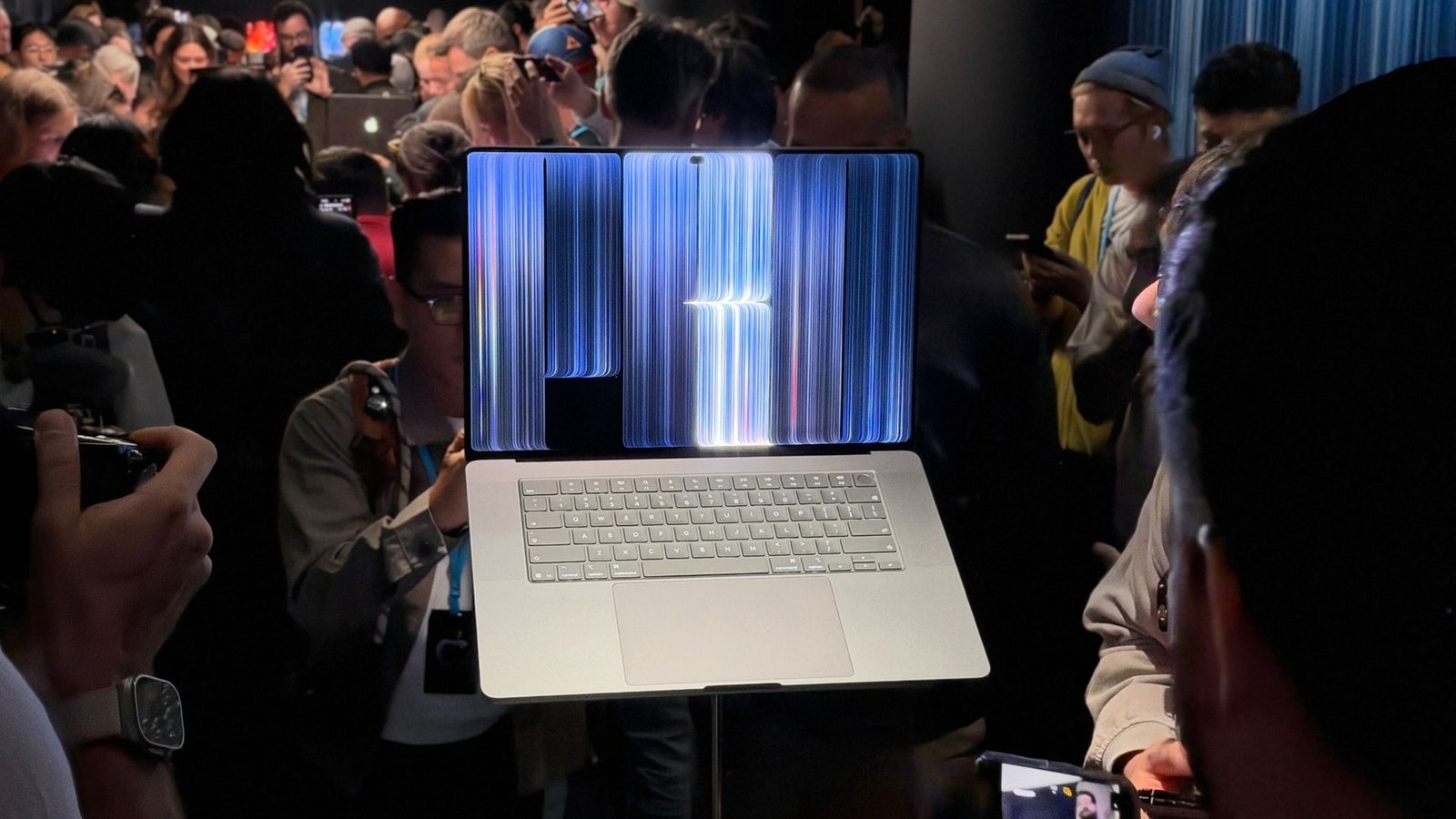
Apple has unveiled its first OLED MacBook Pro laptops, and that means we’ve got a new bit of display branding: PROLED XDR. You can have the laptop in 14-inch or 16-inch variants, pre-orders are open now for shipping on or after the 6th of November — and we’ve gone hands-on with them. Literally, because they’re also the first touchscreen Macs.
The name ‘PROLED XDR’ is a new piece of jargon that Apple’s debuting with this machine. So what actually is it?
The short answer is that it’s a ‘Tandem OLED’ panel, which means that it uses multiple layers of organic light-emitting diodes — in this case, two layers. Two OLED layers are better than one because the result is considerably brighter than a single-layer OLED: you literally have two OLEDs firing per pixel. It also boosts longevity, because each of the two layers doesn’t have to work as hard, so they have a longer lifespan and are more likely to avoid burn-in.
Apple has stayed away from OLED for its MacBook Pro displays in the past, and clearly that’s changed. According to Apple that’s because PROLED XDR “finally” overcomes the traditional limitations of OLED: low and variable brightness, off-axis color shift and the risk of burn-in from displaying the same interface elements, such as toolbars and palettes, whenever the screen is on.
The confusing thing, however, is that this isn’t Apple’s first use of Tandem OLED. It used the technology in its shift to OLED in the iPad Pro, but those aren’t branded as PROLED XDR. Those are called ‘Ultra Retina XDR’ displays.
So let’s look at the performance differences listed by Apple that put the ‘pro’ in PROLED.
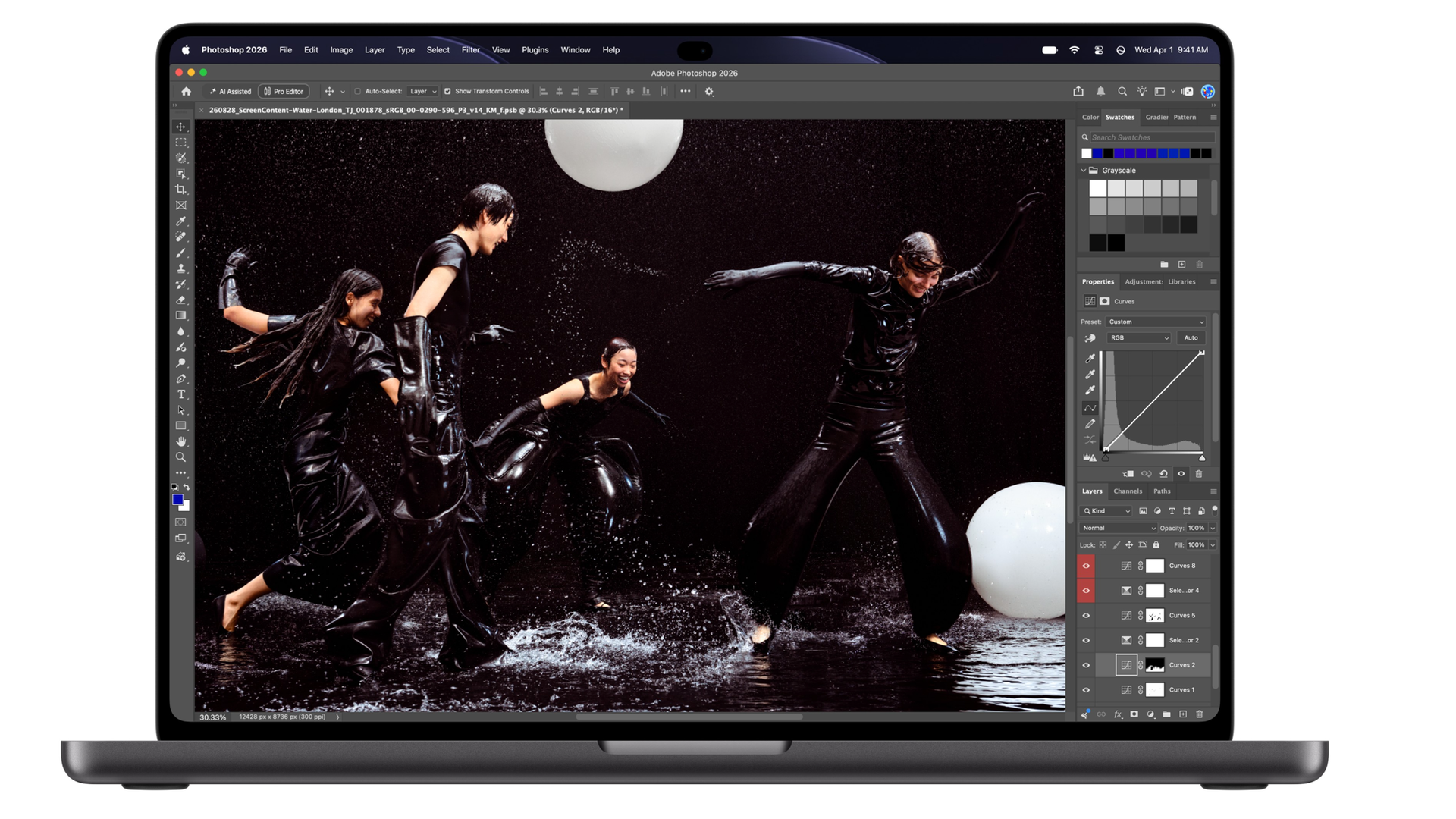
What’s so special about PROLED XDR displays
The Tandem OLED inside the new MacBook Pros is very bright, delivering up to 2,000 nits of peak HDR brightness (ie, in a small area of the screen for a short time) and up to 1,000 nits of sustained fullscreen brightness (ie, across the entire screen at once, without having to dim quickly).
The iPad Pro (2025)‘s display is also capable of 1,000 nits of fullscreen brightness, but has a rated peak brightness of 1,600 nits — so the MacBook Pro is 25% brighter. That will bring a nice extra boost to clarity in bright HDR scenes, but won’t make a huge difference really — the fullscreen brightness is the most important factor, and that’s the same on both.
Because it’s OLED, it gives you the blackest of black tones — there’s no backlight to leak light into areas it shouldn’t go — and a very high contrast ratio, in this case 10,000,000:1. That again is an interesting difference from the iPad Pro, which has a claimed contrast ratio of 2,000,000:1.
Why a 5x difference if the brightness is only 25% different? Apple hasn’t explicitly said, but it must come down the lowest level of brightness that can be measured on the screen. Doing the math on the iPad’s 1,600-nit display with a 2,000,000:1 ratio gives us a lowest brightness of 0.0008 nits. On the PROLED XDR’s display, a 2,000-nit panel with a 10,000,000 contrast ratio gives us a lowest brightness of 0.0002 nits.
We can assume this is down to the new panel design, aimed at “minimizing internal reflections common in traditional OLED designs” — so less light is reflected within the panel itself, which could be the difference between those two different black levels.
But if you’re looking at 0.0008 nits and 0.0002 nits and thinking the difference must be indistinguishable, then… yes, correct. They will both appear totally black to the human eye when they’re supposed to. But it produces a big difference in contrast ratio, because multiplication is overdramatic.
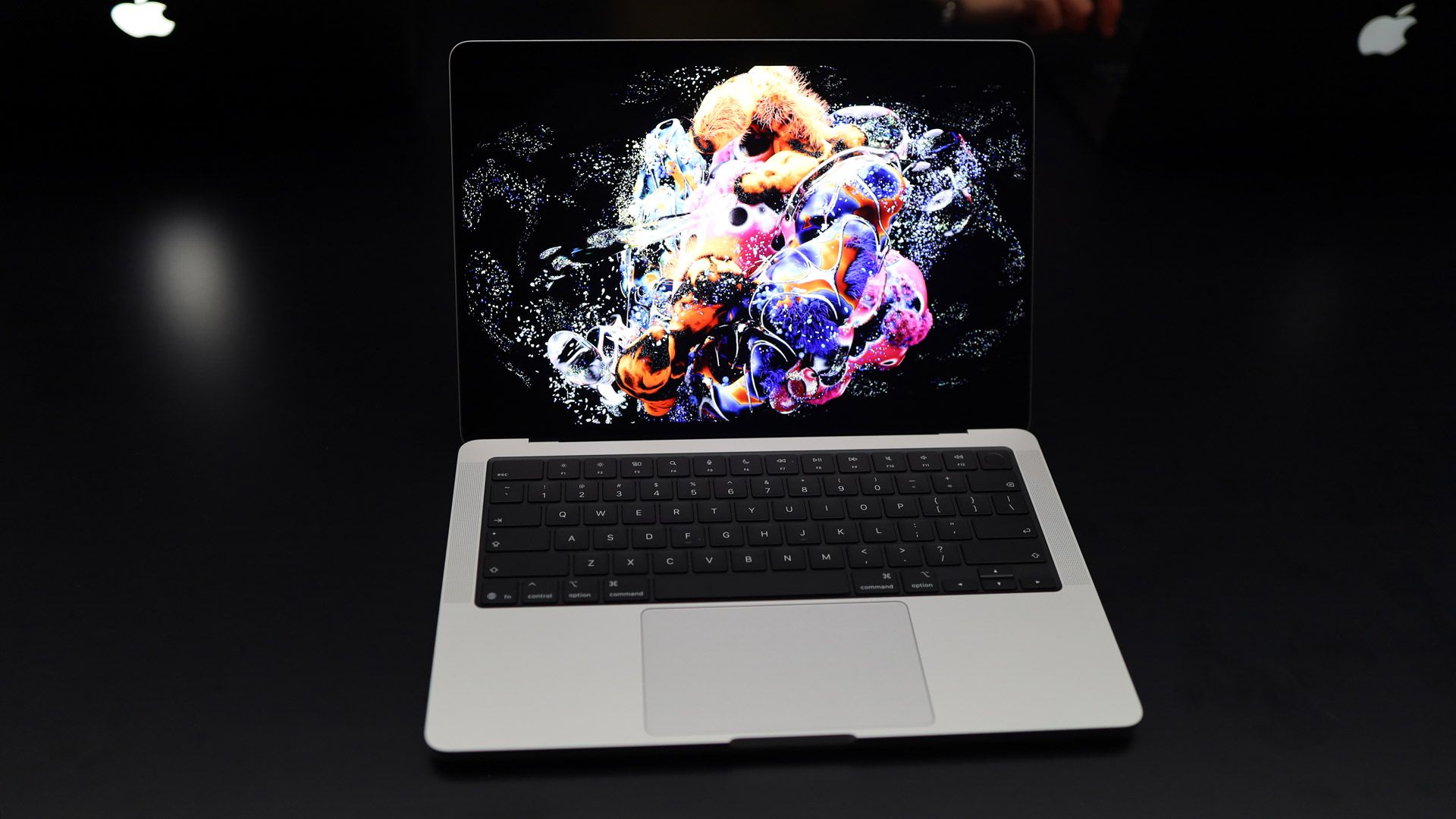
There are other indications that the MacBook Pro’s PROLED XDR display might beat the iPad Pro’s in other areas. Apple says it can achieve over 80% of the BT.2020 color gamut, which suggest it’s likely to hit close to 100% of the DCI-P3 color gamut — the iPad Pro was measured by our lab at around 82% of DCI-P3, so that would be a clear jump here.
The screen is powered by a display engine that’s been built into the M5 Pro and M5 Max chips, which Apple says “continuously compensates each pixel for content, usage, temperature, and ambient conditions”.
Refresh rates are variable from 10Hz to 120Hz (with discrete options for film-makers: 47.95Hz, 48Hz, 50Hz, and 59.94Hz), and as we’ve seen with other Apple products there’s a nano-texture glass option for people who’ll be working in overly bright environments.
The big selling point here is reference monitor accuracy that you can take wherever you go, making these MacBook Pros ideal for video pros and mobile creatives of all kinds.
So do you need it? If you’re making the next Wildwood — go see this movie, it’s incredible — or working with high-res, high-quality video then these are by far the best Mac mobile laptops that Apple has ever made. But I suspect most of them will end up with people who aren’t video pros, but who really like really good displays. I’d love to see Cyberpunk 2077 on one of these.
If you’re technically minded Apple has put together a full technical paper on the new displays, and you can read it right here.
This articles is written by : Nermeen Nabil Khear Abdelmalak
All rights reserved to : USAGOLDMIES . www.usagoldmines.com
You can Enjoy surfing our website categories and read more content in many fields you may like .
Why USAGoldMines ?
USAGoldMines is a comprehensive website offering the latest in financial, crypto, and technical news. With specialized sections for each category, it provides readers with up-to-date market insights, investment trends, and technological advancements, making it a valuable resource for investors and enthusiasts in the fast-paced financial world.