
As if the AI data center boom wasn’t causing enough problems for PC hardware, a looming strike in Samsung’s home territory of South Korea could grind the memory giant’s already-strained production to a halt.
According to the latest reporting from Reuters, a long-simmering dispute between Samsung and its unionized labor force has boiled over, with no compromise in sight even after days of government-mediated talks. If a resolution isn’t found by May 21st, the union is prepared to strike for 18 days. With more than 70 percent of Samsung’s in-country workers as part of the union and as many as 50,000 prepared to walk out, the strike would cost the company an estimated $700 million per day.
The union is disputing issues involving bonus pay, which it sees as insufficient compared to Samsung’s corporate memory rival SK Hynix, who’s passing on its AI-fueled profits to employees. Most SK Hynix employees are receiving yearly bonuses of nearly 3,000 percent of their monthly base salary—with a one-time payout equivalent to almost half a million US dollars for many of them—following a phenomenally profitable 2025 and successful labor negotiations last year.
Samsung union leaders are demanding similar concessions. The company has only committed to a one-time payment capped at 50 percent of an employee’s base salary. Samsung recorded 20.1 trillion won profit in 2025 (approximately $13.4 billion USD) for the 2025 fiscal year. Union leaders say they have no plans for further talks ahead of the strike, but are open to offers in the interim.
The potential strike could be a huge problem not just for Samsung but for South Korea as a whole. The rush to manufacture memory and other semiconductor chips for AI data centers has been a huge windfall for the country, where Samsung and SK Hynix loom large among other electronics giants like LG. Semiconductor exports rose by 40 percent year-over-year in December 2025 alone, insulating the country—if not the average worker—from broader economic issues.
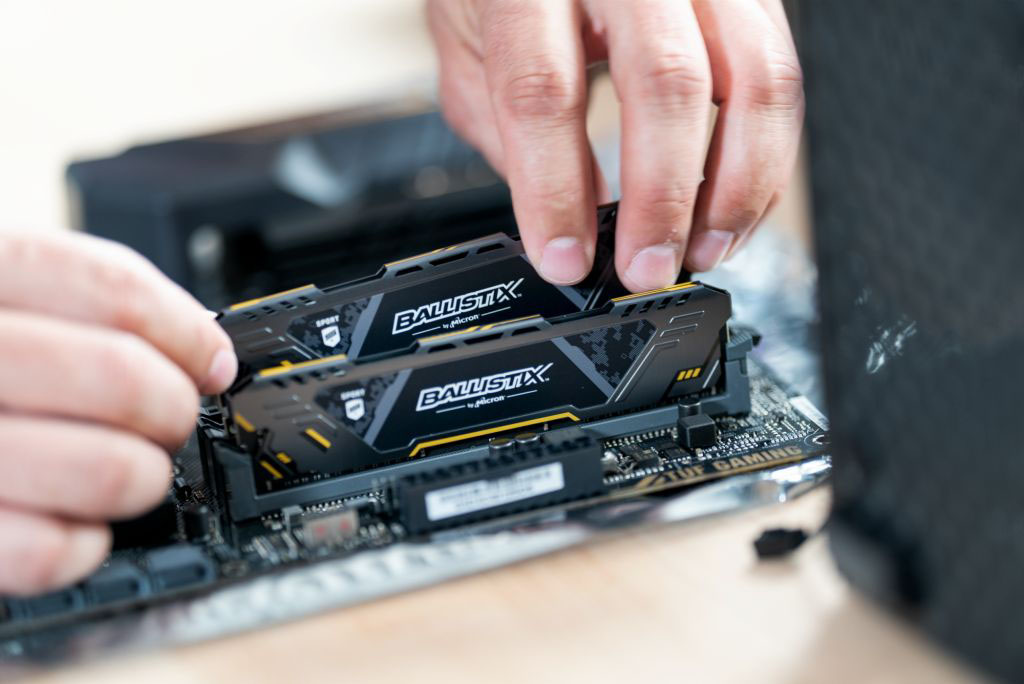
Ballistix
It’s such a massive issue that South Korea’s prime minister Kim Min-seok called for an emergency meeting with his ministers. Though overt government action isn’t currently on the table, South Korea’s large industrial base has made for tense interplay between labor, corporate power, and government oversight in the past. The 1996–1997 automotive and shipbuilding strikes were the largest in the history of labor, in which the government declared strike action illegal and responded with armed police action and arrests.
Weeks of disruption to one of the “big three” memory manufacturers would exacerbate the current chip shortage, now more than half a year into its sad progression. RAM and storage prices are at three-to-four times what they were a year ago, driving up the costs of desktops, laptops, phones, and most finished electronics that run any kind of full operating system. A strike wouldn’t immediately send prices even higher, but it could certainly do so weeks or months down the line as production orders are delayed or unfulfilled.
This articles is written by : Nermeen Nabil Khear Abdelmalak
All rights reserved to : USAGOLDMIES . www.usagoldmines.com
You can Enjoy surfing our website categories and read more content in many fields you may like .
Why USAGoldMines ?
USAGoldMines is a comprehensive website offering the latest in financial, crypto, and technical news. With specialized sections for each category, it provides readers with up-to-date market insights, investment trends, and technological advancements, making it a valuable resource for investors and enthusiasts in the fast-paced financial world.