
The AI pendulum has swung back and forth throughout the last few years, from ChatGPT and Copilot in the cloud, then back to local AI and the PC’s newfound NPU, then back to independent agents like Claude. Now it’s headed the way of the PC once again, abandoning privacy arguments (which still stand strong!) for a more straightforward argument: It’s better for your wallet.
A few announcements at IFA underscored what is now the prevailing argument in AI circles: AI’s selling point is that it essentially multiplies your productivity, assigning independent agents to tasks you’d otherwise perform yourself.
The trouble is that it all comes at a cost. You’ll pay for a cloud AI subscription, with a limited number of tokens which typically expire at the most inopportune time. But no matter what, cloud AI will always keep charging you. It’s the exact reason so many people invest in solar panels for their home. If my local utility company is going to keep charging me money (and raising their rates) why not invest in my own power generation and get it it for “free?”
We’re entering an era where your local PCs can become a personal AI “solar panel” of sorts, driven by AI goliaths like Nvidia and Microsoft — but not only by those titans.
Welcome to PCWorld’s newsletter, Smart Mode! The focus of this newsletter is productivity: from software to hardware to peripherals, all with the idea to get what you need to get done, efficiently.
I’m your host, Mark Hachman, covering the productivity tips, tools, and trends that you need to know about, both from within PCWorld and beyond. If you want the latest issue in your inbox each week, just sign up right here.
It’s a cost thing
Nvidia, naturally, has always been in favor of powerful, local GPUs. Nvidia’s Personal AI Router (PAIR) is an intriguing concept, combining every GPU-equipped device (AMD or Nvidia) on your network into a shared pool of AI computing power. Nvidia said it has tested RTX PAIR on up to 18 devices on a local network, though there is a catch: PAIR assumes a hardwired network is in place, not the mesh routers throughput homes. That means that you’d have to build in a hardwired switch of some kind.
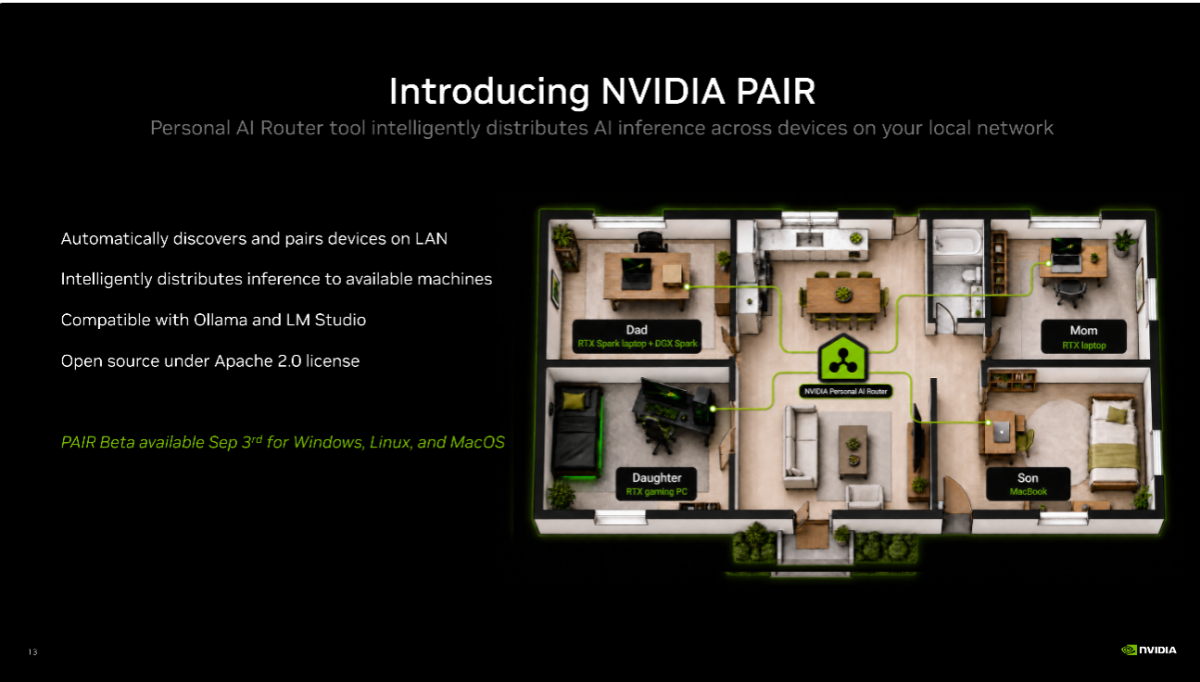
Nvidia
I actually think a smarter implementation is Exo, a project that’s been on my to-do list. Exo basically (supposedly) just finds and assimilates both CPU and GPU resources and storage into an AI cluster, daisy-chaining them together via Thunderbolt connections. For me, with lots of Thunderbolt cables, this seems like a no-brainer. It’s also much more forgiving for homes with existing hardware of all stripes… though hardwiring a Thunderbolt cluster likely requires much tighter quarters than an Ethernet cluster built around your house, which RTX PAIR offers.
The problem with both solutions, of course, is power: you’re going to be pulling a lot of juice and generating a lot of heat to make either solution work. Wouldn’t it be nice to take advantage of the cloud and local AI?
That’s where Microsoft is now, with what it’s calling “unmetered intelligence.” In a presentation at IFA in Berlin last week, Microsoft’s corporate vice president of Windows + Devices, Mark Linton, argued that PC makers and owners should just “offload to the PC” their AI workloads.
“We mean that these powerful PCs can complement what you do in the cloud, but you shouldn’t have to go to the cloud for models that you can use every day,” Linton said. “What if your PC were powerful enough, and essentially you can change your token economics by running it locally on your PC?”
It’s certainly a far cry from when Microsoft and hardware makers were pitching the NPU as the engine of AI, while we (and others) were discovering that the GPU was actually a better choice for generative AI, and that the CPU was more appropriate for managing AI agents. NPUs still have a role to play, it seems, but as efficient engines of small, smart tasks like the filtering algorithms in Windows Studio Effects.
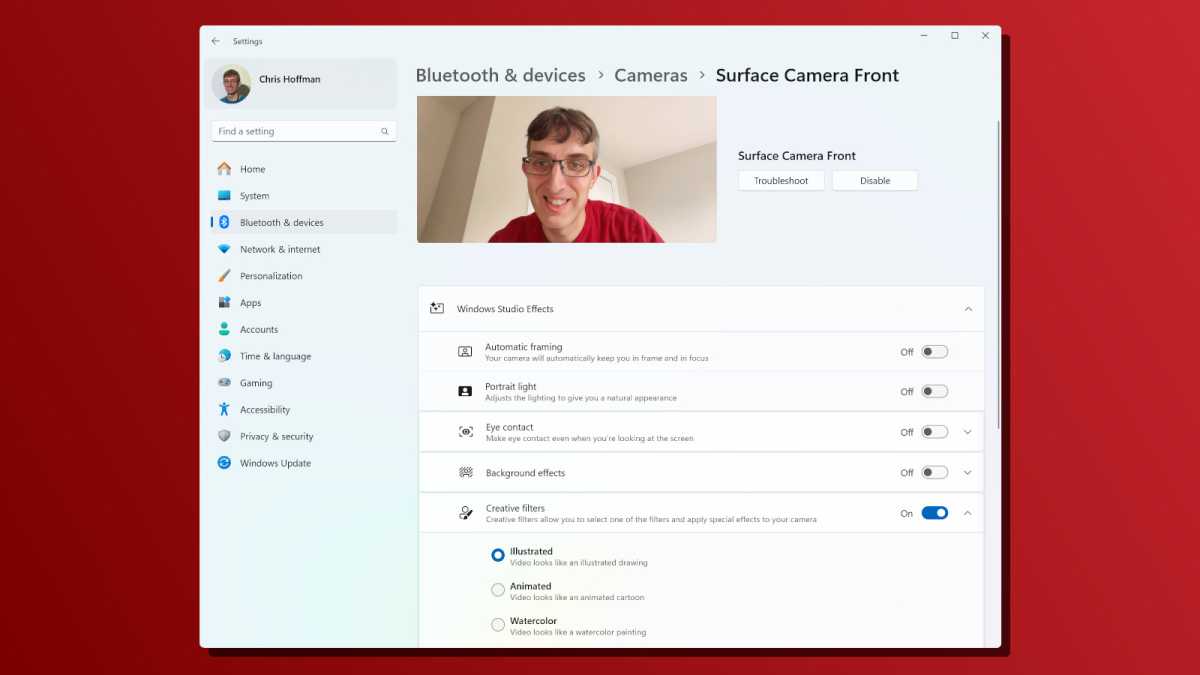
Chris Hoffman / Foundry
We know that most of the time our laptops and desktops sit mostly idle why we, as humans, write, read and think. Background features like Windows Studio Effects and Voice Focus use AI to improve the PC experience without overwhelming your PC’s resources. Windows Foundry offered an alternative, prioritizing CPUs and GPUs. But it still feels like Microsoft is still stuck in the talking stage, rather than the doing stage.
Two other companies changed that at IFA, offering intriguing visions of what local AI could be.
Local AI is heading toward your desk…but will it be a PC?
The first is Anker, the Chinese peripheral powerhouse that debuted the MindBase, a central smart hub that connects over 100 Anker devices via its OmniLink protocol. Apple, Google, and Amazon also have these sort of smart hubs, connected wirelessly, allowing something like a Google Home to connect your lights and thermostat.
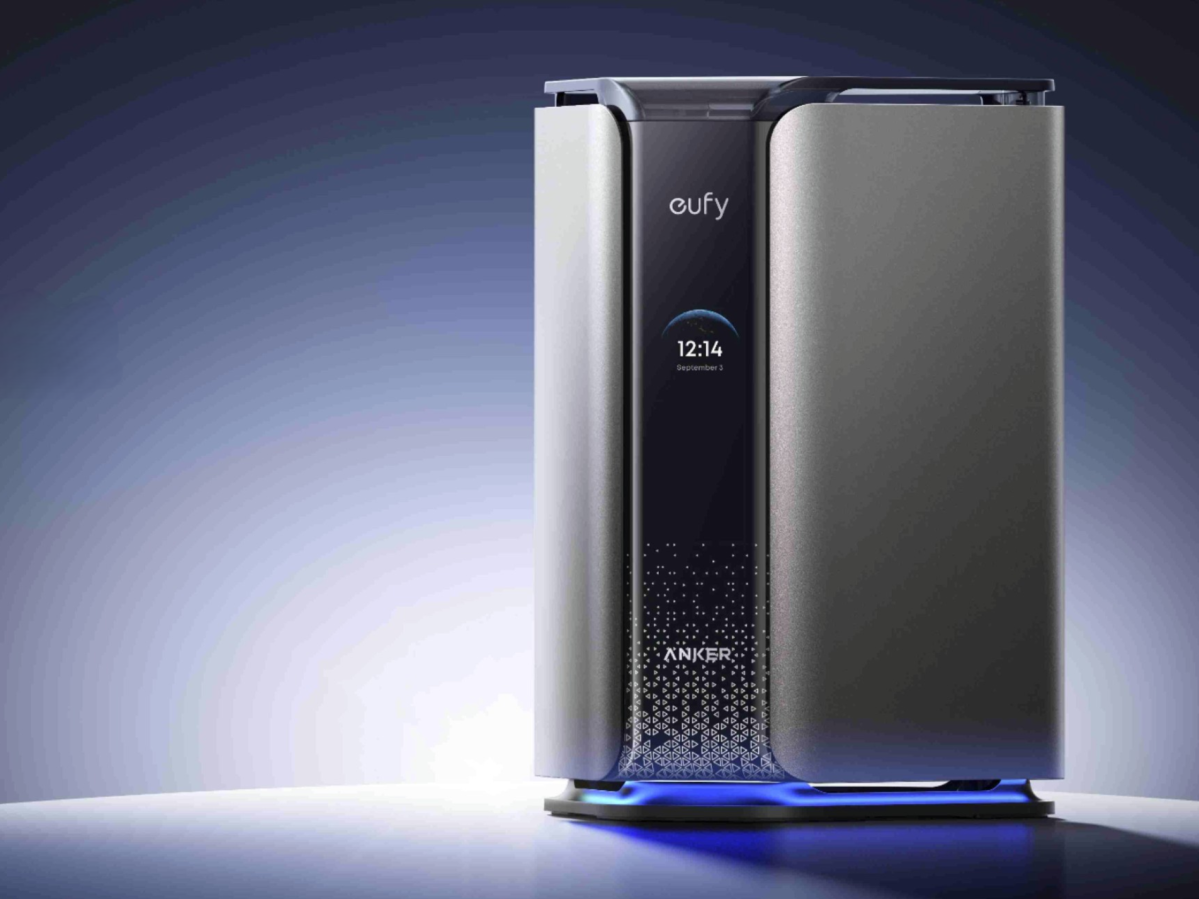
Anker
Anker’s MindBase goes beyond that. At its heart is an AI layer capable of 26 TOPS, nearing the 40 TOPS of a Copilot PC. What I found especially interesting, though, was its so-called EverSafe Memory, an API layer which allowed it to connect up to 48TB (!) of local storage. That goes, way, WAY beyond what a convention “smart home” device can offer.
The other candidate is Violoop, an AI product that has been knocking at my door for a week or so. Violoop is an AI appliance: connect an HDMI cable from your PC to the small box, and it can “see” what’s on your screen, intuit what needs to be done, and act — but only when you tap the big confirmation button on top of it. The company promises that the Violoop will queue up multiple independent actions, from checking your calendar to writing an email in your tone and voice. How useful is it? That remains to be seen.
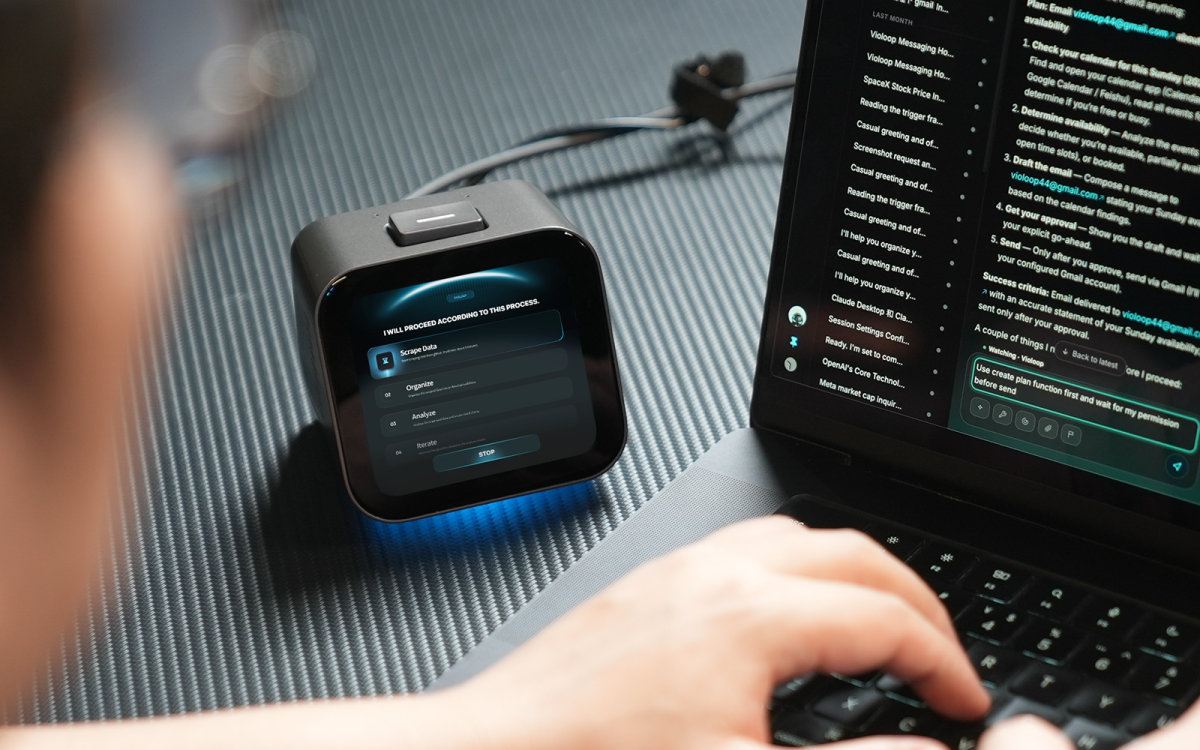
Violoop
That’s a similar approach to what my colleague Adam Patrick Murray attempted with his mini AI PC project from two weeks ago, when he used both an MSI mini PC as a command-and-control hub as well as a Framework Desktop with an AMD Ryzen “Strix Halo” chip inside. (Why two PCs? The argument, Adam told me, was that if one crashed or ran out of resources it would be easier to reconstruct.)
I have to believe that we’re going to see this trend continue. And why wouldn’t it? Take a Thunderbolt docking station. Some Thunderbolt 5 docks now include local storage in the form of an SSD slot, while docks like the Humbird 3 blur the line between docking stations and external GPUs. At CES 2026, Plugable showed off the TBT5-AI, a small local AI server connected by Thunderbolt.
You know, hardware makers would kill to sell us two devices for our desk, rather than just one. And if consumers, office workers, and creatives buy into into this idea that AI can offload some of the day-to-day drudgery of their work life, they might just do it. What’s the difference between a mini PC, a single-board computer, and an AI appliance? Not a hell of a lot. And it’s a brand new world for hardware makers to play in.
Productivity in the news:
- Microsoft’s September security update is out, and many of the usability features Microsoft promised earlier are here, including the moveable taskbar. It might not be an enormous change, but hey, Microsoft responded to complaints. It’s only been, what, five years?
- Via Macworld, Apple is talking about Siri Recap, which makes AI voice transcription really mainstream. (But kinda icky, privacy-wise?)
- Speaking of the IFA show that took place in Berlin…meet the winners of our IFA Best of Show!
- Microsoft’s Project Zenith isn’t aimed at you or me, but developers. Still, it’s a tailored computing experience based around AMD’s Ryzen Strix Halo chip and some specific applications. We’ve seen developer devices before, so this is nothing new. But my original premise for Smart Mode this week was the amazing niches that computing now fits into, and this is an example of that.
- Buying a laptop? Here’s what matters.
- I’m not a huge fan of Windows Voice Typing (transcription is just as good, really) but my colleague Sam Singleton walks you through what Windows has to offer here.
- Looks like there’s a one-day-only sale on Windows 11 Pro for $10!
- I could never really get into standing desks, though I tried. I like standing! I just don’t like typing while standing. What about you?
Productivity on camera:
I love laptop utility software. Here’s why!
Productivity tip of the week:
I’m really torn on the concept of task stacking. On one hand, it’s certainly useful for certain work; if I’m headed to the garage where the washer lives, I’ll check and see if any laundry needs to be taken downstairs, or removed from the dryer. Likewise, my wife or I will fold clothes while watching TV — gotta keep that laundry train moving in a house with teenagers living in it.
So task stacking — performing multiple tasks at once — certainly makes sense for thoughtless tasks. In some ways, that’s the premise of local AI, right? You’re offloading drudge work. But if you need to sit down and think through something, I have an issue with optimizing my time to perform those tasks efficiently. I mean, if I have to plan out my time to maximize task stacking, could I be earning some of that back by simply performing them serially and somewhat inefficiently? If you have any thoughts, drop me a line!
Thanks for reading!
Thanks for tuning in to this edition of Smart Mode, PCWorld’s newsletter devoted to helping you make the most of your life, smartly. Sign up and have it sent to your inbox every Thursday!
This articles is written by : Nermeen Nabil Khear Abdelmalak
All rights reserved to : USAGOLDMIES . www.usagoldmines.com
You can Enjoy surfing our website categories and read more content in many fields you may like .
Why USAGoldMines ?
USAGoldMines is a comprehensive website offering the latest in financial, crypto, and technical news. With specialized sections for each category, it provides readers with up-to-date market insights, investment trends, and technological advancements, making it a valuable resource for investors and enthusiasts in the fast-paced financial world.