Updated in September, 2026.
Did you think that customer reviews were only important to the prospects you knew about? Well, that’s not the case. A recent research shows that 93% of customers will read online reviews before making a purchase. G2 has discovered that around 80% of buyers use customer testimonials at the very beginning of their decision-making process.
For most B2B SaaS companies, three platforms cover the majority of buyer research: G2, Capterra, and TrustRadius. G2 has broad reach across B2B software categories and strong influence on software comparison content. Capterra, along with sibling sites GetApp and Software Advice, reaches a wide small and midsize business audience through Gartner Digital Markets. TrustRadius leans toward detailed reviews favored by enterprise and mid-market buyers.
Beyond those three, companies selling into larger IT organizations should also claim a profile on Gartner Peer Insights and product-led SaaS companies launching new features should treat Product Hunt as a distribution channel, not a review site.
No company needs to be active everywhere at once. The right starting set depends on your buyer, your category, and your stage, which is covered later in this guide, along with why diversifying beyond the G2-owned ecosystem is worth taking more seriously now than it was a year ago.
Best software review sites for SaaS companies: comparison |
||||
| Platform | Best for | Listing type | Free listing? | Key advantage |
| G2 | Broad B2B software comparison research | Review site + comparison reports | Yes, with paid upgrades | Widest influence on buyer comparison content |
| Capterra | SMB software discovery | Review site + directory | Yes, with paid upgrades | Large SMB audience, shared data with GetApp |
| GetApp | SMB app discovery, faster review flow | Review site + directory | Yes, with paid upgrades | Quicker review submission for customers |
| Software Advice | Higher-touch buyer guidance | Review site + advisor-qualified leads | Yes, with paid lead programs | Phone-qualified buyer leads |
| TrustRadius | Enterprise and mid-market B2B software | In-depth vetted reviews | Yes, with paid upgrades | Detailed, authenticated reviews |
| Gartner Peer Insights | Enterprise IT buying committees | Verified peer reviews | Yes | Trusted inside large IT organizations |
| PeerSpot | Enterprise IT and infrastructure software | Crowdsourced reviews | Yes | Strong for infrastructure/security categories |
| SourceForge | Open-source and traditional software | Directory + reviews | Yes, with paid upgrades | Long-standing developer audience |
| Slashdot | Developer and technical buyer audience | Directory + reviews | Yes, with paid upgrades | Overlaps with SourceForge’s tech community |
| AlternativeTo | Buyers comparing specific tools | Community-ranked alternatives | Yes | Great for capturing switcher intent |
| Crozdesk | Algorithm-matched recommendations | Review site + matching | Yes | Free to list, matching-based discovery |
| SoftwareSuggest | SMB software discovery, India and APAC-strong | Review site + advisory | Yes, with paid upgrades | Live buyer assistance |
| GoodFirms | Software and IT services research | Review site + rankings | Yes, with paid upgrades | Covers software and service providers together |
| FinancesOnline | Bottom-line-focused B2B research | Review site + reports | Yes, with paid upgrades | Strong comparison and pricing content |
| SaaSworthy | SaaS-specific discovery | Review site + directory | Yes, with paid upgrades | Purpose-built for SaaS, not general software |
| Clutch | B2B services and increasingly software | Verified client reviews | Yes | Strong for software tied to service delivery |
| SelectHub | Guided software selection | Review site + selection tools | Yes, with paid upgrades | Structured requirements-based comparison |
| Trustpilot | Overall brand and support reputation | General consumer/business reviews | Yes, with paid upgrades | Useful when your buyer also checks general reputation |
Treat this table as a starting shortlist, not a checklist to complete in full.
The best software review sites, platform by platform
G2
G2 has grown into the default starting point for most B2B software comparisons. It covers an enormous range of categories, from subscription billing to project management to cybersecurity, and its comparison reports get cited constantly across the web, which gives a strong G2 profile influence well beyond G2’s own site.
As of the February 5, 2026 close of its acquisition of Capterra, GetApp, and Software Advice from Gartner, G2 also owns all three. In its own announcement, G2 frames the deal around a unified buyer taxonomy, up to 3x more buyer-intent data for vendors, new pay-per-lead offerings, and positioning the combined dataset as “the primary source of truth for the LLMs and agents” behind AI-driven software recommendations. Integration across the four platforms is expected to happen gradually; as of the publishing date of this article, they still operate with separate logins, dashboards, and category structures.
Best for: companies that want maximum visibility in comparison content and analyst-style category reports.
How it works: free profile creation; customers submit reviews directly; enough reviews and category performance can earn placement in G2’s quarterly Grid® reports, which rank competitors against each other.
Consider this: because so much buying research funnels through G2, a thin or outdated profile here is one of the more costly gaps a SaaS company can have. With G2 now owning the three next-largest discovery platforms, that concentration is worth factoring into your broader visibility strategy, not just your G2 profile.
Capterra
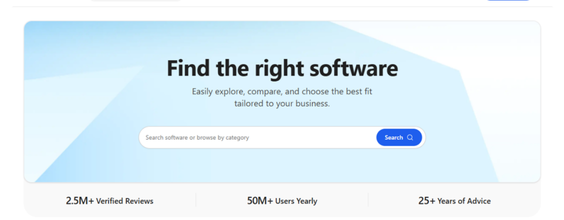
Capterra reaches a large small-and-midsize business audience across hundreds of software categories. It was part of Gartner Digital Markets alongside GetApp and Software Advice for roughly a decade.
Best for: SMB-focused software with a broad category footprint.
How it works: free listing; reviews are shared in part with GetApp, which extends reach without duplicate effort.
Consider this: Capterra, GetApp, and Software Advice already shared infrastructure and synced reviews before the G2 deal, so a well-maintained Capterra profile does double duty across that trio. Whether G2 eventually syncs reviews or unifies categories across all four platforms is unclear; expect that integration, if it happens, to take one to three years.
GetApp
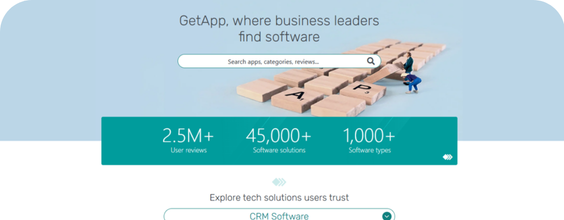
GetApp tends to have a faster, simpler review submission flow than some peers, which can make it easier to convert customer goodwill into a published review. Like Capterra and Software Advice, it moved from Gartner to G2’s ownership.
Best for: companies that want to lower friction for customers leaving reviews.
How it works: free listing; reviews often sync with Capterra.
Consider this: positioning and category depth closely mirror Capterra, so treat the two as a coordinated pair rather than separate strategies.
Software Advice
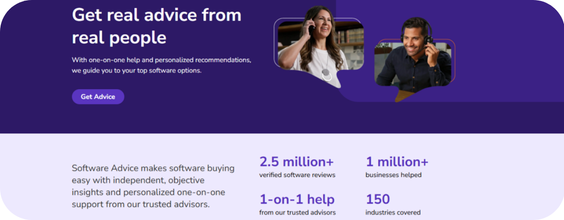
Software Advice takes a more guided approach than its sibling sites, connecting buyers with advisors who qualify leads by phone before referring them to vendors.
Best for: companies with a sales team ready to work phone-qualified leads.
How it works: free listing plus paid lead programs where qualified buyer inquiries are routed to your sales team.
Consider this: this is a higher-touch, higher-cost model than a typical review-site listing; it’s closer to a lead-gen channel than a passive review profile.
TrustRadius
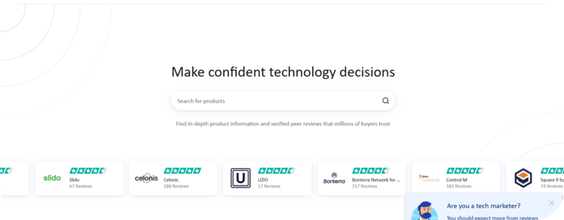
TrustRadius positions itself around depth and authentication. Reviews go through a vetting process before publication, and the platform’s research-style Buyer’s Guides are aimed at more considered, higher-stakes B2B purchases.
Best for: enterprise and mid-market software where buying committees want detail, not just a star rating.
How it works: free profile; reviews are authenticated by a research team before going live, which slows volume but supports credibility.
Consider this: if your buyer is a committee rather than a single decision-maker, TrustRadius’s depth tends to matter more than it would for a self-serve, low-price product.
Gartner Peer Insights
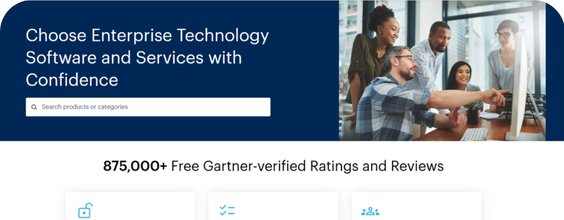
Gartner Peer Insights sits inside Gartner’s core analyst research business and is used heavily by enterprise IT buying committees who already trust Gartner as a source.
Best for: companies selling into large enterprises and regulated industries.
How it works: free to claim a vendor profile; reviews go through identity verification.
Consider this: reach here is narrower than G2 or Capterra, but influence with enterprise IT buyers can be disproportionately high.
PeerSpot
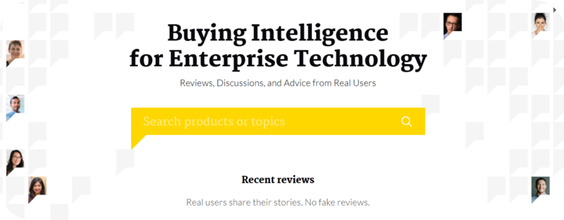
PeerSpot (formerly IT Central Station) is a crowdsourced review platform that leans toward infrastructure, security, and enterprise IT categories more than horizontal SaaS tools.
Best for: infrastructure, security, and IT operations software.
How it works: free profile; reviews and rankings are driven by community ratings across functionality, popularity, and other factors.
Consider this: less relevant for horizontal, non-technical SaaS categories like marketing or HR tools.
SourceForge
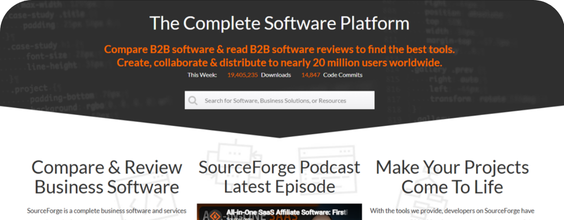
SourceForge has been around since the early open-source era and has evolved into a broader software directory and review site that still carries weight with a technical audience.
Best for: developer tools, open-source-adjacent software, and technical buyers.
How it works: free listing with paid promotional add-ons.
Consider this: audience is slightly more technical than G2 or Capterra.
Slashdot
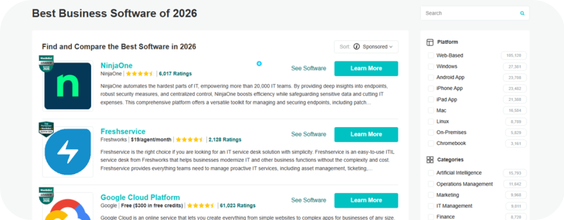
Slashdot, under the same parent company as SourceForge, runs a business software directory and review section aimed at a similarly technical, developer-leaning audience.
Best for: reaching the same technical audience as SourceForge with minimal extra effort, since profiles often extend across both.
How it works: free listing with paid upgrade options.
Consider this: largely overlaps with SourceForge’s audience rather than reaching a distinct new one.
AlternativeTo
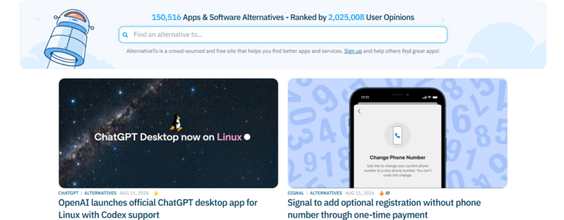
AlternativeTo organizes software around “alternatives to X” rather than traditional categories, which makes it unusually good at capturing buyers who are actively trying to switch away from a competitor.
Best for: capturing switcher intent and competitive displacement.
How it works: free listing; ranked by community “likes” rather than star ratings.
Consider this: works best when you can clearly position against a specific, well-known competitor.
Crozdesk
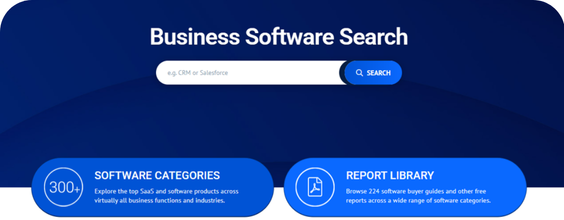
Crozdesk uses a matching algorithm to recommend software to buyers based on stated needs, alongside more conventional ratings and comparisons.
Best for: getting discovered by buyers who haven’t decided on a category leader yet.
How it works: free to list, rate, and appear in comparison reports.
Consider this: reach is smaller than G2 or Capterra, but the cost of participating is close to zero.
SoftwareSuggest
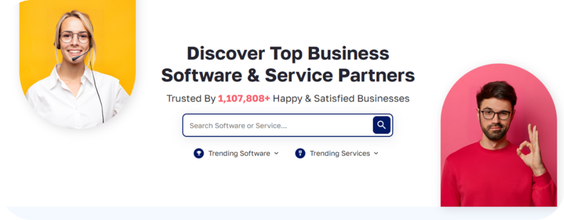
SoftwareSuggest is a software discovery and recommendation platform with strong reach in India and parts of APAC, alongside a broader international listing base.
Best for: companies expanding into or already selling in South Asian and APAC markets.
How it works: free listing; reviews are verified before publishing; live buyer assistance is part of the model.
Consider this: particularly valuable if international, region-specific visibility is part of your growth strategy.
GoodFirms
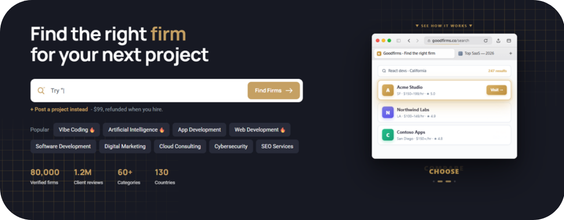
GoodFirms reviews both software products and IT/services firms, which makes it slightly different from pure software review sites.
Best for: software companies whose buyers also research implementation or services partners.
How it works: free listing; rankings are built from a research methodology covering quality, reliability, and ability.
Consider this: if your product is sold with heavy implementation services, GoodFirms’ combined software-and-services angle is a genuine advantage.
FinancesOnline
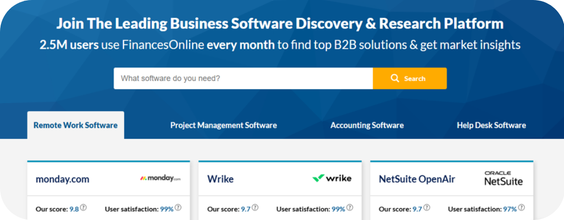
FinancesOnline focuses on the commercial impact of software: leads, conversions, and revenue, with detailed comparison and pricing content alongside reviews.
Best for: companies that want their listing framed around ROI and business impact rather than pure feature comparison.
How it works: free listing; paid options for enhanced visibility and reporting.
Consider this: content depth here tends to be strong for comparison and “vs.” style pages that also perform well in organic search.
SaaSworthy
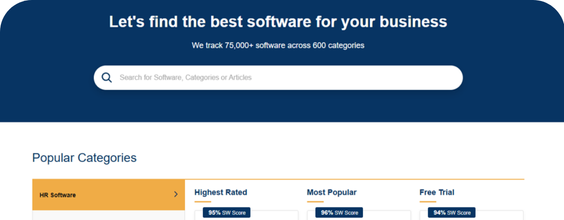
SaaSworthy is built specifically for SaaS, rather than software in general, which keeps its category structure and comparison content tightly relevant to subscription software buyers.
Best for: pure-play SaaS companies that want a listing among SaaS-specific peers rather than mixed with on-premise or consumer software.
How it works: free listing with paid promotional tiers.
Consider this: smaller audience than the major players, but tightly relevant if your product is SaaS-only.
Clutch
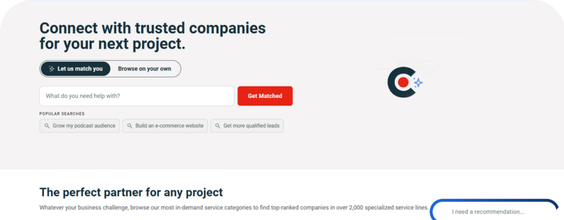
Clutch is best known for B2B services reviews (agencies, consultancies) but has expanded into software categories, especially where software is delivered alongside implementation or managed services.
Best for: software companies whose buyers also compare service providers, or software with a strong services component.
How it works: free profile; reviews are verified through direct client interviews in many categories.
Consider this: not a primary fit for pure self-serve SaaS with no services layer.
SelectHub
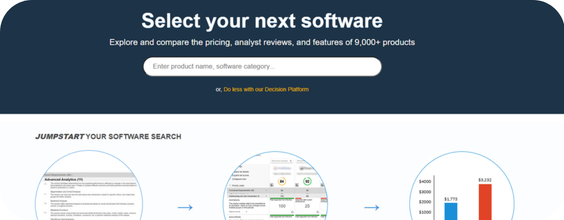
SelectHub takes a more structured, requirements-based approach, helping buyers compare software against specific criteria rather than general star ratings alone.
Best for: categories where feature-by-feature comparison matters more than broad sentiment.
How it works: free vendor profile; paid options for expanded visibility in guided selection tools.
Consider this: smaller reach than G2 or Capterra, but useful for buyers deep in structured evaluation.
Trustpilot
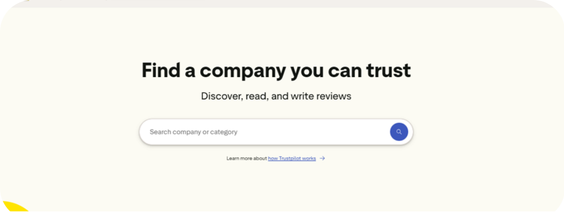
Trustpilot is a general business review platform, not software-specific, but it matters when your buyer also checks overall company reputation, support quality, and billing trust, which is common for subscription products.
Best for: SaaS companies where broader brand trust (support, billing, reliability) factors into the buying decision.
How it works: free profile with paid features for review collection tools and response management.
Consider this: less useful for narrow, technical B2B categories where buyers only care about software-specific peer reviews.
How to choose which review sites to prioritize
Rather than trying to claim every listing at once, try to prioritize based on:
- Your ICP. Enterprise IT buyers weigh Gartner Peer Insights and TrustRadius more heavily; SMB buyers lean on Capterra, GetApp, and G2.
- Your category. Infrastructure and security tools should weigh PeerSpot; developer tools should weigh SourceForge and Slashdot; SaaS-only products fit SaaSworthy well.
- Geographic market. If you’re expanding into South Asia or APAC, SoftwareSuggest carries more weight than it would for a purely North American buyer base.
- Where your competitors already have strong review volume. A category where competitors have hundreds of reviews on one platform is harder to catch up on than one where the category is still thin everywhere.
- Your review-generation capacity. A platform is only useful if you can realistically get reviews flowing; a Software Advice-style lead program is not worth it if your sales team can’t work the leads.
- Cost versus stage. Early-stage companies should prioritize free listings and defer paid upgrades until there’s enough review volume and traffic to justify the spend.
A reasonable starting set for most SaaS companies is G2, Capterra/GetApp, and one category-specific platform (TrustRadius, PeerSpot, Gartner Peer Insights, or SaaSworthy, depending on category and buyer). Expand from there.
How to get your SaaS product listed
- Claim your profile directly on each priority platform rather than letting a customer-submitted listing stand unmanaged; unclaimed profiles are frequently incomplete or outdated.
- Verify ownership through the platform’s standard process (usually a business email domain match or a short verification step).
- Complete every profile field, including screenshots, integrations, pricing tier information where relevant, and a clear category selection. Incomplete profiles get outranked by competitors with fuller listings, independent of review count.
- Write a clear, differentiated description rather than reusing generic homepage copy; buyers see dozens of similar-sounding vendors on any given category page.
- Set up a review-request workflow before you need it (see the next section), so listings don’t sit empty while you figure out logistics later.
- Monitor and respond to new reviews, especially negative ones, promptly and professionally.
Conclusion
Review and discovery platforms aren’t a side project anymore; they’re part of how SaaS buyers form trust before a sales conversation ever happens. The right approach in 2026 isn’t listing everywhere at once, it’s picking a handful of platforms that match your buyer, your category, and your stage, then investing consistently in keeping those profiles current and the reviews flowing.
Getting review generation right is really a subset of a bigger challenge every growing SaaS business faces: building trust and converting demand efficiently, wherever a buyer happens to find you.
Bonus: Check out our eBook to discover best practices for customer acquisition, new touchpoints of customer engagement and new distribution channels for revenue growth.
FAQ
-
What is the best review site for SaaS products?
There isn’t a single best platform for every company. G2 has the broadest influence across B2B software comparison content, Capterra reaches the widest SMB audience, and TrustRadius is strongest for enterprise and mid-market buyers who want in-depth, vetted reviews.
-
How do I get my SaaS product listed on review sites?
Claim and verify your profile directly on each platform, complete every profile field with clear, differentiated information, and set up a consistent process for requesting customer reviews.
-
How do I get more SaaS reviews?
Ask satisfied customers at the right moment (after a clear success point, not right after signup), make the process quick, avoid incentivizing or gating reviews, and respond to feedback so customers see the review is actually read.
-
Are software review sites important for B2B SaaS?
Yes, for most B2B SaaS companies. Buyers commonly check third-party reviews before ever talking to sales, so an absent or outdated profile is a real trust gap during research.
-
Which software review sites should a startup prioritize?
Most early-stage SaaS companies get the most value starting with G2 and Capterra (plus GetApp, since profiles often extend across both), then adding one category-specific platform based on their buyer and category.
-
What is the difference between G2 and Capterra?
G2 has broader influence on third-party comparison content and covers a wide range of B2B categories with deep analyst-style reports. Capterra tends to skew toward small and midsize business buyers across an especially wide range of software categories. As of February 2026, G2 owns Capterra, along with GetApp and Software Advice, following its acquisition from Gartner, though the platforms still operate with separate profiles, dashboards, and audiences today.
The post Best Software Review Sites for SaaS Companies in 2026 appeared first on he 2Checkout Blog | Articles on eCommerce, Payments, CRO and more.
This articles is written by : Nermeen Nabil Khear Abdelmalak
All rights reserved to : USAGOLDMIES . www.usagoldmines.com
You can Enjoy surfing our website categories and read more content in many fields you may like .
Why USAGoldMines ?
USAGoldMines is a comprehensive website offering the latest in financial, crypto, and technical news. With specialized sections for each category, it provides readers with up-to-date market insights, investment trends, and technological advancements, making it a valuable resource for investors and enthusiasts in the fast-paced financial world.