In the world of buzzwords, the acronym ‘AI’ has absolutely been the buzziest of buzzing buzzwords for at least a few years now. Where previously terms like ‘smart’ and ‘intelligent’ sufficed to promote a product, we are now being told that we are living in an age where this supposedly newfangled ‘artificial intelligence’ is doing literally everything faster and better while also curing cancer on the side. Yet, as a wise man once said: “You keep using that word. I do not think it means what you think it means.”
The obvious implication of using a term like ‘artificial intelligence’ in this manner is that it brings to mind a modern version of early last century’s ‘electronic brain’ vernacular alongside the rise of digital computers. Yet rather than electrons in vacuum tubes and semiconductors propelling us into a brave new world of super-intelligence, we now just use said devices to doom scroll and to engage in passive-aggressive online communications like the typical primate groups in a virtual jungle defending their turf.
Similarly, the term AI is massively oversold today, least of all in the inherent presupposition that we somehow have finally cracked the mystery of the brain and have created an intelligence that can go toe-to-toe with humans and even our corvid dinosaur friends. Perhaps the worst part is that there is a veritable mountain of fascinating algorithms and other constructs that help us automate many tasks today, making it somewhat rude to just give up and call everything ‘AI’ like we learned nothing from the 1980s AI craze.
So what is exactly being smoothed over by the glossy marketing of ‘everything is AI’?
Cognition Versus Intelligence
Recently I covered the topic of intelligence, both in the sense of its definition and the empirical evidence. Within that definition it is already quite obvious that animals like birds are pretty intelligent, and can compete with the average human on a number of metrics. Of the different types of intelligence, fluid intelligence (Gf) is perhaps the most crucial since it pertains to what might be the clearest sign of intelligence in the form of reasoning.
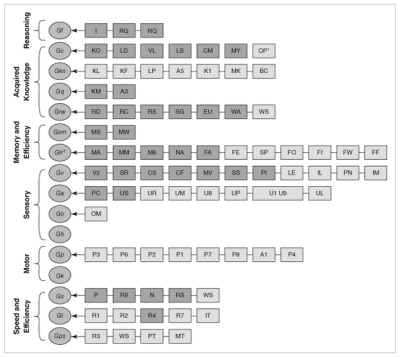
Add to this memory (knowledge and recall) as well as acquired skills and you got the basics of general intelligence. One could absolutely make the point that this is all that intelligence is about, as in the acquisition of data, processing it and using reasoning to come to new conclusions. Yet as can be seen in the referenced article, the basic CHC intelligence model can, and has been, expanded to include sensory, motor and efficiency metrics, which are very species-centric.
Of course, it is true that within cognitive processes it’s hard to exclude sensory input and output via actuators like muscles to perform some kind of physical action. After all, no type of intelligence is of much use if there are no in- and output, such as how we need at least one of our five senses to be aware of the world around us along with some way to interact. Whether intelligence could develop without both is also a valid question.
The resulting disagreements in the academic community on where to draw the line between intelligence and cognition do not help with narrowing the scope of ‘intelligence’, as it makes it possible to assign the label to something like machine vision. Even when this is a system that merely replicates parts of the visual cognitive process without the underlying reasoning and understanding that accompanies this cognitive process in us animals.
What we can conclude from this, however, is that what we call ‘smart’ or ‘AI’ are merely systems that attempt to replicate such a fragment of the human cognitive process.
Machine Vision
Perhaps the biggest strength of machine vision (MV) is that it allows for a cognitive task to be off-loaded to a computer system that will never suffer fatigue or become distracted. This is essential in tasks like quality assurance, such as on production lines. Rather than having a human check each item that zips past for certain properties, alignments, etc. a machine vision system can take over this cognitive task while being inarguably far more efficient.
MV encompasses a wide range of implementations, all targeting a specific task that can use different sensors and outputs to accomplish a goal. For e.g. PCB assembly lines and food production you got many MV systems that use visible light as well as near-infrared and other camera and sensor types to detect flaws, spoilage and other issues. This data is then passed through the rest of the system, where some kind of programming allows for the detection of any issues.
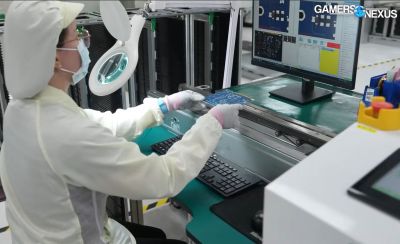
At the board house, suspect PCBs are identified and then taken off the conveyor and handed over to a human who can then either confirm the issue and address or bin it, or mark it as a false positive by the system and put it back on the conveyor. The main advantage here is that it reduces the cognitive load on the humans, who are notoriously terrible at long stretches of boring work.
Another area where MV is essential is that of self-driving vehicles, which is where sensor blending and interpretation of features in a scene using e.g. edge detection and recognition using a convolutional neural network (CNN) is paramount. This replicates the human cognitive process of navigation and steering, though it should be noted that these systems require significant more sensors, including radar and Lidar, to do their job somewhat effectively.
Here it should be noted that MV doesn’t replace human cognition. Rather, it serves to complement it from a general automation perspective. This is why purely self-driving vehicles (Level 5) are still fictional and sometimes comically obvious PCB assembly flaws can make it through automated QA, even if overall it is a net win for the human workers.
Pattern Recognition
Much of the medical profession is about pattern recognition and differential diagnostics, as symptoms and test results have to be categorized and analyzed. Within this field there has been a push towards computer-aided diagnosis (CAD) for decades now, here also to try and reduce the cognitive workload on medical staff. The start of this was with expert systems implemented in e.g. Lisp, which use a knowledge base and an inference system in order to reach a conclusion or solve a problem.
An issue here is of course that this knowledge base has to be constantly maintained, which is why artificial neural network designs have become more popular, with large language models one particular example of these. Such models can be updated more easily, with the slight gotcha that by not having the expert system maintained by human beings any more and instead relying on what are essentially statistical models, you’re abandoning the ‘expert’ part.
This is why LLMs have been increasingly pushed to the side by things like retrieval augmented generation (RAG), which ‘grounds’ the provided facts in more factual reality such as human-written documents, leaving the LLM to help provide a friendly natural language interface.
When it comes to analyzing test results such as of MRI scans and X-rays, this covers much of the same ground as with full MV systems, with the same gotcha that although it can save time, it can also make incredibly dumb mistakes and thus cannot be left unsupervised.
Natural Language
Perhaps the biggest advancement of the past years has been in creating better chatbots that can keep up a conversation on a level that would put ELIZA to shame. Of course, this is at least as much smoke-and-mirrors as ELIZA, in that there is no actual intelligence or concerned therapist behind the friendly interaction, just a complex human-written chat interface that creates the query and handles all other details of using an LLM for generating the semblance of a human-level interaction.
The term ‘emotional intelligence‘ refers to the ability to perceive and feel emotions, something that is impossible for an entity that is incapable of feeling and reasoning, meaning that it is a fairly complex cognitive process that is also heavily susceptible to projection of one’s own feelings onto another person or even an inanimate object. Although the chatbot is literally incapable of learning and requires external session information to be stored within the context window, these can be very convincing near-facsimile under the right conditions.
Faking Cognition
The increased use of machine vision and similar systems has been an absolute boon in automating industries and other fields, making life better for everyone involved due to the reduced cognitive load and freeing up humans to do more creative tasks where one isn’t asked to mindlessly perform the same task over and over.
There are many fields where such increased cognitive offloading is a good thing and quite feasible, but always with a full understanding of the limitations and potential pitfalls, especially when it comes to risks like cognitive atrophy caused by cognitive surrender. This has been identified as a hazard in an increasing number of studies, highlighting the importance of maintaining one’s critical thinking skills.
Even if actual artificial intelligence happened next year, it’s still paramount that we treasure human intelligence, as it is the only one we will always have, as well as the sole reason why humankind has come this far.
This articles is written by : Nermeen Nabil Khear Abdelmalak
All rights reserved to : USAGOLDMIES . www.usagoldmines.com
You can Enjoy surfing our website categories and read more content in many fields you may like .
Why USAGoldMines ?
USAGoldMines is a comprehensive website offering the latest in financial, crypto, and technical news. With specialized sections for each category, it provides readers with up-to-date market insights, investment trends, and technological advancements, making it a valuable resource for investors and enthusiasts in the fast-paced financial world.