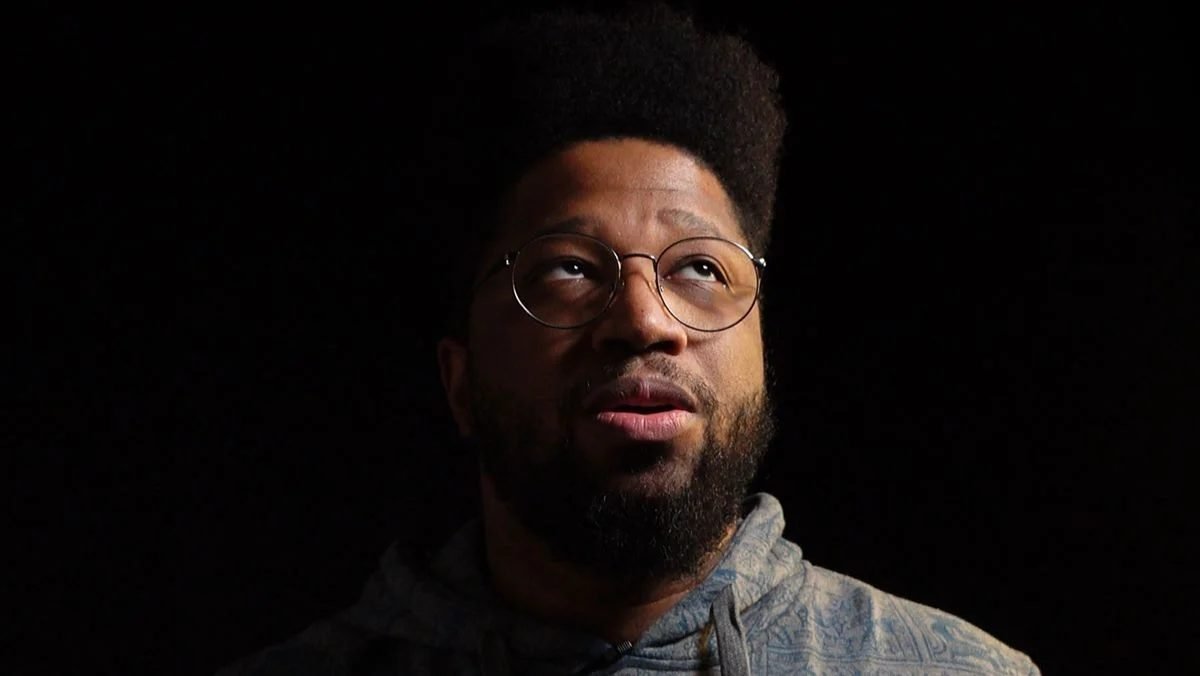
Obsession over a particular topic is typically one of the requirements to give yourself the moniker of nerd or geek. And if you proudly let your geek flag fly, chances are you’ve gone down Reddit rabbit holes exploring the inner workings of your favorite video games, manga, films, and TV shows. Sure, researching cheat codes for your favorite games is one way to do it. Or you can be like Elijah Lee who’s making it easier for “otaku” to uncover why these cheat codes exist in the first place, one documentary at a time with his platform, The Icon.
Before you ask, no, Lee is not referring to himself when he decided to launch The Icon. Instead, the Chicago-based creative pays homage to the iconic video games, characters, and people that shaped the video game industry. The journey to The Icon was as winding as the roads in The Legend of Zelda: Ocarina of Time, a favorite of Lee’s.

His background in computer science and blogging during the advent of personality-driven publications, like Buzzfeed, merged with his passion for gaming. What started off as “listicles,” turned into coverage of lesser known video game trailblazers, like the first Black woman video game designer, Muriel Tramis.
Frustrated with the demands of the almighty, social media algorithm, but inspired by video games being taken seriously as an art form, Lee decided to focus on the content he wanted to create on his own terms.
“I remembered being fascinated with Dreamcast commercials when they first came out, where it was following these video game characters at the club and at restaurants and I’m like, ‘I kind of want to do something like that,’” Lee told Nerdist. “And that’s really where I started with tongue-in-cheek interviewing characters that are actually in the game to tell this story about how the games were created to be engaging and fun, while still being educational at the same time.”
His magical trifecta of computer science, journalism, and video games evolved into Lee creating mini-documentaries with video game characters sitting by his side as if they were all playing couch co-op. While the finished product makes it look like child’s play, the development of Lee’s videos is anything but.
He starts with identifying the video game he’s most interested in, at the time, and follows that interest with immense deep dives into untold lore. With archival research from sources, like Archive.org and the Video Game History Foundation, Lee pulls lesser known facts about video games and inserts that lore into educational videos. In a way, Lee is archiving video game media just as much as the resources he pulls from.
“A lot of that stuff can be found on the internet, thanks to Archive.org, [the Video Game History Foundation], and going to the local library to find what you can,” Lee said. “I’m really appreciative of the people online who have made it their business to catalog and archive all this information. Right now, as we speak, there could be a video game that is just lost forever that only exists in the memory of the people that made it and the people that played it. So, I really think that conserving these things is really important, and I wouldn’t be able to do what I do without it.”
From there, he focuses on answering questions the research poses and develops storyboards for his visuals. Afterwards, Lee either buys or creates 3D models of his video game characters, hires actors (or employs himself) to voice the characters, records live footage to merge with his 3D models, and then the video editing process commences.
Thanks to his meticulous process, YouTube users can uncover how a simple bug in Street Fighter’s coding resulted in fighting combos that revolutionized the industry or how a pioneer of otaku culture turned an entomology interest into a video game we know as Pokémon. These final results stem from Lee’s extensive time cutting his teeth as a video editor.
With a meticulous process, Lee recognizes that not everything goes to plan and his eagle-eyed fans take note. In one of his videos about Sonic the Hedgehog, Lee takes on voice acting duties for the iconic speedster. Inspired by Jaleel White, of Steve Urkel fame and the original Sonic voice from the animated series, Lee felt proud of the work he did. Which is why he wasn’t dismayed when a comment under the video asked, “Why does Sonic sound like Cartman from South Park?”
“I’m like, ‘I don’t’ and I listen to it and I’m like, ‘Oh, I do. I do,’” Lee said. “So, I just responded back with all caps, “You will respect my authority.”
While Lee takes cheeky comments under his videos in stride, the ones he receives the most of are about why his YouTube channel doesn’t have more subscribers. These questions, and his growing subscriber count, inspire him to keep creating because he sees the impact his videos have on the Icon fans and casual YouTuber users alike. That’s not just because they feel Lee’s passion for gaming, but because video games have a long history of impacting film, TV, fashion, music, and the pop culture zeitgeist altogether.
In 2012, New York City’s Museum of Modern Art (MoMA) curated several games, including PacMan, Tetris, and The Sims, to be shown as art in its Applied Design exhibition. Final Fantasy XIII’s Lightning appeared in an official 2015 Louis Vuitton fashion campaign, while niche gaming language is a part of the modern-day lexicon, like “respawn” or “level up.” And when you consider that, in 2016, more people watched the League of Legends world championship than they did the NBA Finals, the proof is in the playtime.
While not everything goes according to plan for Lee, creating videos is still a labor of love, one that started with watching too much X-Play on TV and a video game journalism magazine from his mother. Plenty of blood, sweat, and tears goes into it, especially when you consider Lee’s filming efforts in mosquito-ridden forests to record footage about Pokémon Gold and Pokémon Silver or spending hours in the Windy City’s Field Museum just to get the perfect shot for his Star Fox video. That same labor goes without the support of artificial intelligence (AI), something many of The Icon fans inquire about.
What’s Lee’s answer to it all?
“I think right now, if you’re really trying to stand out and be seen in a world of AI, the best thing you can do is be more human,” Lee said. “I do see that there are some uses for AI with administrative work and things like that to simplify things and all that, but mostly where I’m concerned is within art spaces.”
While Lee sees the benefit to AI automating administrative tasks, he still sees the beauty in art being created by human hands.
“I want to make money off art. I’m not going to say that I don’t, but when your basis of what is art is associated with a price tag, that starts to have a problem,” Lee said. “AI is a symptom of that overarching problem of only seeing the price tag and wanting to basically turn creativity and intelligence into a subscription service, which is something they have said.”
Black Mirror-esque statements aside, creatives like Lee continue to create in spite of the growing shadow that AI casts. With each video Lee creates, he pushes against the need to utilize AI over human talents, while discovering his new skills at the intersection of computer science, filmmaking, and journalism.
The need to create for the sake of creation exists at the heart of the work of many Black independent creators, of which Lee joins the ranks of. From Cheyenne “The Geek” Ewulu’s The Comic Shop webseries starring her along with anime voice actor Zeno Robinson to model and fashion muse Wisdom Kaye exploring fashion inspo from the “Straw Hats” of One Piece, these Black creatives all find ways to express their geeky identity and influence TV, film, and fashion alike. What started as a “Blerd” renaissance became a movement to reclaim narratives, create new ones, and foster an ever-growing audience yearning for content by Black content creators.
When it comes to Lee and The Icon, continue to expect more content to come down the Super Mario Bros. pipeline. Pulling inspiration from animated shows like Freakazoid, Histeria!, and the Steven Spielberg-produced Animaniacs, Lee’s ready to push his artistry to new bounds.
“I don’t want to give too much away, but I kind of wanted to do more with CGI, [the] characters that I create, and tell a better and fuller story through this medium,” Lee said. “That’s kind of what I’m heading for, but what I’m doing right now, I think is probably the most ambitious thing that I’ve done with The Icon.”
Whether it’s finding new filming techniques or unearthing hidden lore, Lee is ready to level up The Icon.
The post Elijah Lee Turns Video Games Into Reality-Bending Documentaries appeared first on Nerdist.
This articles is written by : Nermeen Nabil Khear Abdelmalak
All rights reserved to : USAGOLDMIES . www.usagoldmines.com
You can Enjoy surfing our website categories and read more content in many fields you may like .
Why USAGoldMines ?
USAGoldMines is a comprehensive website offering the latest in financial, crypto, and technical news. With specialized sections for each category, it provides readers with up-to-date market insights, investment trends, and technological advancements, making it a valuable resource for investors and enthusiasts in the fast-paced financial world.