
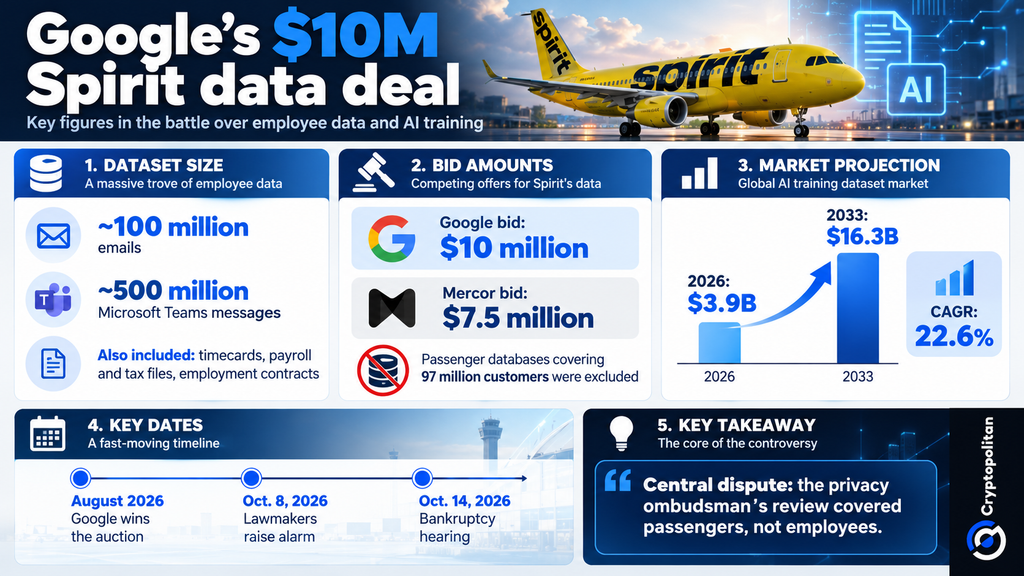
Google’s offer of $10 million for the internal data of the bankrupt Spirit Airlines has raised questions regarding who will have access to organizational records once the employer has been bankrupt. More than 120 members of the US legislature want to see more safeguards implemented before the bankruptcy hearing that is scheduled to be held on October 14.
What the lawmakers want kept out of the deal
In their letter dated October 8, Senator Elizabeth Warren and Representative Steven Horsford, along with 119 of their co-signers, raised alarm about the impending sale, which reportedly included approximately 100 million emails, 500 million Microsoft Teams messages, payroll and tax records, timecards, and employment contracts. Some of the documents may contain personal health information and employees’ requests for adjustments to their working conditions due to health issues or disabilities. Almost 1,000 Spirit employees have been laid off in Las Vegas.
“Spirit’s workers handed over this information because their jobs required it, not so it could be sold to train a different company’s AI,” Horsford said. The legislators want to have employee information kept out of the deal as much as possible, remove any confidential safety reports, and enforce restrictions on the use of the information in the future.
Google says the data will be scrubbed first
“We are not looking to buy any personal information from Spirit,” Google told Reuters. It says identifying records will be “completely excluded” or de-identified independently. Google beat Mercor’s $7.5 million offer in August. Passenger databases covering 97 million customers were excluded, while Tonic.ai was hired to scrub remaining material.
But court-appointed ombudsman Lucy Thomson’s favorable review covered passengers, not employees.
The significance of this distinction is that the report emphasized the privacy of passengers instead of employees’ information. US bankruptcy laws insist that privacy ombudsmen evaluate “the potential losses or gains of privacy to consumers,” but do not give similar rights to employees. Therefore, even if the ombudsman made a recommendation for approving the sale, it does not indicate the fact that concerns about the confidentiality of employees’ private data have been solved.
Why stripping names may not be enough
In their letter, legislators caution that AI technology has the capacity to bring together fragmented bits of information in order to know who a person is, even after their name is gone. The guidance from NIST makes similar warnings known regarding the risks of re-identification. In a bankruptcy court case, privacy organization EPIC stresses that de-identification is “not a magic wand” and may lead to the fact that employers would gather data that can be sold off.
Another example is the guidance from France’s data protection authority CNIL, which states that AI systems may be subject to GDPR when personal data may be extracted using “means that are reasonably likely to be used.”
The commercial pull behind corporate datasets
Grand View Research expects the AI training dataset market to grow from $3.9 billion in 2026 to $16.3 billion by 2033, a 22.6% annual growth rate. That demand makes corporate records valuable, but privacy disputes could complicate future acquisitions.
Cryptopolitan previously covered Meta’s retreat from employee mouse and keystroke tracking after staff likened it to “training your own replacement.”
Union leader Sara Nelson says the Spirit case carries “tremendous implications for workers across the economy.” The October 14 decision could help shape how bankruptcy courts handle workplace data in the AI era.
Don’t just read crypto news. Understand it. Subscribe to our newsletter. It’s free.
This articles is written by : Nermeen Nabil Khear Abdelmalak
All rights reserved to : USAGOLDMIES . www.usagoldmines.com
You can Enjoy surfing our website categories and read more content in many fields you may like .
Why USAGoldMines ?
USAGoldMines is a comprehensive website offering the latest in financial, crypto, and technical news. With specialized sections for each category, it provides readers with up-to-date market insights, investment trends, and technological advancements, making it a valuable resource for investors and enthusiasts in the fast-paced financial world.