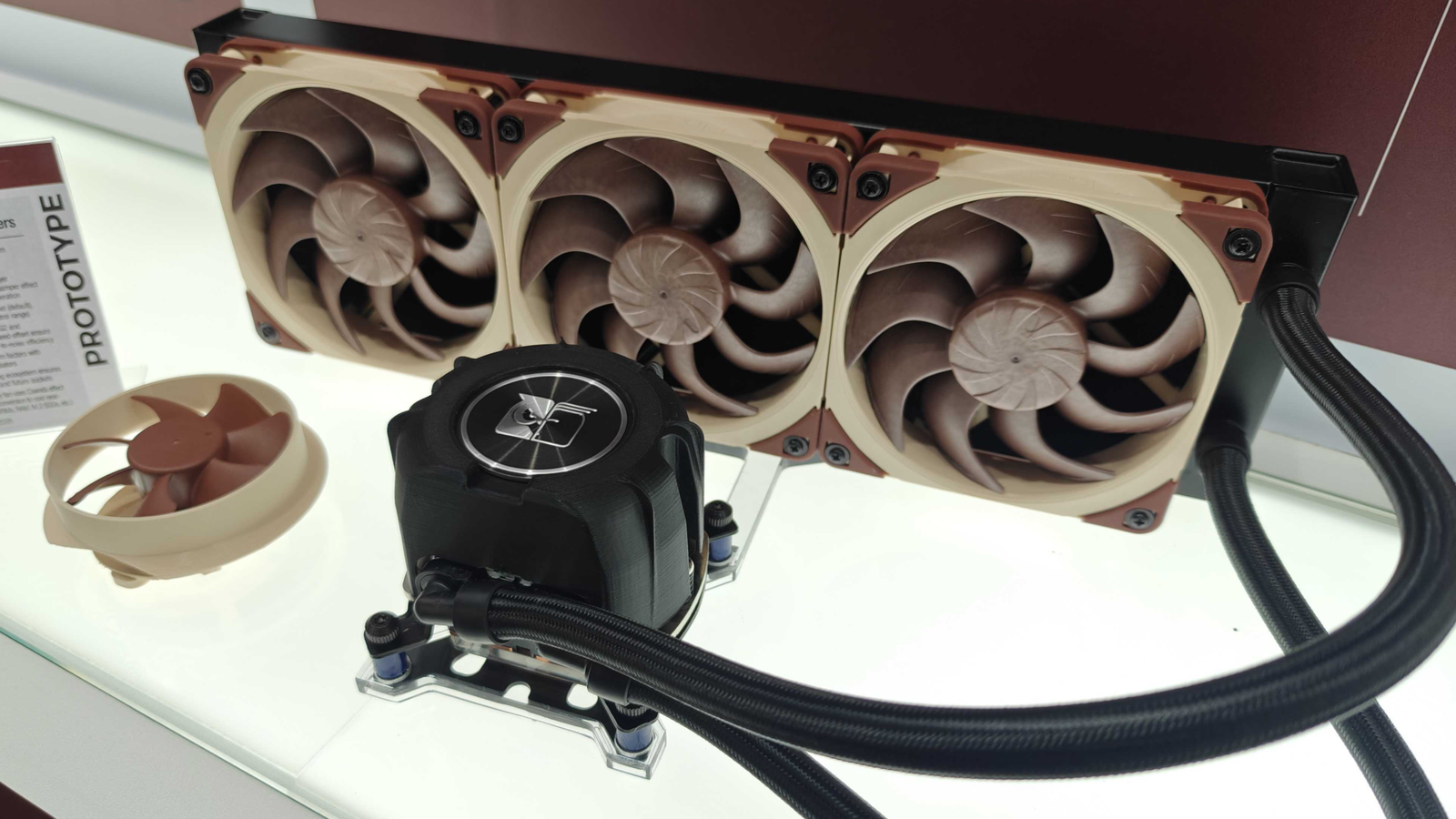
Water-cooling systems look spectacular inside a PC. But do you really need them? For most gamers, the honest answer is… no. At least not if the sole aim is to squeeze more performance out of your machine. In many cases, a good air-cooling system is perfectly adequate and more sensible.
When it comes to CPU cooling, it’s not just about achieving the lowest possible temperatures. You’ve also got to factor in cooling performance, noise levels, maintenance, and price. With those factors in mind, this is where it becomes clear. Water cooling isn’t automatically the better solution.
Custom water cooling is impressive, but it’s ultimately a luxury project
First, it’s important to distinguish between all-in-one water-cooling systems (AIOs for short) and genuine custom water-cooling setups.
Custom water-cooling systems are custom-built circuits consisting of a pump, radiator, hoses or hard tubes, water blocks, a reservoir, and fittings. They can look spectacular and are a real DIY project for many enthusiasts.
In practice, such systems can be very powerful. When the graphics card is added to the loop, noise levels and temperatures can be significantly improved. However, the effort involved is considerable, the costs are high, and for most users, the practical benefits do not justify the price.
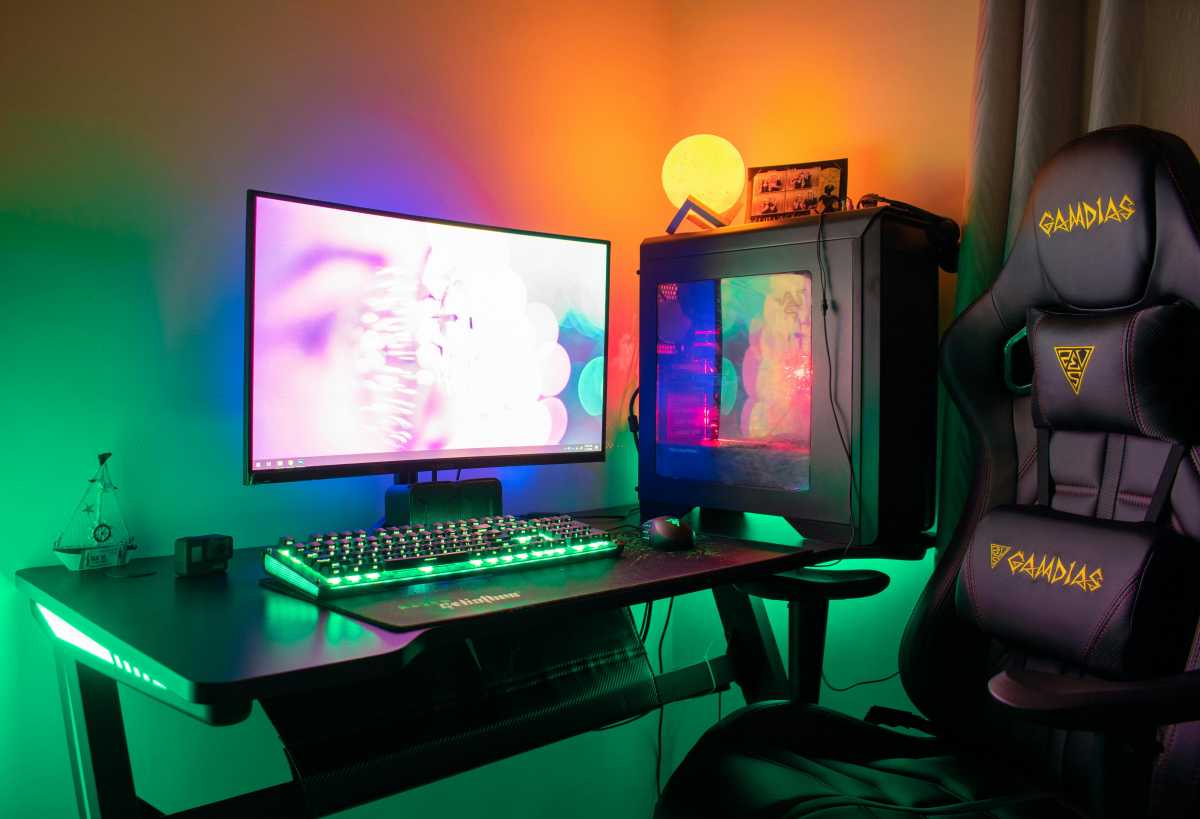
Pexels: John Petalcurin
You can get a decent AIO for as little as $80. A custom water-cooling system with better performance can cost many times that amount. If you want high-quality components, a clean look, good fittings, and multiple radiators, you’ll end up spending several hundred dollars.
For enthusiasts, this can be entirely justified. Anyone who enjoys planning, building and optimizing will find this a fascinating project. However, a custom water-cooling system is hardly a good value for standard gaming PCs.
Better than air, but not always the best choice
With AIO water-cooling systems, the situation is more complicated. An AIO consists of a closed water circuit, which is usually sold as maintenance-free. This means you don’t have to top up the coolant or assemble individual components yourself.
In many tests, high-performance AIOs actually outperform traditional air coolers in terms of pure cooling performance. Particularly large models with 280-, 360-, or 420-millimetre radiators can effectively dissipate very high thermal loads.
However, this does not automatically translate into real-world benefits.
The key point is this: as long as your CPU isn’t reaching its thermal limit and throttling as a result, lower temperatures won’t automatically give you a higher FPS. A CPU running at 65 degrees while gaming isn’t any faster than the same CPU at 78 degrees, as long as they’re both stable.
Typical gaming processors often generate significantly less waste heat while gaming than in synthetic full-load tests. That’s why a good air cooler is more than adequate in most gaming PCs.
Cooler doesn’t automatically mean faster
Many PC builders look at temperature readings first. The lower, the better. That’s the obvious assumption.
But it’s not quite that simple. Of course, lower temperatures are generally a good thing. They provide headroom, can reduce noise levels, and help with sustained heavy loads. But when it comes to gaming, the crucial question is: does the cooling prevent a performance issue?
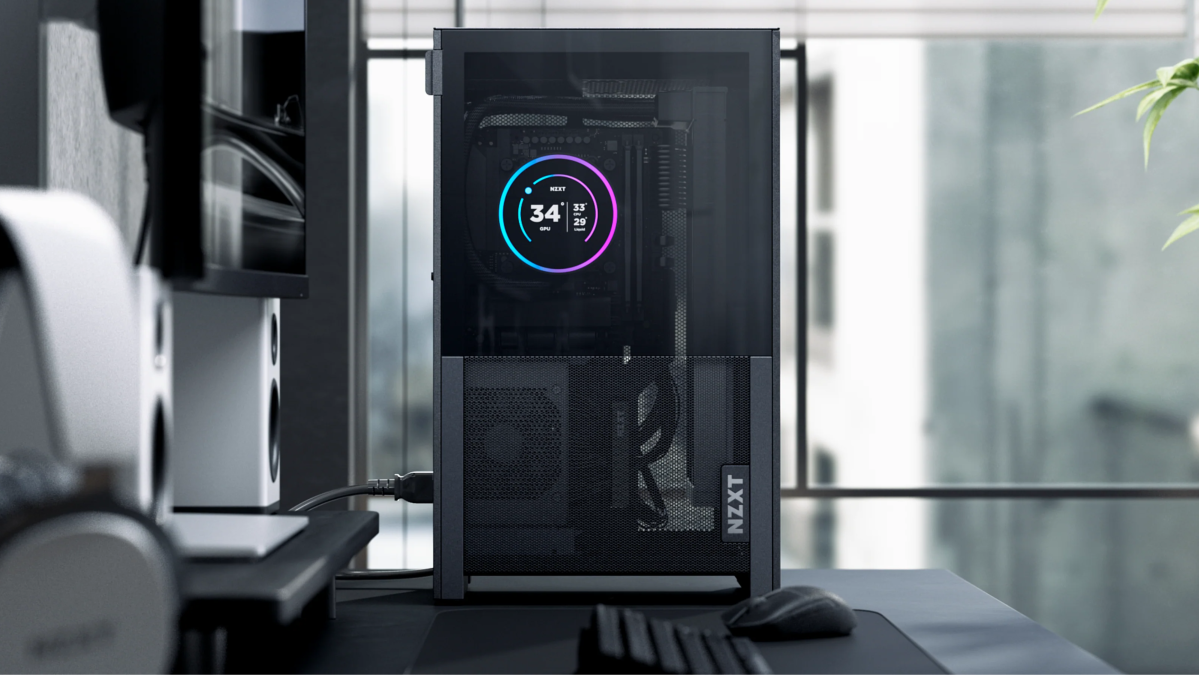
NZXT
If your CPU isn’t throttling, a more expensive cooling system usually delivers barely measurable performance gains in gaming. You’re mainly paying for lower temperatures, aesthetics, quieter operation, or peace of mind–not necessarily more FPS.
This is particularly important for mid-range and gaming CPUs. In many cases, a Ryzen 5, Ryzen 7 X3D, or Core i5 system does not need a large AIO. A solid air cooler is perfectly adequate.
Air coolers are appealing because they deliver strong performance at a lower cost
The main advantage of traditional air coolers is their strong value for money. Good models are available at relatively low prices, and even budget tower coolers are capable of reliably cooling modern gaming CPUs, provided the case has decent airflow.
In many cases, the savings can be allocated elsewhere, such as to a more powerful graphics card, additional SSD storage, a higher-quality power supply, a more robust motherboard, or a quieter case.
This is true for gaming PCs, where a better graphics card almost always delivers better performance than a more expensive CPU cooler. So if you have to choose between an expensive water-cooling system and a faster GPU, you should opt for the better graphics card.
Airflow is more important than people realize
One point that’s often underestimated is that even the best CPU cooler is of little use if the case is poorly ventilated.
Fresh air must flow into the case and warm air must flow out again. If heat builds up inside the case, the CPU, graphics card, motherboard voltage regulators, and SSDs all suffer equally. An affordable air cooler in a well-ventilated case can be a better choice than an expensive AIO in a setup with poor airflow.
You should ensure a clean basic configuration: fresh air coming in at the front or bottom, exhaust air leaving at the back or top, no fan slots unnecessarily blocked, and a tidy interior.
When an AIO water-cooling system makes sense
Nevertheless, there are good reasons to opt for an AIO. It isn’t fundamentally a bad choice – it’s just often purchased for the wrong reasons.
An AIO can be a sensible choice if you’re using a very powerful CPU, frequently running long rendering, encoding or workstation workloads, or deliberately aiming to build a particularly quiet system. In some cases, an AIO may also be more practical if a large air cooler doesn’t fit or blocks the RAM.
Furthermore, aesthetics play a major role. Many users don’t want to see a massive heatsink on the motherboard. An AIO looks tidier and often features RGB lighting or even displays on the pump block. This isn’t a technical necessity, but it’s a legitimate reason to buy one.
The important thing is this: buy an AIO because you want one – not because you think every gaming PC absolutely needs one.
The downsides of AIOs
AIOs also have their drawbacks. For one, it’s more likely to fail than an air cooler. The pump can wear out, fluid can evaporate slightly over the years, and deposits can build up. While the risk of a leak is low with modern branded products, it cannot be ruled out.
Installation is also a little more challenging. The radiator must fit inside the case, the hoses must not be positioned awkwardly, and the pump should not be mounted in such a way that air collects in the wrong place. If you install an AIO incorrectly, it could negatively impact noise levels, cooling performance, and lifespan.
An air cooler is much simpler, and heat sinks pretty much last forever. If a fan wears out after years of use, it’s easy to replace. It shouldn’t cost you much, either. That’s what makes air coolers so attractive. They’re simple, robust, and durable.
The insider tip for cooler gaming PCs
Before spending a lot of money on a new cooling system, it’s worth taking a closer look at undervolting.
Many modern CPUs and GPUs run at high voltages straight from the factory. Undervolting can significantly reduce the temperature without any noticeable loss in performance. In some cases, performance can even improve because the chip is less likely to hit temperature or power limits.
This applies to graphics cards, but also to many processors. Anyone who explores this topic can reduce noise levels, power consumption, and temperatures–often without needing any new hardware at all.
Of course, you should proceed with caution and thoroughly test for stability. For many users, undervolting is a more sensible way to optimize performance than switching straight to an expensive water-cooling system.
Who really benefits from water cooling
Water cooling is particularly worthwhile for three groups:
- Enthusiasts who enjoy tinkering and are prepared to spend more money on aesthetics, noise levels, and maximum control
- Users with very powerful CPUs that regularly run under high sustained loads (like rendering and 3D work)
- PC builders pursuing a specific design goal
The best cooling solution isn’t always the most expensive
Water-cooling systems aren’t bad. Far from it! AIO systems can be very powerful. Custom water-cooling setups can look fantastic and offer advantages in high-end systems.
But for most gaming PCs, good air cooling is the more sensible option. It’s cheaper, more durable, easier to install, and, in many cases, totally adequate. As long as your CPU isn’t throttling, a more expensive water-cooling system usually doesn’t deliver additional gaming performance.
If you want a water-cooling system for aesthetic reasons, go ahead and get one. If you enjoy tinkering, build yourself a custom water-cooling setup. If you’re regularly running a powerful CPU at full capacity, a large AIO might be the better choice.
This articles is written by : Nermeen Nabil Khear Abdelmalak
All rights reserved to : USAGOLDMIES . www.usagoldmines.com
You can Enjoy surfing our website categories and read more content in many fields you may like .
Why USAGoldMines ?
USAGoldMines is a comprehensive website offering the latest in financial, crypto, and technical news. With specialized sections for each category, it provides readers with up-to-date market insights, investment trends, and technological advancements, making it a valuable resource for investors and enthusiasts in the fast-paced financial world.