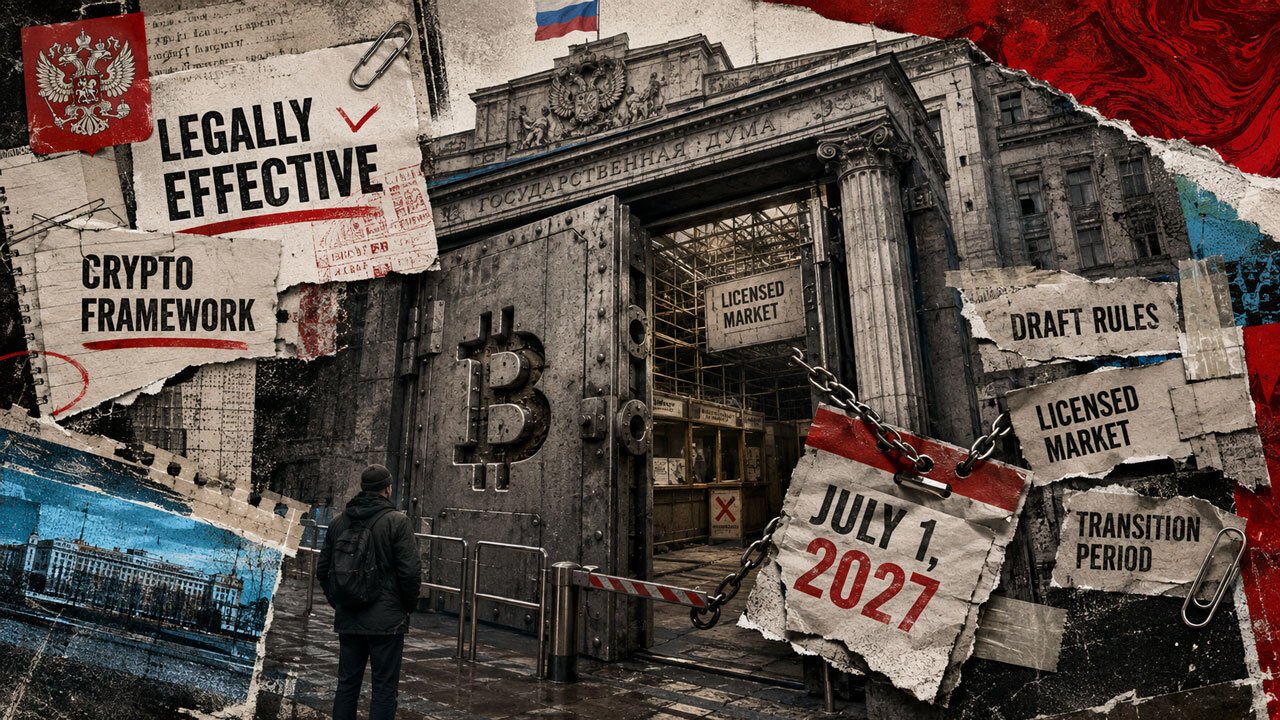
Russia’s new crypto law took effect Sept. 1, but investors cannot yet access the full market it promises.
Federal Law No. 282-FZ gives cryptocurrency a formal place within Russia’s supervised financial system, allowing regulated investment and cross-border use through brokers, exchanges, management companies, digital depositories and organized trading venues.
However, the catch is that many of those channels are not ready.
The Bank of Russia is still completing rules that will determine which cryptocurrencies ordinary investors can buy, how trading venues calculate prices, and what capital requirements digital depositories must meet. Firms also have until July 1, 2027, to obtain licenses and bring their operations into compliance.
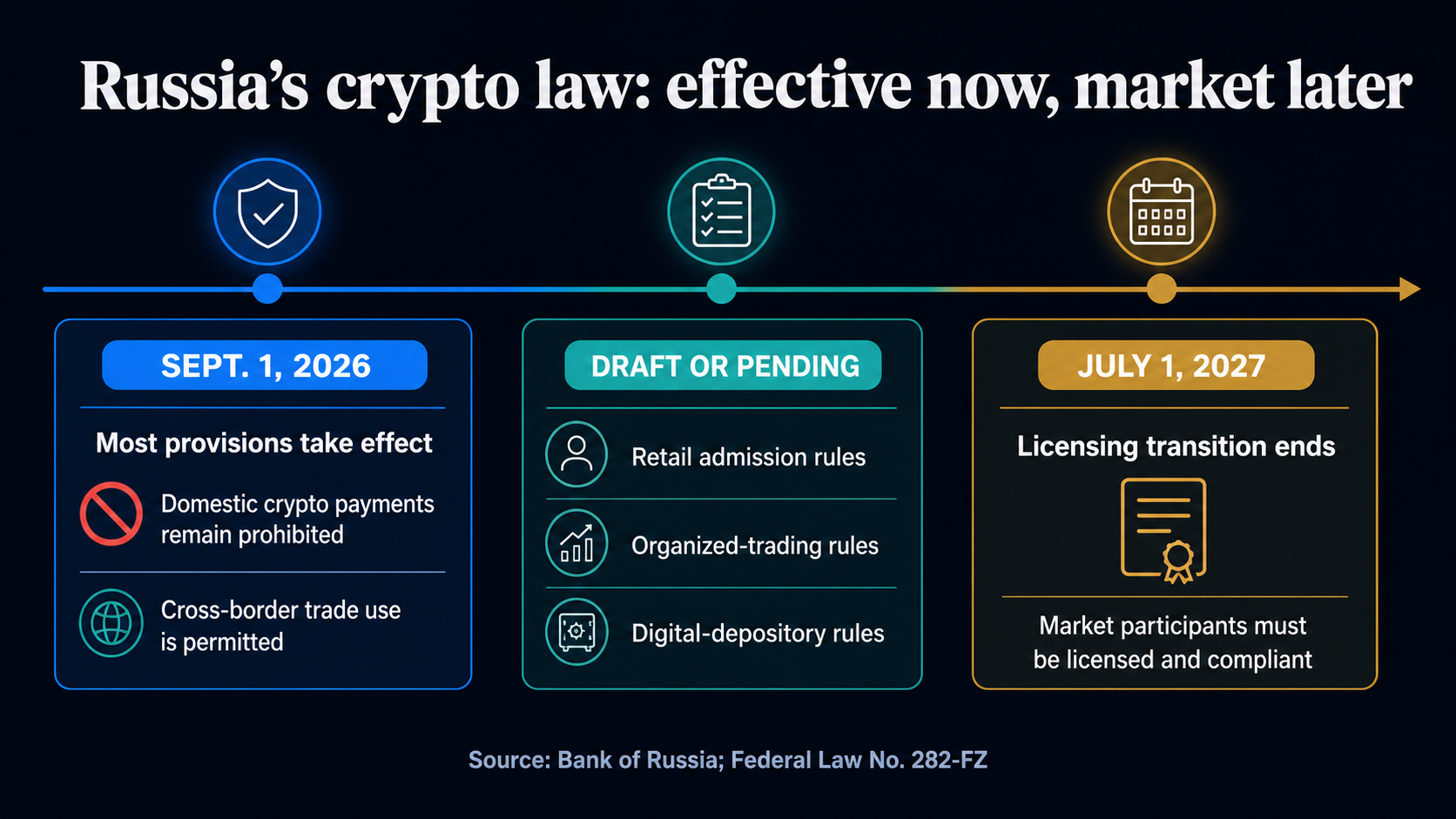
That leaves Russia in an unusual transition: crypto now has a legal framework, but the infrastructure needed to use it broadly is not yet in place.
Meanwhile, the new law does not open the door to everyday crypto payments. Instead, Bitcoin, stablecoins and other cryptocurrencies remain prohibited for purchases of goods and services inside Russia.
Their permitted role is narrower. Exporters and importers can use crypto for cross-border settlements, while investors will eventually gain access through supervised intermediaries. The Bank of Russia has said the regime also covers foreign stablecoins.
Moreover, retail investors face tighter restrictions once access expands.
Non-qualified investors must pass a test and can purchase no more than ₽300,000 of eligible cryptocurrency per year through each intermediary. Qualified investors must also complete testing but face no equivalent monetary cap.
What qualifies for retail purchase is also still being decided.
The central bank has proposed allowing Bitcoin, Ethereum and Tether’s USDT, but that list remains part of a draft ordinance. Separate proposals governing organized-trading prices and digital-depository capital requirements were also unfinished heading into Sept. 1.
Two additional Bank of Russia measures dated Aug. 27 were still undergoing Ministry of Justice registration in the regulator’s latest published status.
The staggered rollout extends beyond licensing. Some provisions of the law do not take effect until July and September 2027, reinforcing that Sept. 1 marks the legal starting point rather than a single opening day for Russia’s crypto market.
The immediate change is therefore certainty over the structure Russia intends to build. The next stage depends on the central bank turning that framework into operating rules and enough firms securing licenses to give investors somewhere to trade.
Until then, Russia has formally opened the door to a regulated crypto market without yet completing the market behind it.
The post Russia just switched on a crypto market that doesn’t fully exist yet appeared first on CryptoSlate.
Most provisions took effect Sept. 1, but draft rules and a July 2027 transition limit what can operate now.
The post Russia just switched on a crypto market that doesn’t fully exist yet appeared first on CryptoSlate. Crypto, Featured, Legislation, Regulation, Bitcoin, BTC, ETH, ethereum, stablecoins, Tether, USDT
This articles is written by : Nermeen Nabil Khear Abdelmalak
All rights reserved to : USAGOLDMIES . www.usagoldmines.com
You can Enjoy surfing our website categories and read more content in many fields you may like .
Why USAGoldMines ?
USAGoldMines is a comprehensive website offering the latest in financial, crypto, and technical news. With specialized sections for each category, it provides readers with up-to-date market insights, investment trends, and technological advancements, making it a valuable resource for investors and enthusiasts in the fast-paced financial world.