Combinatorial mathematics Ph.D candidate Richard Garfield debuted the world’s first trading card game at GenCon 1993: Magic: The Gathering. Two years prior, the then-fledgling company Wizards of the Coast had refused Garfield’s initial board game project, so he challenged Wizards’ founder Adkinson to name an idea, any idea, and he would build a game around it. Amused, Adkinson suggested a simple but distracting game, something good for downtime at gaming conventions. By the end of that first convention, they’d completely sold out with 2.5 million cards—and even then, they couldn’t have imagined how successful this game would become.
Link To: What Is MTG // Spell Types // Anatomy of a MTG Card // Board Composition and Set Up // MTG Gameplay
Magic is now played by approximately 50 million players worldwide and made 1.72 billion dollars in 2025. There are over 30,000 unique Magic cards out there in the wild. International Magic championships offer prize money in the hundreds of thousands of dollars. While these are impressive numbers, they can sometimes make the game seem inaccessible for players just starting out. The truth is, Magic is exactly as simple or as complicated as you want it to be.
Today, let’s focus on the simple. What is Magic: The Gathering, how do you play it, and what else should a beginner know? Let’s get into it.
What Is Magic: The Gathering and How Do You Play It?
Magic: The Gathering is a strategic trading card game in which players compete to defeat each other using combinations of spells. You defeat someone when their life reaches 0, and win when you have no other opponents remaining. Games can include two or more players without limit, though 2-5 is the normal range. Each player begins with 20 life ainbond a deck of 60 cards. Your deck is also known as your Library.
Players start with seven cards in hand, drawn from the top of their shuffled Library. At the beginning of each individual’s turn, they get to draw a single card from the top of their Library. This is called the Draw Phase.
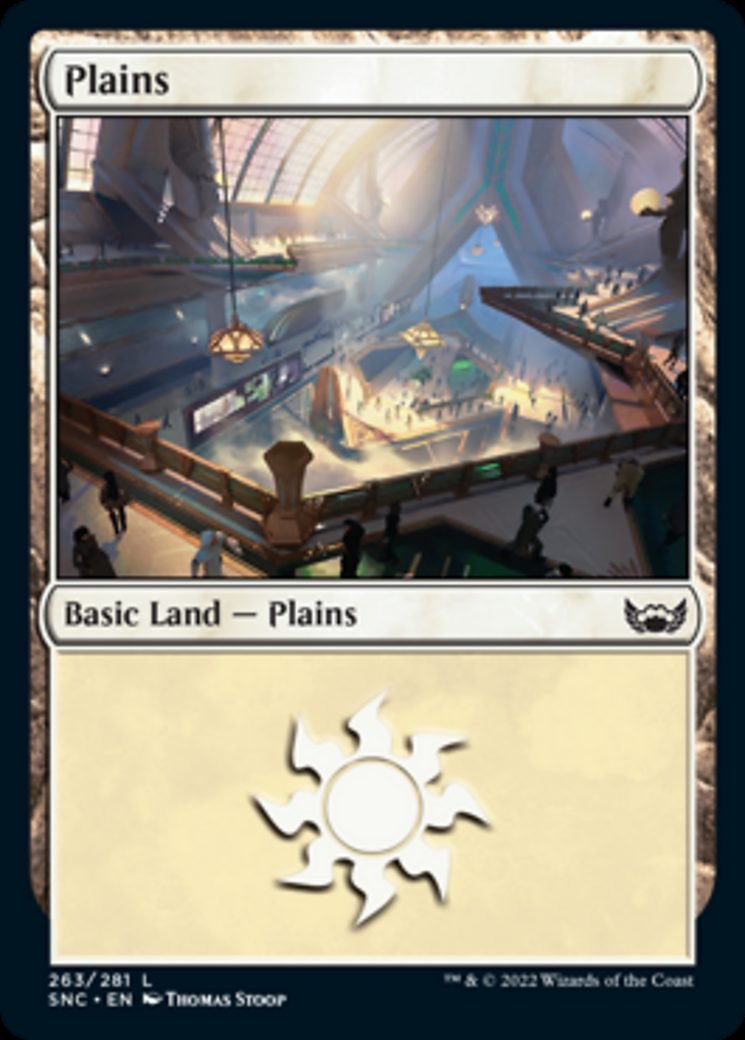
While Magic: The Gathering strategies vary wildly depending on the decks, each player’s first turn almost always starts the same: you play a card called a Land.

Magic cards come in six main types: Creatures spells, Instant spells, Sorcery spells, Enchantment spells, Artifact spells, Planeswalker spells, and Lands. You’ll note that Lands are the only cards that aren’t spells; instead, Lands give you Mana, which powers your spells. Each land produces a certain color of Mana: white (Plains Lands), blue (Island Lands), black (Swamp Lands), red (Mountain Lands), and green (Forest Lands).
Breaking Down the Spell Types in Magic: The Gathering
Here’s a quick rundown of the main spell types—
- Creature: A permanent spell characterized by its power and toughness. These stay on the Battlefield after you cast them, and can attack other players directly (hitting the other players to lower their life total) or they can block the attacks of other creatures (take the damage instead of you, and going into your graveyard if the damage taken in one turn is greater than their toughness).
- Instant: A nonpermanent spell that you can cast at any point during the game, even on another player’s turn. These have a wide variety of effects, and go directly into your graveyard after being cast.
- Sorcery: A nonpermanent spell, similar to an instant except that it must be played on your turn. These often have stronger effects than Instants. A spell to kill one creature might be an instant, while a spell to kill all of your opponent’s creatures is more likely to be a sorcery.
- Enchantment: A permanent spell that provides a continuous effect or ability, sometimes imposing new rules on the board. These are typically harder to remove from the Battlefield than a creature, but cannot attack or defend.
- Artifact: A permanent spell, similar to an enchantment, except they usually represent specific magical items or constructs.
Anatomy of a Magic: The Gathering Card
Nonland cards have a Mana Cost in their top right corner. This is the required amount of Mana needed to cast the spell and activate it in the game. Mana costs can include specific colors of Mana, or generic Mana, which can be Mana of any color.

For each of these symbols, you will need one Mana of the corresponding color.

But a grey ‘6’ in a circle means you can use six mana of any color!
Playing a Land simply means placing it from your hand onto the Battlefield (aka the area of play, open to the view of all players). You can play one Land per turn. You can indicate you’re using Mana from a specific Land by rotating that Land sideways, “tapping” it. That way, both you and your opponent can see your available Mana.
Once a land is tapped, it is considered ‘spent’, and can’t be activated again until untapped, which will happen automatically at the start of that player’s next turn. Players use their gathered Mana to cast spells or activate the abilities of cards already on the Battlefield. Choosing how to use that Mana is a huge part of tactical gameplay—but in order to make those choices, you need to be able to read a Magic card correctly.
For example:

The Mana cost is in the top right corner (one generic, one white), but what else is here? The name of the card in the top left (Priest of Possibility), the type of card in the middle bar (Creature, with the creature subtypes of “Kor” and “Cleric”), the expansion symbol to the right at the middle bar (Alchemy 2023), with its color indicating the rarity (in this case gold, meaning this is a Rare card). The Creature’s in-game abilities will be described in the central box, along with flavor text, sometimes.
Then, finally, we have the battle stats! First is the Creature’s Power (2, in this case), which signifies how much damage the card deals in combat. The Creature’s Toughness, that second number (also a 2), is how much damage it can sustain before it’s removed from the battlefield.
Board Composition & Set-Up
Magic has several different spaces for cards to be, and it’s important to discuss them before we dive into gameplay.
- Visible only to you, your Hand contains the spells you can cast and the lands you can play.
- Visible to all players, the Battlefield is a shared space where players send creatures to attack other players, and where creatures, enchantments, artifacts, lands, and other permanents interact.
- Visible to all players, your Graveyard is where destroyed, sacrificed, or discarded cards go. There are entire strategies built around digging up graveyards, so if your favorite creature dies, don’t despair
- When an opponent sends one or more of your cards into Exile… despair a little. That card is permanently out of play.
Getting Into Magic: The Gathering Gameplay
Many prebuilt decks come with a handy card that lays out the steps of your turn pretty clearly:
To elaborate a little further—
- Begin (Draw Phase, Upkeep): You’re gonna untap all your creatures and lands and draw a card. Cards with ‘at the beginning of your upkeep’ are referring to this phase.
- Main Phase: Not much to add! Play your land and cast spells!
- Combat Phase: The Combat Phase can occur anytime during the main phase, but once declared a player must assign all combatants during this time, since there’s only one Combat Phase allowed per turn.
- Main Phase (Again): You can still cast lands and creatures as you wish.
- End (Cleanup): Cleanup Phase triggers Cleanup abilities noted on cards, and creatures that were damaged now return to full health. Finally, you discard down to seven cards in hand.

Make the Game Your Own!
The intricate strategies of Magic lie not only in the tactical gameplay of cards, but also in the construction of a player’s deck. Deck building is an additional skill separate from gameplay, though complimentary to it. If you’re just starting out though, no need to worry! There are plenty of pre-built decks that are plenty strong. You’ll find your own playstyle and deck building preferences as you become more comfortable with the game.
Magic is for everyone. Always will be—always has been. I hope that armed with this knowledge, you too may decide to gather yourself some magic!
For more information, Geek & Sundry has a YouTube series demonstrating gameplay in action, and further instructional guides for beginners!
The post How to Start Playing MAGIC: THE GATHERING appeared first on Nerdist.
This articles is written by : Nermeen Nabil Khear Abdelmalak
All rights reserved to : USAGOLDMIES . www.usagoldmines.com
You can Enjoy surfing our website categories and read more content in many fields you may like .
Why USAGoldMines ?
USAGoldMines is a comprehensive website offering the latest in financial, crypto, and technical news. With specialized sections for each category, it provides readers with up-to-date market insights, investment trends, and technological advancements, making it a valuable resource for investors and enthusiasts in the fast-paced financial world.