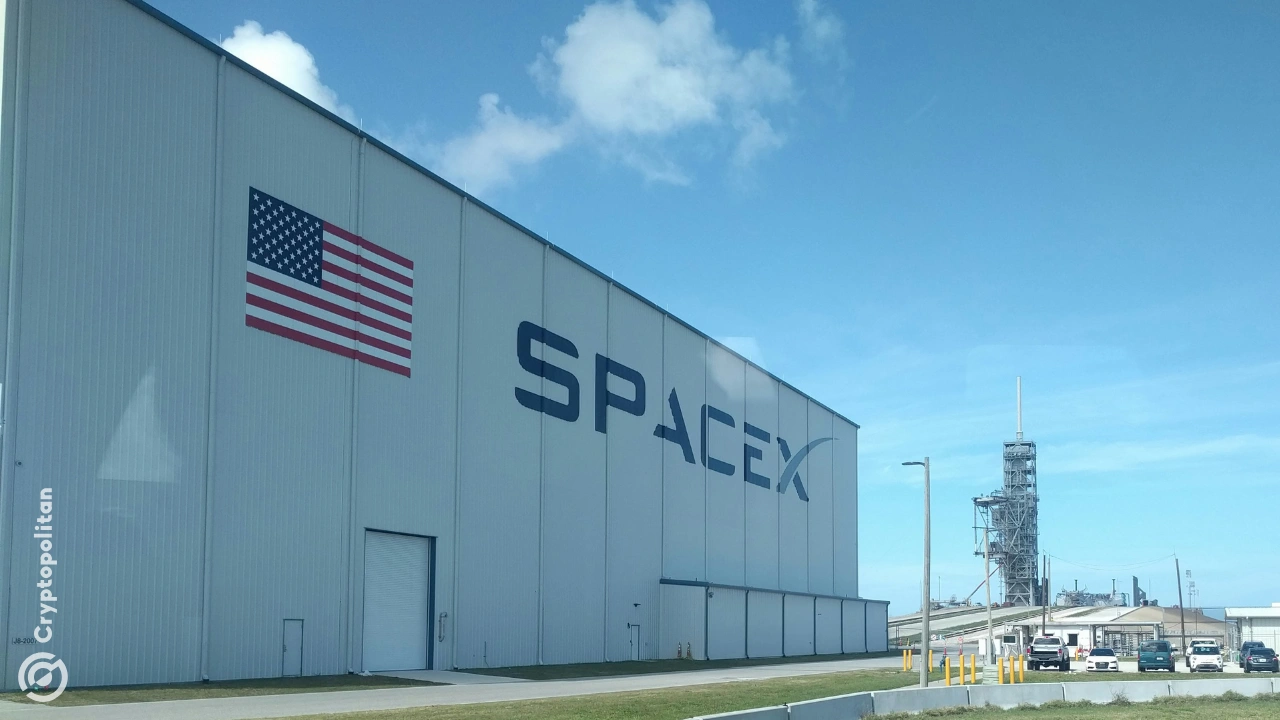
SpaceX (NASDAQ: SPCX) is changing the way it builds AI data centers, choosing to prioritize power and cooling redundancy over raw build speed, per The Information.
The slight tweak is likely to put the brakes on SpaceX’s infrastructure expansion, with little time left to meet a September 30 deadline tied to a $920 million-per-month compute deal with Google.
Why redundancy is now the focus
The change is a reversal from the approach that brought SpaceX (NASDAQ: SPCX) this far. For over 12 months, the company was squarely focused on ensuring compute gets online. Redundancy in backup power and cooling was treated as an afterthought.
Now, the tide has turned, as a number of SpaceX sites in Tennessee and Mississippi went without backup cooling or power for months. As the primary systems dropped, the machines dropped also. The system failures impacted the training for Grok, SpaceXAI’s chatbot.
Though the reporting is yet to be verified, it’s important to note that if truly power and thermal design are challenges, then this is not peculiar to SpaceX but the whole industry.
The $920 million clock
The redundancy fix comes as SpaceX races against time to meet the September 30 deadline tied to its deal with Google. SpaceX agreed to supply Google with access to about 110,000 Nvidia GPUs for a fee of $920 million per month.
Those chips have to be delivered by September 30 to Google. Based on the agreement, Google is free to walk away, accept fewer GPUs, or slash payments proportionally after a grace period of one month
This is why SpaceX optimized for speed initially. Revenue goes down the drain each day a data center is inoperative. AI data center revenue sits at $10 million to $12 million per megawatt per year, based on Cleanview’s estimates. Thus, bringing a large site online early can mean tens of billions of dollars over its life.
SpaceX’s expenditures only prove how urgent the matter is. In Q2, it spent around $15.8 billion on AI-related capital expenditure, twice what it spent in Q1. That brings capex in the first half of the year to $23.6 billion.
The AI division also lost $3.7 billion in the first half of the year, as compute capacity increased from 0.4 gigawatts to 1.4 gigawatts and AI revenue in Q2 rose over 210% to top $2.5 billion.
Turbines, permits, and a backlash in Mississippi
The issues with reliability began with how SpaceX sourced power. Its Mississippi site feeds Colossus 2, and the grid on the site was unable to supply electricity on time. It made use of portable gas turbines, which were permitted by state law to be used for a year without air permits.
Mississippi regulators spotted 69 temporary turbines at the Southaven plant by July. And this was twice the number of turbines SpaceX revealed. The site had about 1,775 megawatts of capacity.
In April, the NAACP filed a lawsuit, and residents sued in a separate class action, complaining of air quality and turbine noise. The Department of Justice argued in SpaceX’s favor that cutting power to Colossus 2 would put AI innovation and national security at risk.
Supply chain issues worsened things. The company had to make do with temporary turbines in Mississippi for an extended period of time after the delay in getting 41 permanent units.
The management reshuffle behind the change
SpaceX has begun to make adjustments in its organizational structure. A couple of data center executives departed in the last few months, and the company placed Starlink executive Michael Nicolls in charge of its AI infrastructure. SpaceX has been backfilling with staff pulled from its rocket and Starlink programs.
Elon Musk and his team are looking to gain control of the supply chain when it comes to hardware. The company is constructing a foundry in Bastrop, Texas. The foundry will produce turbine blades and vanes in-house. Musk said this move could expedite new gas-turbine deployment by as much as 18 months.
Musk has set a target for his employees. He wants SpaceXAI compute to get to 10 GW by the end of 2027, an increase from the current figure of about 1.4 GW. Projected annual revenue is in the $300 billion to $500 billion range. Customers such as Google want that capacity delivered on time, but they also want it to stay online.
If you’re reading this, you’re already ahead. Stay there with our newsletter.
This articles is written by : Nermeen Nabil Khear Abdelmalak
All rights reserved to : USAGOLDMIES . www.usagoldmines.com
You can Enjoy surfing our website categories and read more content in many fields you may like .
Why USAGoldMines ?
USAGoldMines is a comprehensive website offering the latest in financial, crypto, and technical news. With specialized sections for each category, it provides readers with up-to-date market insights, investment trends, and technological advancements, making it a valuable resource for investors and enthusiasts in the fast-paced financial world.