We may earn a commission from links on this page.
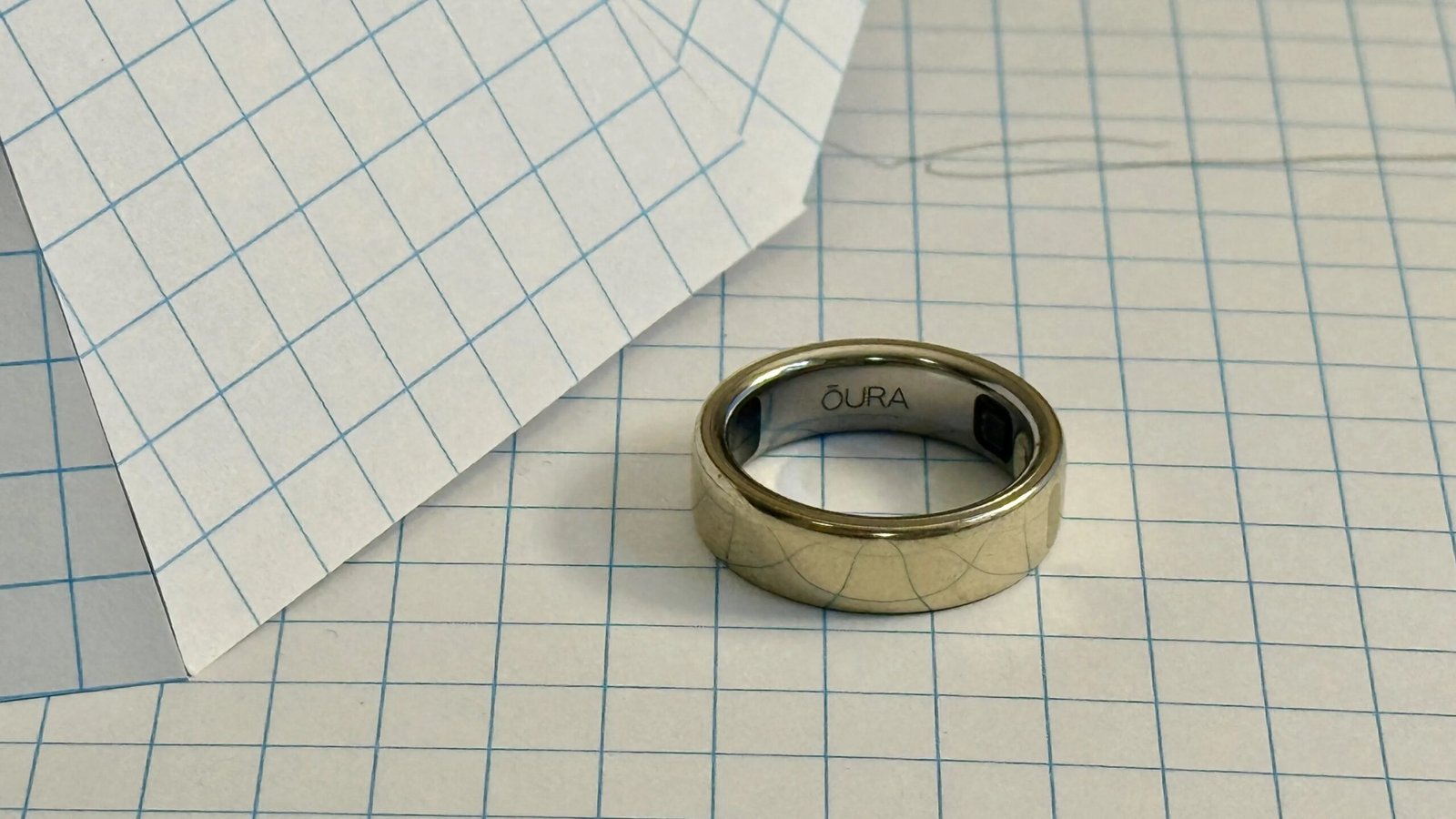
Oura is currently being sued over its claims that the ring measures your sleep. Both the law firm bringing the class action suit and Oura itself have released statements giving their opinion on the matter, and I’ll dig into those today. I also want to talk about the underlying issue here—how much can we trust our wearables when it comes to sleep data?

What is happening with the lawsuit against Oura?
So, first, the lawsuit. It’s a class action suit being brought by Clarkson Law Firm out of California on behalf of Madison Surber, a person who bought an Oura ring. The suit states: “At the time of purchase, Plaintiff did not know that the Challenged Representations were false—i.e., that the Product could not accurately and definitively measure sleep stages.” You can read the full text here.
A press release from the law firm summarizes the problem like so: “The product cannot measure any of the physiological signals required to determine sleep quality or sleep stages. Instead, it delivers only AI-generated guesses that, according to the Complaint, are no more reliable than a coin flip.”
After the suit was filed, Oura published a blog post called “Standing Behind Our Science,” which you can read here. Oura writes: “A recent baseless, opportunistic legal allegation seeks to discredit how consumer wearables—including Oura Ring—track and estimate sleep stages. We dispute these allegations and stand firmly behind our research and accuracy.”
Beyond the suit being filed and both sides stating their position, nothing has officially happened yet, and it may be a while before we hear anything else. The case has not gone to trial, there has been no judgment, and Oura rings are still on the shelves for the foreseeable future.
It’s also worth remembering that plenty of lawsuits never even make it to trial; the two sides often end up coming to an agreement privately, and we may or may not hear what the terms of that settlement even are. It sometimes happens that a lawsuit is announced with sensational claims even if the suing party does not expect to win in the end. I’m no legal scholar, and I’m not qualified to judge who is likely to win this case or why it was brought. What I can talk about, though, is whether it’s reasonable to expect wearables to properly track our sleep.
Why you shouldn’t read too much into your sleep data
As I write about fitness tech, I keep coming up against a fundamental problem: Companies make their devices report numbers, and device users want to know if those numbers are “accurate.” I do my best to judge the answer to that question, but it’s often impossible to answer.
Here’s why. First of all, only a measurement can be accurate: something like “how many beats per minute is my heartbeat?” (which I am actually able to test when I write about devices, as you may have noticed). If this measurement matches a gold-standard reference (ideally on multiple tests over time and with different people), we can judge how accurate it seems to be.
But most things a wearable reports are not, strictly speaking, measurements. They may be calculated from other data. The amount of time you were asleep is calculated from start and end times, and an algorithm had to “decide” when those start and end events happened. Similarly, even for something simple like counting steps, the device has to “know” what movement of the device should count as a step. That’s why we can get different step counts from different devices. And since a watch only has access to movement data from your wrist, it doesn’t know what your feet are doing. Indoor running mileage is also an estimate for those same reasons.
One step further removed from those stats are scores and interpretations. Some are obviously made up: A “79” sleep score doesn’t correspond to anything a scientist could measure in a lab. But sleep stages are also in this category. When Oura tells me I had 51 minutes of REM sleep last night, it doesn’t know this; it’s just putting together the data it has and making its best estimation. I’ve often told you guys not to read too much into sleep stages, but instead to take note of how long you’re sleeping in total, and to pay attention to real-world things like whether you feel tired during the day. My colleague Meredith Dietz came to a similar conclusion after interviewing sleep scientists for this look into why sleep scores are a lot less useful than you would think.
What does an Oura ring (or any wearable) actually know about your sleep?
Let’s take this back to the basics. What is happening on the ring itself? An Oura ring can shine red and green (and infrared) LEDs on your skin, and its sensors pick up reflections of that light to get a decently good sense of your heart rate and an estimate of your blood oxygen. The ring has motion sensors, so it can tell when you (or at least your finger) are moving around. There is also a temperature sensor for skin temperature.
That’s it, as far as measurements in a strict sense. From the fluctuations in the rhythm of your heartbeat, Oura can calculate your respiration rate and HRV. From accelerometer data, it can calculate the times it thinks you are lying perfectly still. Oura has written here about what it measures and what it calculates or infers from those measurements. That blog post is about the Oura Ring 4 (which is also the device named in the lawsuit), but you can expect most smart rings and other wearables to work similarly.
So, the lawsuit is technically correct in saying that Oura doesn’t actually know your sleep stages. But Oura may be able to successfully argue that it’s as correct as you can expect a wearable to be.
We will probably never know how accurate a wearable’s sleep data is
I found one of the lawsuit’s claims interesting: “Plaintiff does not personally know the mechanism or science behind the Products’ promised sleep tracking features. … Plaintiff had and still has no way of determining whether the Challenged Representations on the Products were and are true.”
Companies that make wearables don’t share their algorithms publicly. (Maybe there’s an exception to this rule, but I can’t think of any.) Both the device itself, and the software that interprets its readings aren’t subject to any thorough, public accuracy or validity testing before a device makes it to market.
That’s why tech writers like me have to make do with “N=1” tests: I, as one person, go for a few runs and report the data I got. I, as one person, sleep a few nights comparing the readings from multiple devices. I can’t rent a sleep lab for every device review, and if I could, I’d ideally bring a few hundred friends and a lot of research funding for a team of scientists to pore over the results. That’s just not in the Lifehacker budget. Ironically, tech reporters like me are the first—and in some cases, the only—people to do in-depth independent testing on wearable devices.
Sometimes scientists do proper studies, especially on devices that are popular or that might have uses in the clinic or for research. I’m glad for these studies, but they just don’t happen on a schedule that makes them useful to regular folks who want to know if a new device does what it says it does. By the time a paper comes out telling us how the Garmin Fenix 6 did at measuring heart rate during sleep, Garmin is already selling the Fenix 8. By the time you hear about it—perhaps today?—we’re already on to the Fenix 9.
The best and worst points from the lawsuit that I think are worth thinking about
In a press release from the law firm, several of the lawyers stressed that customers make choices in their daily lives based on information they get from their wearables. This is true of all wearables, not just Oura, and I think it’s a fair point. We probably rely too much on data that we shouldn’t actually trust.
Something that doesn’t ring true to me is the claim from the lawsuit that “sleep happens in the brain, not on one’s finger. It is defined by brain electrical activity, eye movements, muscle tone, and other signals…” That quote almost had me in the first half, but sleep isn’t defined by EEG readings and such. It’s measured that way in the lab.
A scientist doing a sleep study is trying to eavesdrop on what your body is doing, and toward that end, scientists have described stages of sleep based on those signals. But sleep itself is still something of a mystery to science. Professional-grade equipment probably has a better handle on what’s going on than a consumer-grade ring, but both are just describing outward signs of an inscrutable internal process.
Oura points out in their “Standing Behind Our Science” blog that several scientific and medical teams have published peer-reviewed papers on Oura’s sleep data. I commend Oura for encouraging teams to study its devices. That said, lots of familiar problems crop up when you start looking at the studies.
The most recent, for example, is this 2024 study that compares the Gen 3 Oura ring (two models back) to the Fitbit Sense 2 and the Apple Watch Series 8—all pretty out-of-date models at this point. One of the authors is a consultant for Oura and serves on its Medical Advisory board. And I don’t find the results particularly impressive; it reports a sensitivity of 75% or better on detecting sleep stages, which may be slightly better than the other devices, but still supports my longstanding opinion that we should not put too much stock in any wearable’s claims about the stages or “quality” of your sleep.
And that’s where I find myself after reading both sides’ claims: A smart ring (or watch) is a tool that can report its measurements, estimations, and inferences. Some of these may be useful. But none of them are ever guaranteed to be accurate. Perhaps we should all forget about chasing accuracy and pay more attention to old-fashioned things like making sure you have a good bedtime routine.
This articles is written by : Nermeen Nabil Khear Abdelmalak
All rights reserved to : USAGOLDMIES . www.usagoldmines.com
You can Enjoy surfing our website categories and read more content in many fields you may like .
Why USAGoldMines ?
USAGoldMines is a comprehensive website offering the latest in financial, crypto, and technical news. With specialized sections for each category, it provides readers with up-to-date market insights, investment trends, and technological advancements, making it a valuable resource for investors and enthusiasts in the fast-paced financial world.