
Perhaps your gaming laptop doesn’t have enough storage. Or perhaps you simply want your game library to be portable so you can move between systems. A speedy external SSD can solve both of these problems. Not only will it provide you with a lot more fast storage for your games, you can use it on any system you wish.
Choosing the external SSD that’s right for your needs means sorting through a dizzying array of protocol and speed options. Making the wrong choice could leave you disappointed, either financially or performance-wise. Luckily for you, we’ve tested a bunch of these wee beasties and can offer recommendations guaranteed to leave you satisfied.
PROMOTION
Fortify your games and moments of glory

Built for gamers and streamers, FireCuda X Vault offers massive capacity and convenient bus-powered single-cable connectivity. Vault’s striking design with customizable RGB illumination and Windows Dynamic Lighting keeps your vibe in check and syncs to your rig’s energy.
Below are recommendations for drives from 80Gbps down to 10Gbps; scroll below those to learn more about our evaluation process and what to look for when buying an external SSD for gaming.
Note that SSD prices have risen considerably since our original reviews thanks to the AI / data center gold rush, and the recommendations below reflect that new reality. The older, linked reviews may not. We’ve also added a couple of enclosures to which you can add your own NVMe SSD, as the availability of many pre-populated SSDs is currently scattershot. Furthermore, an enclosure / DIY option is a way to save money in these time of inflated prices.
Why you should trust PCWorld for external drive reviews and buying advice: PCWorld has been putting computer hardware through its paces for decades. Our external drive evaluations are thorough and rigorous, testing the limits of every product — from performance benchmarks to the practicalities of daily use. As consumers ourselves, we know what makes a product exceptional, or not. For more about our testing process, scroll to the bottom of this article.
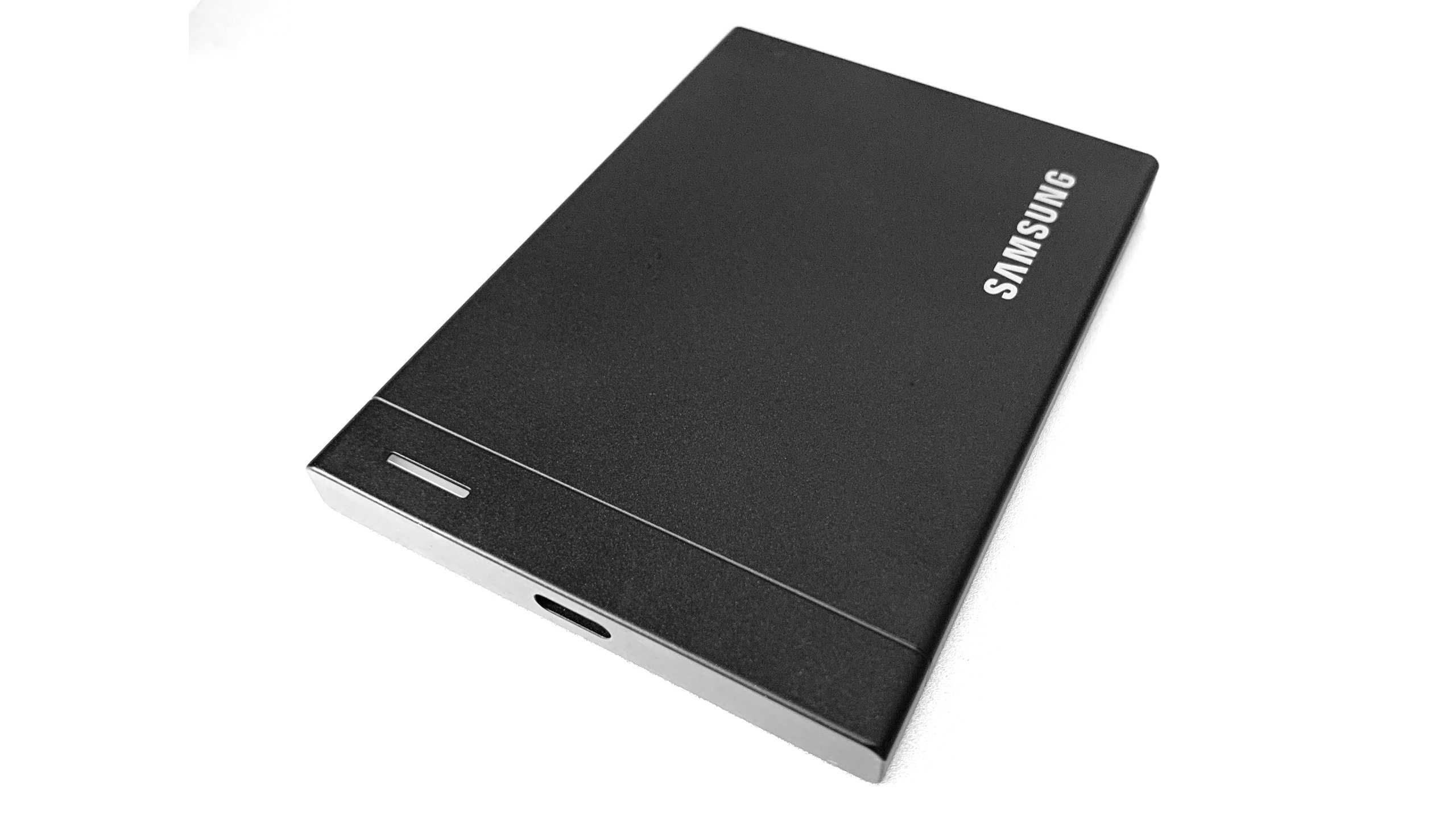
Samsung P9 — Best 40Gbps USB4 external SSD for gaming
Pros
- Fast and sustains long writes exceptionally well
- Runs remarkably cool despite its diminutive dimensions
- Up to 8TB of capacity
Cons
- Like all current SSDs — very expensive
Price When Reviewed:
1TB: $340 I 2TB: $650 I 4TB: $1,440 I 8TB: $2,880


Who should buy the Samsung P9?
For those who want stellar sustained throughput, but for less moolah than an 80Gbps SSD (shoot, good luck even finding one of those these days!), the Samsung P9 will get the job done and then some. Note, a 40Gbps USB4 external SSD isn’t for everyone. Your PC needs to support the USB4 or the Thunderbolt 3/4/5 spec in order to take advantage — and while cheaper than 80Gbps, it’s still not cheap.
If you’re equipped to enter the club, the Samsung P9 will reward you with nearly 4GBps transfers, and at a more affordable price than our previous pick for USB4, the Adata SE920 — which has catapulted to $556 for 1TB, compared to the P9’s MSRP of $340. Of course, with all storage right now, availability is another story. Still you can find the 2TB P9 on Amazon for $650.
Besides being very fast, the P9 is (theoretically) a good pick for anyone who wants performance and capacity, with sizes up to 8TB — again, availability being the deciding factor.
Samsung P9: Further considerations
Some other qualities that distinguish the P9 are its extremely svelte, and thus portable, size; it’s ability to maintain speed even when running very large data sets, while also remaining cool; and a nice 5-year warranty.
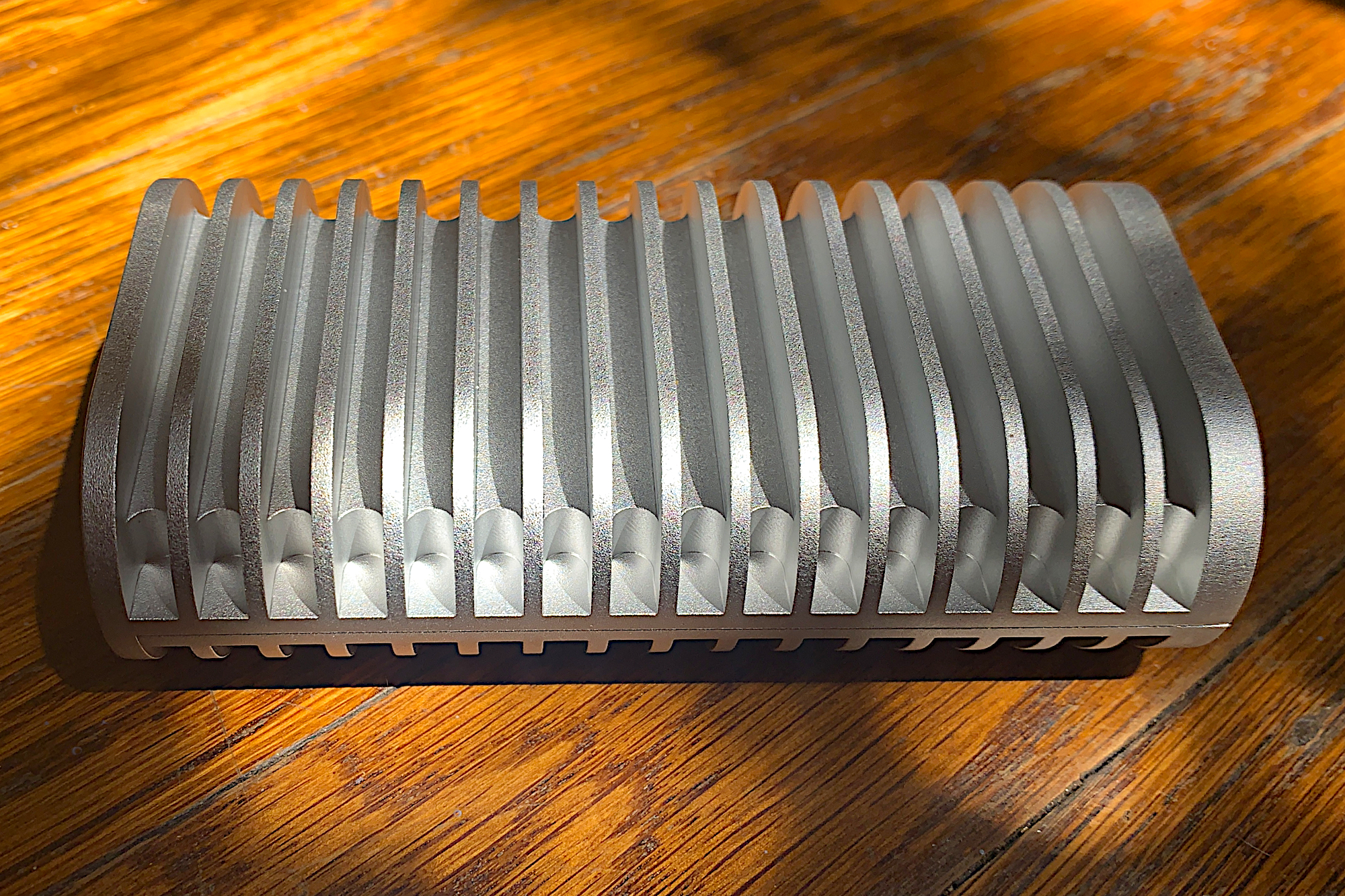
TerraMaster D1 SSD Plus – Best 40Gbps external SSD enclosure for gaming
Pros
- Second-fastest USB4 enclosure to date
- Solid, thermally excellent design
- Good-looking
Cons
- Bulky
Price When Reviewed:
$109.99
Best Prices Today:
Who should buy the TerraMaster D1 SSD Plus?
With the price of pre-populated 40Gbps SSDs rising due to the AI / data center memory arms race, buying a $90 (currently $76 on sale) 40Gbps enclosure such as the TerraMaster’s D1 SSD Plus, and then adding your own NVMe SSD is quite likely your most affordable external high-speed SSD option.
TerraMaster D1 SSD Plus: Further considerations
The TerraMaster D1 SSD Plus is bulky, and the style may not be everyone’s cup of tea, but the overtly finned aluminum enclosure sheds the heat inherent with faster 40Gbps SSDs extremely well.
When you populate the D1 SSD Plus, don’t overbuy with a PCIe 5.0 NVMe SSD, unless you want said SSD for use in something faster in the future. An affordable PCIe 4.0 model provides as much speed as the 40Gbps bus can handle. Note that TerraMaster also makes an 80Gbps enclosure, the D1 SSD Pro.
Read our full
TerraMaster D1 SSD Plus review
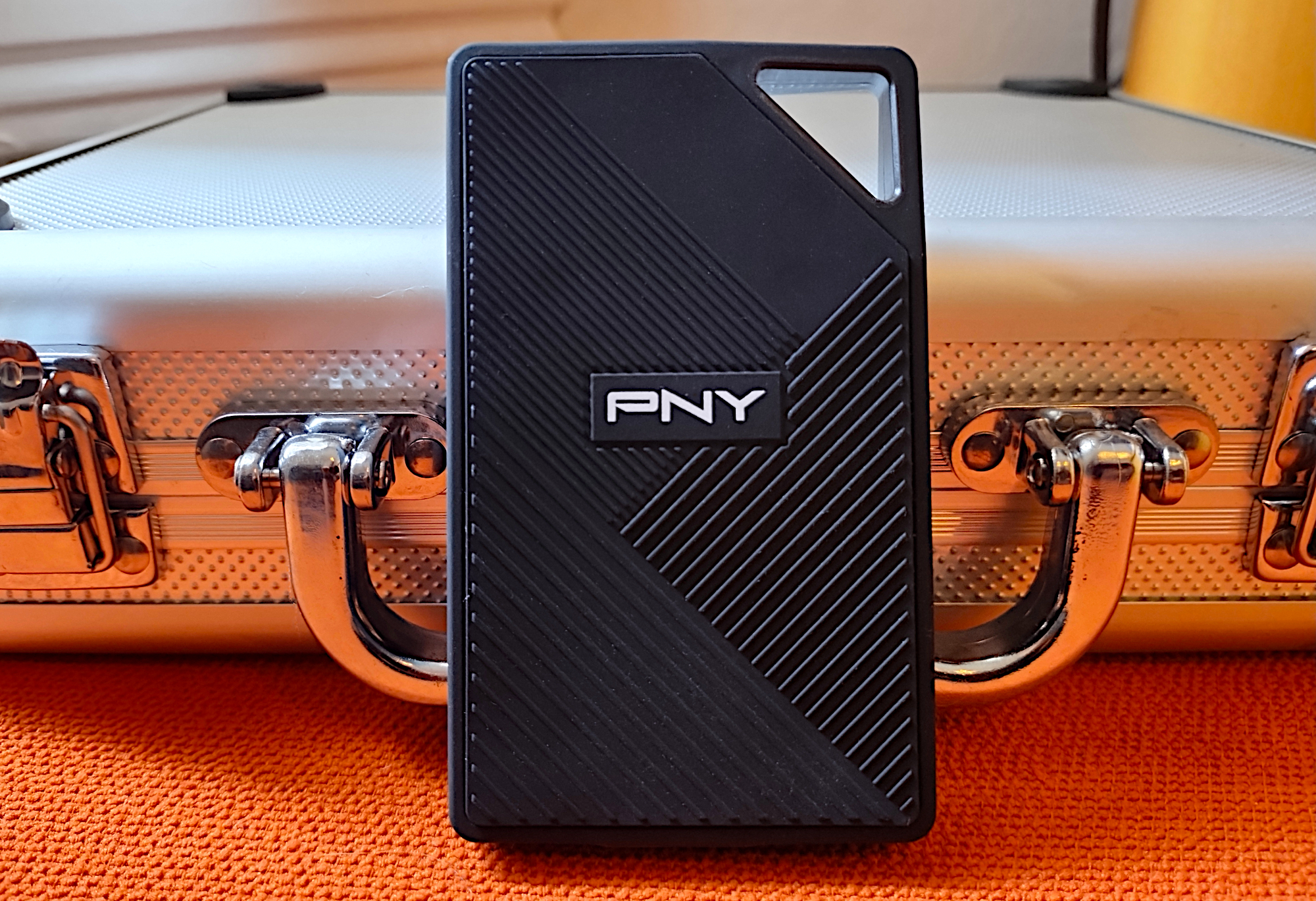
PNY RP60 – Best 20Gbps external SSD for gaming
Pros
- Handsome, IP65-rated design (dust proof, water resistant)
- Good 20Gbps performance
- Nice flat Type-C USB ribbon cable
Cons
- USB port plug tether is difficult to reinsert.
Price When Reviewed:
1TB: $100 I 2TB: $180
Best Prices Today:
Who should buy the PNY RP60?
If you tend to take your gaming drive everywhere, and/or you’re not the most careful person with hardware, a ruggedized external SSD is a practical way to ward off accidental damage.
The PNY RP60 offers more than just a rugged IP65-rated exterior that protects against dust and water droplets. It’s handsome and lightweight to boot, as well as an admirable performer, even besting one of the fastest 20Gbps drives I’ve tested — the Crucial X10 Pro — in a couple of our tests.
PNY60: Further considerations
A 20Gbps SSD is the sweet spot in the price/performance ratio for external SSDs. The only issue is that the USB 3.2×2 drives function at only 10Gbps or slower unless attached to a dedicated 20Gbps port. That applies to most USB4 and Thunderbolt ports as well.
While a sad reflection of today’s prices, the RP60 is nonetheless competitively priced at $200 and $279 for 1TB and 2TB, respectively. Note that these prices are significantly higher than when I first reviewed the RP60 due to the global NAND shortage.
Read our full
PNY RP60 20Gbps USB SSD review
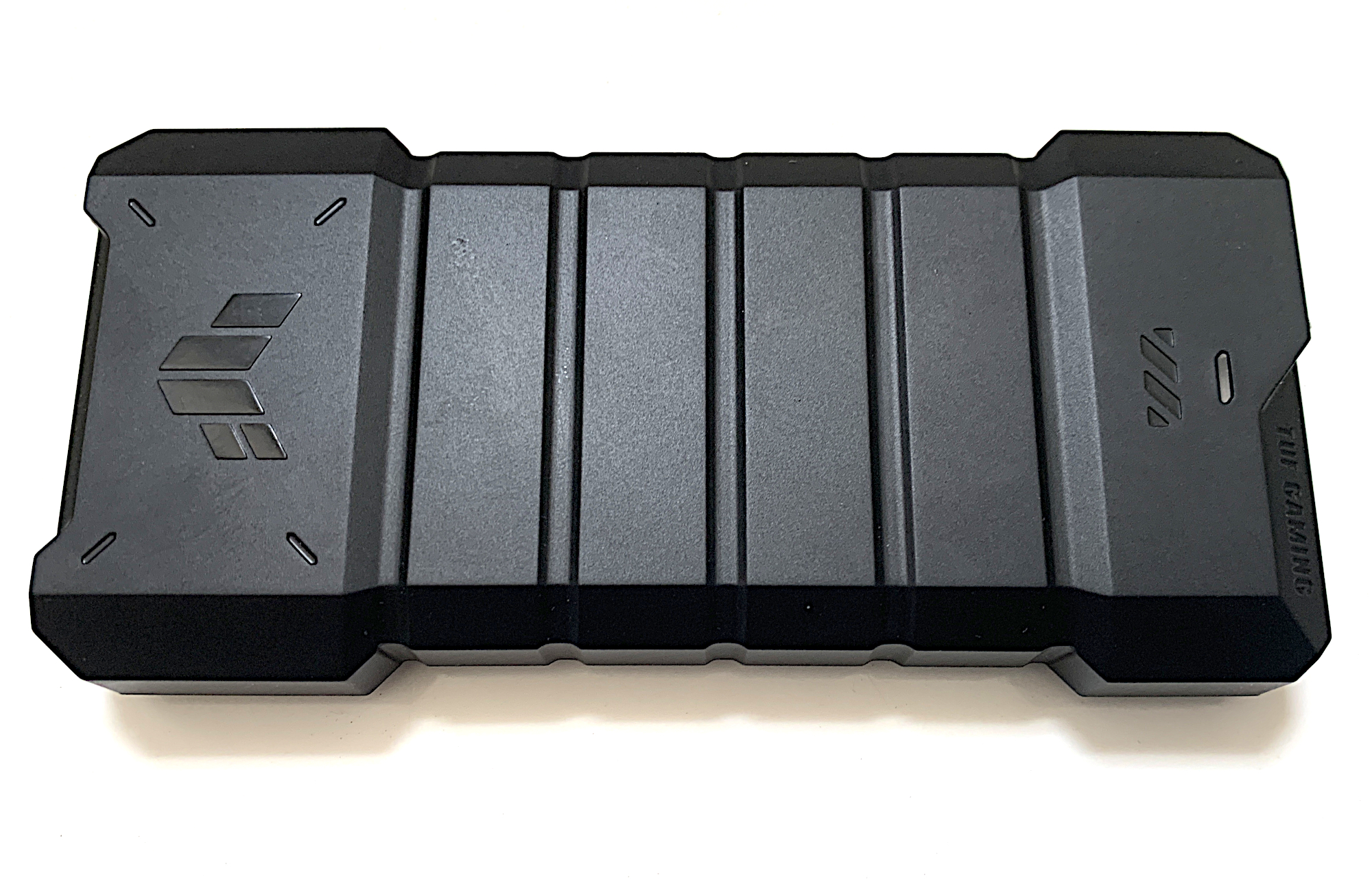
Asus TUF Gaming A2 – Best 20Gbps external SSD enclosure for gaming
Pros
- Very fast performer
- Military-esque styling
- Super-rugged IP68 rated
- Affordable
Cons
- You need to provide the NVMe SSD
- Requires a USB 3.2×2 port for 20Gbps performance
Price When Reviewed:
59.99
Best Prices Today:
Who should buy the Asus TUF Gaming A2?
Many gamers build their own gaming rig, so why shouldn’t they roll their own external SSD with an affordable enclosure such as the $60 TUF Gaming A2? With the price of pre-populated external SSDs currently reaching for the stratosphere, it’s an especially attractive proposition for 2026.
The TUF Gaming A2 is styled to appeal to gamers, especially fans of first-person, military-style shooters. It’s built like a tank, carries an IP68 rating, and is easy to open for installing your NVMe SSD.
Asus TUF Gaming A2: Further considerations
The TUF Gaming A2 allows you to leverage older NVMe SSDs. Even a PCIe 3.0 SSD is fast enough for the 20Gbps bus, if you find a deal. With those going the way of the Dodo, however, an affordable PCIe 4.0 model will do just fine.
Read our full
Asus TUF Gaming A2 review
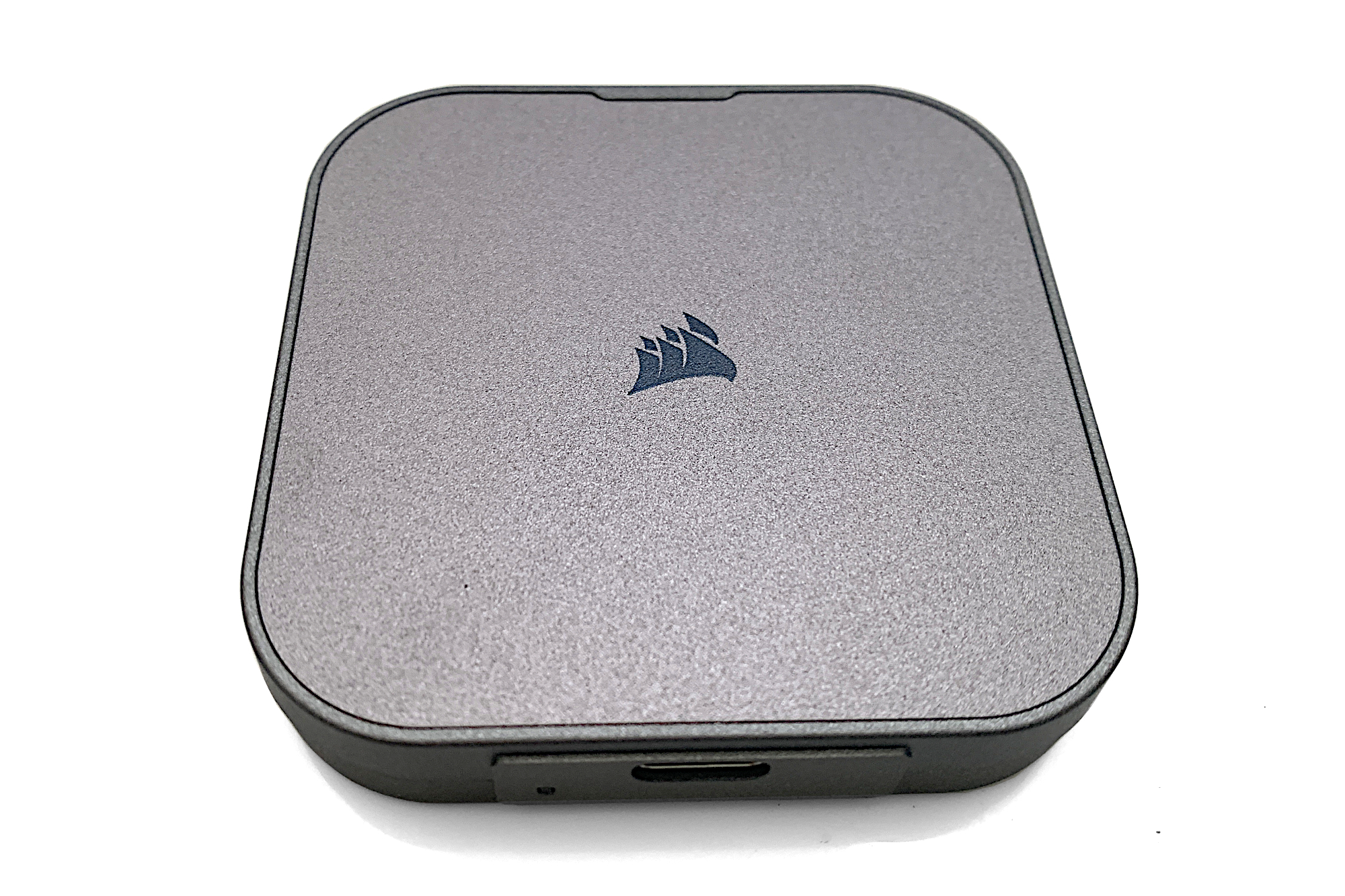
Corsair EX300U – Best 10Gbps external SSD for gaming
Pros
- Fastest 10Gbps SSD we’ve tested
- Small profile
- Magnetic attachement to metal surfaces
Cons
- Almost as pricey as 20Gbps SSDs currently
Price When Reviewed:
1TB: $100 I 2TB: $180 I 4TB: $340
Best Prices Today:
Who should buy the Corsair EX300U?
For those looking for an SSD that won’t break the bank, but is still “fast enough,” the EX300U is an appealing little magnetic square of a drive. That said, $175 for 1TB is almost as pricey as the 20Gbps PNY RP60 listed above. Formerly, the drive was $100 at that capacity.
Scant savings aside, the EX300U is the fastest 10Gbps SSD I’ve tested to date, besting the Teamgroup X2 Max listed below by a small margin. And unlike the latter, you can stick it to a metal object like a PC case via the circular magnet on the back. Note that aluminum is not particularly magnetic, so this doesn’t work with most Macs.
Corsair EX300U: Further considerations
The warranty on the EX300U is three years, which is the usual for external SSDs, but the 250TBW (terabytes that can be written) per terabyte of capacity is a little stingy. At least Corsair provides a TBW rating — most vendors don’t for external SSDs.
Still, the odds of anyone exceeding that TBW limit is rather low. Most of the time games are reading data, not writing it.
Read our full
Corsair EX300U review
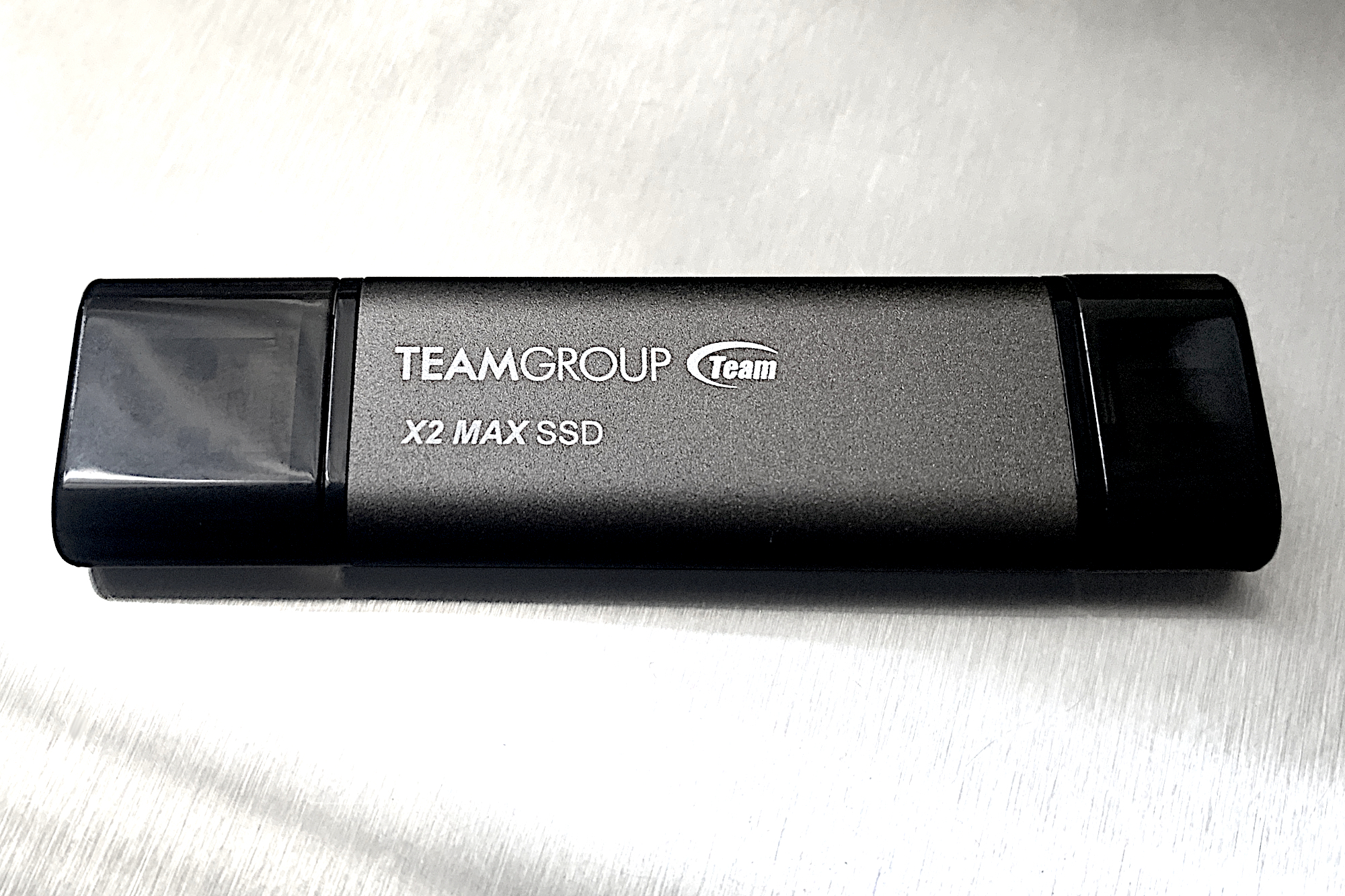
Teamgroup X2 Max — Best 10Gbps thumb drive SSD for gaming
Pros
- Svelte thumb drive form factor
- Fastest 10Gbps SSD we’ve tested
- Dual Type-A/Type-C connectors
Cons
- End caps aren’t captive
Price When Reviewed:
1TB: $70 I 2TB: $130
Best Prices Today:
Who should buy the Teamgroup X2 Max?
For those who want both fast 10Gbps performance, plus the super convenience of the thumb drive form factor and both Type-A and Type-C connectivity, it doesn’t get any better than the X2 Max. In fact, it’s the second-fastest 10Gbps SSD of any type that I’ve tested. Right behind the Corsair EX300U shown above.
While it may not be sexy-looking in the gaming sense, pulling this out of your pocket when you sit down to game is the ultimate sandbag move. Let them laugh, they’ll never see you coming.
Having both Type-A and Type-C connectors on board means never having to worry about what type of computer you’ll be using the X2 Max on, though having a thumb drive attached to your laptop can be a bit awkward if you’re lounging on the couch, etc.
Teamgroup X2 Max: Further considerations
While some gamers might scoff at “only” 10Gbps, that’s still plenty fast enough for loading games — and seek times are roughly the same as 80/40/20Gbps SSDs. Where you’ll lose out a bit compared to those faster models is in the time it takes saving games in the first place.
Note that the 2TB X2 Max was on target for a 10Gbps SSD writing our 450GB file, never slowing appreciably or tragically as some do. The 1TB might not do quite as well.
The current pricing of *cough* $330 for the 2TB model means you should weigh this option against faster options for a little more cash, and/or creating your own external SSD using the enclosures listed above. A roll-your-own model, however, will never be this portable.
Read our full
Teamgroup X2 Max review
Other notable external SSDs for gaming
- Orico TB5 dock: For anyone looking to add extra ports to their PC and an M.2 NVMe slot for super-fast Thunderbolt 5 storage, this dock does it, for a price.
- Asus ROG Strix Aiolos: This 20Gbps NVMe enclosure offers RGB lighting and easy access to the internal M.2 slot.
- Asus PA40SU: A good-performing single NVMe, USB4 drive enclosure that makes DIY storage easy, and looks nice in the process.
- Glyph Atom EX20: Comes in a good-looking, protective silicon jacket while offering speedy 20Gbps performance.
- Glyph Atom EX40: Sibling to the above, it has a similar sturdy exterior combined with USB4 compatibility and 40Gbps speed.
- MSI DataMag 40Gbps: Not the fastest USB4 drive, but it’s got magnetic mounting.
- Teamgroup PD20: A handsome, tough, and decently fast 20Gbps drive.
- Crucial X10: A tiny, weatherproofed drive that can hold up to 8TB of storage.
- Sandisk Extreme Pro SSD with USB4: A handsome design and relative affordability, but connection issues and comparably lackluster 40Gbps performance left us unamazed.
- Addlink P21: Has a compelling combination of good performance and a striking design.
- Corsair EX400U: On the slow side for a USB4 external SSD, but can sometimes be less expensive than the competition.
- Seagate Game Drive SSD: Targeted at PS4/PS5 owners, this 10Gbps SSD is very fast for its class as well as attractively styled, complete with a Playstation logo, though it’s relatively pricey.
- Lexar Armor 700: A 20Gbps drive that can withstand some abuse — perfect for the gamer on the go or the accident-prone.
- Adata SD810: A solid 20Gbps drive, save for writing large amounts of data, where it slows down.
How PCWorld tests external drives
Drive tests currently utilize Windows 11 24H2, 64-bit running off of a PCIe 4.0 Samsung 990 Pro in an Asus Z890-Creator WiFi (PCIe 4.0/5.0) motherboard. The CPU is a Core Ultra i5 225 feeding/fed by two Crucial 64GB DDR5 5600MHz modules (128GB of memory total).
Both 20Gbps USB and Thunderbolt 5 are integrated into the motherboard and Intel CPU/GPU graphics are used. Internal PCIe 5.0 SSDs involved in testing are mounted in an Asus Hyper M.2 x16 Gen5 adapter card sitting in a PCIe 5.0 slot.
We run the CrystalDiskMark 8.04 (and 9), AS SSD 2, and ATTO 4 synthetic benchmarks (to keep article length down, we report only the first) to find the storage device’s potential performance. Then we run a series of 48GB transfer and 450GB write tests using Windows Explorer drag and drop to show what users will see during routine copy operations, as well as the far speedier FastCopy run as administrator to show what’s possible.
A 25GBps two-SSD RAID 0 array on the aforementioned Asus Hyper M.2 x16 Gen5 is used as the second drive in our transfer tests. Formerly the 48GB tests were done with a RAM disk serving that purpose.
Each test is performed on a NTFS-formatted and newly TRIM’d drive so the results are optimal. Note that in normal use, as a drive fills up, performance may decrease due to less NAND for secondary caching, as well as other factors. This issue has abated somewhat with the current crop of SSDs utilizing more mature controllers and far faster, late-generation NAND.
Caveat: The performance numbers shown apply only to the drive we were shipped and to the capacity tested. SSD performance can and will vary by capacity due to more or fewer chips to shotgun reads/writes across and the amount of NAND available for secondary caching. Vendors also occasionally swap components. If you ever notice a large discrepancy between the performance you experience and that which we report, by all means, let us know.
Note also that some of the SSDs in this roundup were tested using other equipment and methodologies, which you can read about in the standalone reviews.
To learn more about our testing methodology see PCWorld’s article on how we test external SSDs.
Who curated this article?
Having started computing by flipping switches, Jon L. Jacobi has witnessed storage morph from punch cards and tape to solid state. He’s been using and testing HDDs, SATA SSDs, and NVMe SSDs for PCWorld for well over two decades. To paraphrase a well-known commercial, you might say he’s seen a thing or two.
FAQ
What is the best external SSD for gaming?
At 80Gbps, the LaCie Rugged SSD Pro5 is our choice for absolute best performance. If speed is important, but you want to save a bit of coin, then the best 40Gbps external drive is the Adata SE920. For still-great 20Gbps performance, and a significant cost savings, consider the PNY RP60 and Crucial X10 Pro. Note that the Teamgroup X2 Max still offers good 10Gbps in a super-small form factor.
What are the speeds of the various external interfaces and which one do you want?
In descending order of performance the current external interfaces are: 80Gbps Thunderbolt 5/USB4, 40Gbps USB4/Thunderbolt 3 and 4, 20Gbps USB 3.2×2 (dedicated port required or it’s 10Gbps), 10GBps USB 3.2, then 5Gbps USB 3.x. For optimal gaming performance, we recommend 20Gbps or higher, though you can easily make do with 10Gbps.
Note that currently, the real-world difference in performance between 40Gbps and 80Gbps is minimal. Also, the increase in power draw and heat produced as you climb the performance ladder from 10Gbps to 80Gbps is noticeable.
Note that you’ll occasionally see mentions of 120Gbps Thunderbolt 5. 120Gbps is only available for downstream video, not storage or other applications. 80Gbps is the current top of the line.
What causes an external SSD to fail?
While mechanical hard drives are much more prone to failure than SSDs, it is still possible for an SSD to give up the ghost. Generally it’s the result of a controller failure, although that’s an increasingly rare occurrence; it’s also a relatively easy fix/reset for someone who knows the SSD’s internals such as a recovery service.
SSDs will also eventually wear out, though this only precludes further writing to the unit. You can still read what’s on the drive, so it’s not the disaster a HDD failure can be. There were also instances in the ancient past of static electricity bricking Type-A connected SSDs upon insertion.
Why does Windows say my external drive has less capacity than specified?
This discrepancy is due to the difference between the binary and decimal number systems, their nomenclatures, and a Microsoft miscue. Your 2TB drive indeed has 2 trillion bytes of storage, and if you look at the byte count that Windows displays in a drive’s properties dialog, this should be what you see. This, in the International System of Units (SI/decimal), is 2 terabytes, or 2TB. Vendors use this system as consumers are far more familiar with base 10 than binary.
However, Windows uses the newer International Electrotechnical Commission (IEC) binary multiples such as 2^10 (Kibibyte/KiB), 2^20 (Mebibyte/MiB), 2^30 (Gibibyte/Gib), etc. Binary multiples are larger than their decimal near-equivalents (one KiB is 1,024 bytes, one MiB is 1,048,576 bytes) so when Windows divides the total bytes by the IEC values you get something like 1.8TiB for a 2TB drive. Alas, Windows labels this as 1.8TB rather than 1.8TiB, misleading the user.
Other reasons you might not see as much available storage in the properties tab are formatting or partitioning. The file system uses some storage for file location and size info, etc. Also, some drives come with a small partition containing software so the main partition will be smaller than the drive’s total capacity.
How long will my external SSD last?
SSDs don’t wear out or break mechanically like a hard drive, but their cells can only be written to so many times. SSDs generally have a TBW (terabytes that may be written) rating, but this is rarely provided by vendors for external SSDs. Hint: They may not use the same SSD inside throughout the product lifespan.
Most internal M.2 NVMe TLC SSDs are rated for around 600TBW per terabyte, and QLC types for around 200TBW, though the type of NAND in use is also rarely provided by vendors. That’s a lot of data, and a lot of SSDs are rated well below what they might actually achieve. You can guesstimate by using a utility to see how much data you write to an SSD a day and then doing the math.
External SSD warranties are generally between three and five years. As with all such things, it’s a financial risk formula calculated by the company. In this case based on expected NAND longevity and price. As is the TBW rating. Our best guess based on experience is perhaps a decade. However, certain models have had issues long before that — generally due to a flaw or failure in the bridge chip or controller.
Exceeding a SSD’s rating does not affect the data stored on it. You can still read that data, you just can’t write more of it to the drive.
Should you build your own external SSD with an enclosure and an NVMe SSD?
Due to the current high price of NAND, buying an enclosure and populating it with an NVMe SSD is a more enticing proposition than ever before, and it has always appealed to PC builders. Note that even a PCIe 3.0 NVMe SSD will give you good performance in up to 20Gbps enclosures, though you’ll need at least a PCIe 4.0 model to get the most out of an 40/80Gbps enclosure.
Related content
- External SSD reviews
- Best SSDs: From SATA to PCIe 5.0, from budget to premium
- Best external drives: 9 top picks for portable storage
- 6 easy tweaks that maximize your SSD’s performance
- How long does data last on a USB flash drive? It’s complicated
- Benchmark your SSD: These free tools do it all
- Buying an external drive? Wait! 5 reasons to build your own instead
This articles is written by : Nermeen Nabil Khear Abdelmalak
All rights reserved to : USAGOLDMIES . www.usagoldmines.com
You can Enjoy surfing our website categories and read more content in many fields you may like .
Why USAGoldMines ?
USAGoldMines is a comprehensive website offering the latest in financial, crypto, and technical news. With specialized sections for each category, it provides readers with up-to-date market insights, investment trends, and technological advancements, making it a valuable resource for investors and enthusiasts in the fast-paced financial world.