
Ah, you love to see it. A quote from a billionaire CEO shows just how phenomenally out of touch they are. In a video interview published last week, OpenAI CEO Sam Altman said it’s actually pretty terrible that consumers like you and me get to have a bunch of memory in our computers. Think how much better it would be if that memory was in a gigantic, polluting data center instead.
That immensely quotable moment comes from the Cheeky Pint channel on YouTube, wherein the CEO in control of ChatGPT spoke with Stripe president John Collison. Both men share pints of beer in an empty bar in an attempt to cultivate some “hey look at us ordinary people” vibes. The relevant bit comes at about the 29-minute mark.
“A lot of people want local inference,” says Altman, referring to users running large or small language models on their own hardware. “And somehow they assume that, like, the problem is solved now, because we are going to have open-source models. We’re going to be able to run them on our computers. And so we’re not going to need all the stuff in the data center.” For the uninitiated, the data center is where gigantic AI services like ChatGPT operate, on hardware that’s owned, leased, or otherwise utilized by gigantic companies like OpenAI, Anthropic, Google, etc.
Here’s the bit that has Altman’s critics seeing red: “But from, like, a global allocation perspective, actually, it’s quite terrible to have everybody, like, have a bunch of the world’s limited supply of DRAM sitting in their own computer. And being used five percent of the time.”
This sentiment, naturally, isn’t sitting well. Consumers are paying somewhere in the range of 500 percent more for memory today compared to early 2025, and knock-on effects are driving up the prices of finished computers, graphics cards, cell phones, game consoles, and pretty much anything with memory inside it. So the idea that, actually, it would be way better if we took most of the memory out of end-user devices and stuck them into data centers—which have a host of other problems affecting the economy, environment, and society at large—is less than appealing to many.
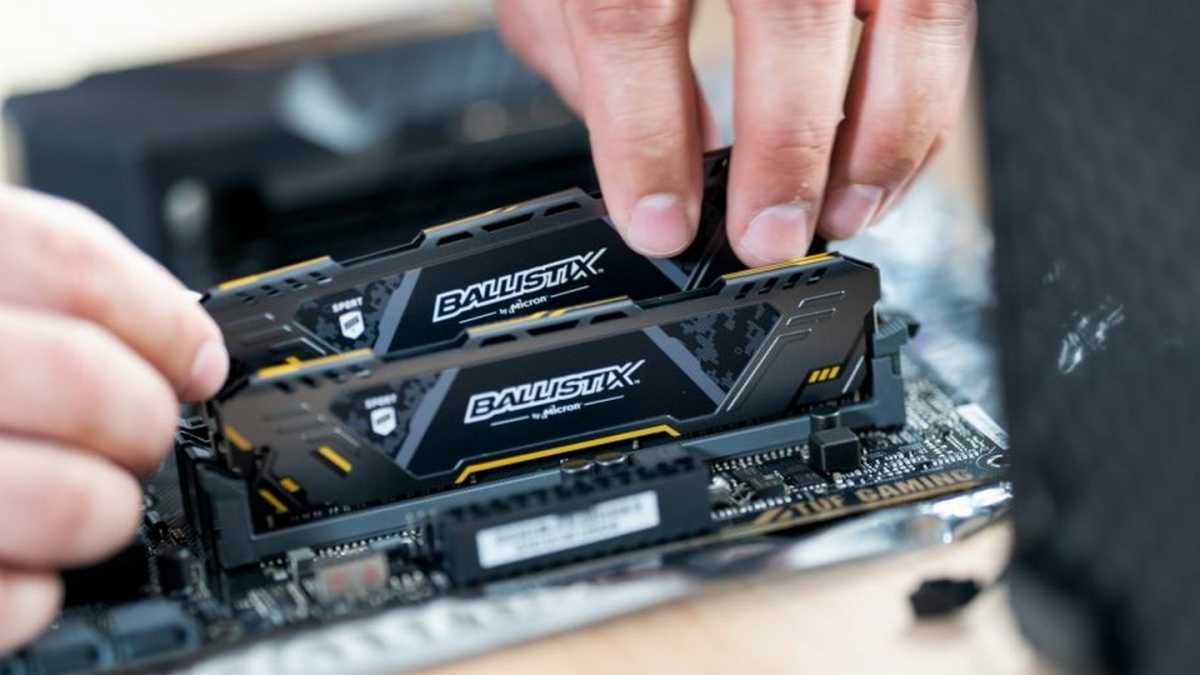
Crucial
Altman’s point is true, if you think like The Borg. It would be far more efficient to consolidate all the computing power into just a few nodes, particularly if you want to perform LLM tasks on it. It would also be far more efficient to consolidate every single movie and TV show and song and video game ever produced into a centralized, monopolized Netflix-style platform, and make sure no one ever owned their own media ever again. It wouldn’t be cheap or open or particularly good for the environment. But it would be an incredible way to monetize all that stuff.
The software-as-a-service trend tried to destroy the idea that you could own software, and instead tried to make you rent it back from companies like Microsoft and Adobe. And in many ways it succeeded. Altman’s supposition here shows the goal of companies like OpenAI and Anthropic, or even Microsoft’s Game Pass: make both the software and the hardware a service, and sell it back to you a month at a time. Or maybe an hour at a time, or a hundred AI tokens at a time.
You will own nothing, whether or not you’re happy about it. And with the RAM crunch expected to last years (absent a catastrophic crash of the AI industry), it looks like Altman is getting what he wants.
This articles is written by : Nermeen Nabil Khear Abdelmalak
All rights reserved to : USAGOLDMIES . www.usagoldmines.com
You can Enjoy surfing our website categories and read more content in many fields you may like .
Why USAGoldMines ?
USAGoldMines is a comprehensive website offering the latest in financial, crypto, and technical news. With specialized sections for each category, it provides readers with up-to-date market insights, investment trends, and technological advancements, making it a valuable resource for investors and enthusiasts in the fast-paced financial world.